
1. Grassroots Origins, Physical Gift & Formative Athletic Years

Salvador Domingo Felipe Jacinto Dalí i Domènech was born on May 11, 1904, in the small agricultural town of Figueres, located in the Empordà region of Catalonia, Spain, near the French border. From the very moment of his birth, Dalí was enveloped in a haunting family narrative that profoundly reshaped his psychological development and artistic destiny. Nine months prior to his birth, his elder brother—also named Salvador—had died of gastroenteritis at just twenty-two months old. When Dalí was five years old, his parents took him to his brother’s grave and told him that he was the literal reincarnation of his deceased sibling. This heavy existential burden ignited an intense lifelong identity crisis, compelling young Salvador to perform eccentric, hyper-dramatic acts to prove his unique existence to a grieving household.
His father, Salvador Dalí i Cusí, was a prosperous, strict, and anti-clerical middle-class notary, while his mother, Felipa Domènech Ferrés, was a devout Catholic who warmly nurtured her son’s artistic whims and delicate temper. Dalí’s childhood unfolded against the sun-drenched, rugged coastal landscapes of Cadaqués and Port Lligat, where his family spent their summers. The striking geological formations, stark cliffs, and crystalline waters of the Cap de Creus peninsula imprinted themselves indelibly upon his subconscious mind, later becoming the primary backdrop for his most famous dreamscapes.
Recognizing their son’s extraordinary raw talent, Dalí’s parents enrolled him in drawing lessons at the Municipal Drawing School of Figueres in 1916. During a summer vacation with the family of local painter Ramon Pichot, young Salvador discovered Impressionism, an encounter that ignited a fiery passion for oil painting. By 1919, at just fourteen years old, Dalí held his first public exhibition at the Municipal Theatre of Figueres. However, tragedy struck in February 1921 when his mother died of breast cancer when he was sixteen. Dalí later wrote that his mother’s death was the greatest blow he had ever experienced, describing her as the figure who rendered invisible the inevitable blemishes of his soul.
In 1922, Dalí moved to Madrid to study at the prestigious Real Academia de Bellas Artes de San Fernando. Settling into the famous Residencia de Estudiantes, the eccentric youth—sporting long sideburns, a knee-length coat, stockings, and a wide-brimmed hat inspired by Victorian aesthetics—immediately drew the attention of his peers. It was at the Residencia that Dalí formed intense, transformative friendships with two future giants of twentieth-century culture: filmmaker Luis Buñuel and poet Federico García Lorca. Influenced by Cubism, Futurism, and Metaphysical art, Dalí rapidly mastered various classical styles, though his arrogant demeanor and vocal disdain for his professors frequently brought him into conflict with academic authorities. In 1926, shortly before his final exams, Dalí was permanently expelled from the academy after declaring that no faculty member was competent enough to examine him.
2. Stepping into the Arena: Early Career Milestones & Rising Stardom
Undeterred by his expulsion, Dalí embarked on his first trip to Paris in 1926, where he sought out his intellectual idol, Pablo Picasso. Picasso, who had already heard glowing reports about the young Catalan from Miró, welcomed Dalí into his studio. Over the next three years, Dalí voraciously absorbed the Parisian avant-garde landscape, forging a stylistic synthesis that fused classical academic precision—reminiscent of Renaissance masters like Vermeer and Raphael—with the burgeoning psychological theories of Sigmund Freud.
The crucial breakthrough that launched Dalí onto the global stage occurred in 1929 through his collaboration with Luis Buñuel on the groundbreaking avant-garde short film Un Chien Andalou (An Andalusian Dog). Featuring shocking, dreamlike imagery—most famously a graphic sequence depicting a razor slicing through a woman’s eye—the film sent shockwaves through the Parisian art scene. It was celebrated by André Breton, the self-appointed Pope of Surrealism, as a cinematic triumph of the uninhibited subconscious. Later that same year, Joan Miró formally introduced Dalí to the Surrealist group in Paris.
In November 1929, Dalí held his first major solo exhibition at the Galerie Goemans in Paris. The show featured groundbreaking canvases like The Lugubrious Game and The Great Masturbator, which unveiled his newly minted ‘paranoiac-critical method’. Dalí defined this revolutionary technique as a ‘spontaneous method of irrational knowledge based on the critical and systematic objectivity of the associations and interpretations of delirious phenomena.’ Unlike the passive, automatic writing championed by Breton, Dalí’s method allowed him to systematically induce a state of controlled paranoia, enabling him to visualize multiple, overlapping images within a single composition and render them with photographic hyperrealism. The exhibition was a sensational success, establishing the twenty-five-year-old Catalan painter as the vibrant new superstar of the European avant-garde.
3. Career Longevity, Historic Tournaments & Unmatched Dominance

3.1. Defining Championship Matches & Decisive Victories
The 1930s marked the dawn of Dalí’s golden era, during which he created works that fundamentally redefined twentieth-century art. In 1931, Dalí painted his undisputed masterwork, The Persistence of Memory. Measuring a mere 24 by 33 centimeters, this deceptively small canvas depicted a barren Catalan shoreline littered with melting pocket watches draped over a dead olive branch and a strange, organic sleeping creature. Inspired by a piece of soft, melting Camembert cheese left in the summer sun, the artwork captured the fluidity of time, decay, and the psychological weight of memory. When dealer Julien Levy exhibited the canvas at his New York gallery in 1932, it ignited an American obsession with Dalí, establishing the melting clock as an indelible global icon of Surrealism.
Throughout the mid-1930s, Dalí produced a string of masterpieces that solidified his status as an unparalleled virtuoso. Works such as Soft Construction with Boiled Beans (Premonition of Civil War) (1936), Swans Reflecting Elephants (1937), and Burning Giraffe (1937) showcased his astonishing ability to transform political angst and psychological horror into mesmerizing visual tapestries. Beyond the canvas, Dalí expanded his visionary universe into three-dimensional sculpture and fashion, collaborating with Italian designer Elsa Schiaparelli to create iconic, subversive pieces such as the Lobster Dress (1937), the Shoe Hat (1937), and the whimsical Mae West Lips Sofa (1937).

3.2. International Stature & Dominance on the World Stage
As World War II engulfed Europe in 1940, Dalí and his wife Gala fled France, establishing residence in the United States for nearly a decade. This American exile inaugurated a magnificent peak in Dalí’s commercial career, transforming him from an avant-garde painter into a mainstream cultural powerhouse and international celebrity. Settled in New York and California, Dalí embraced the glittering apparatus of American commercialism, high fashion, and entertainment with shameless enthusiasm.
In 1941, the Museum of Modern Art (MoMA) in New York organized a massive retrospective of Dalí’s work alongside Joan Miró, which subsequently toured eight major American cities, drawing unprecedented crowds. Dalí published his famously grandiose autobiography, The Secret Life of Salvador Dalí, in 1942, further captivating the public imagination. His sensational flair attracted lucrative commissions from luxury brands, designing covers for Vogue, Town & Country, and advertising campaigns for Bryan Full-Fashioned Hosiery and Ford.
Dalí’s cultural footprint expanded exponentially through his legendary collaborations with Hollywood titans. In 1945, legendary director Alfred Hitchcock recruited Dalí to design the unsettling, dream-analysis sequence for his psychological thriller Spellbound, starring Gregory Peck and Ingrid Bergman. That same year, Dalí partnered with Walt Disney to produce Destino, an animated short film set to music by Mexican composer Armando Domínguez. Though financial troubles forced Disney to shelve the project mid-production, the salvaged footage was eventually completed by The Walt Disney Company in 2003, earning an Academy Award nomination.

3.3. All-Time Great Stature & Athletic Milestones
In 1948, Dalí and Gala made the dramatic decision to return to Francoist Spain, settling permanently in their secluded home in Port Lligat near Cadaqués. This return coincided with a profound shift in Dalí’s artistic philosophy. Declaring the Surrealist period of his life complete, Dalí announced the dawn of his ‘Nuclear Mysticism’ phase, driven by two seemingly contradictory passions: his newfound rediscovery of traditional Roman Catholicism and his fascination with modern physics, nuclear fission, and DNA double-helix structures.
During the 1950s and 1960s, Dalí produced monumental, breathtaking religious and scientific canvases that shocked art critics who had written him off as a commercial showman. Masterworks from this mature period include The Madonna of Port Lligat (1950), Christ of Saint John of the Cross (1951), Crucifixion (Corpus Hypercubus) (1954), and The Sacrament of the Last Supper (1955). In these works, Dalí synthesized intricate geometric mathematics, hyper-realist technique, and sacred iconography, creating spiritual images that remain among the most popular religious paintings of the twentieth century.
Dalí’s monumental contributions to world culture earned him prestigious honors later in life. In 1964, he was awarded the Grand Cross of the Order of Isabella the Catholic by the Spanish government. In 1982, King Juan Carlos I of Spain conferred upon him the noble title of Marquis of Púbol. Despite the shifting tides of twentieth-century art movements, Dalí maintained an unassailable global stature, culminating in the construction and 1974 inauguration of the Dalí Theatre-Museum in his hometown of Figueres—a surrealist palace designed entirely by Dalí himself that houses the definitive collection of his life’s work.
4. Behind the Champion: Private Passions, Relationships & Family Ties
Behind Dalí’s theatrical public persona lay an extraordinarily complex, unconventional private life dominated by a single figure: Elena Ivanovna Diakonova, known universally as Gala. Born in Kazan, Russia, Gala was an enigmatic, fiercely ambitious woman ten years Dalí’s senior. When the couple first met in the summer of 1929 in Cadaqués, Gala was married to the French Surrealist poet Paul Éluard. The twenty-five-year-old Dalí, who was tormented by severe phobias, social anxiety, and fears surrounding intimacy, experienced an immediate, thunderous obsession with her.
Gala recognized Dalí’s artistic genius behind his erratic hysterics and chose to leave Éluard to become his lifelong muse, business manager, protector, and romantic partner. They married in a civil ceremony in 1934 and later in a Catholic ceremony in 1958. Gala completely organized Dalí’s turbulent world, managing his commercial contracts, negotiating with wealthy patrons, keeping creditors at bay, and creating a stable environment in which he could paint uninterrupted. Dalí was so consumed by devotion to her that he frequently signed his paintings with both their names, famously declaring, ‘It is with your blood, Gala, that I paint my pictures.’
Their relationship, however, was far from conventional. Gala conducted numerous high-profile extramarital affairs throughout their marriage—often with younger men, including her ex-husband Éluard and rock star Jeff Fenholt—with Dalí’s full knowledge and tacit encouragement. Dalí, whose sexual psychology was deeply complex and voyeuristic, derived creative energy from her romantic pursuits. The couple never had children. In 1968, Dalí purchased Castle Púbol in Girona for Gala, agreeing to an eccentric arrangement wherein he was not permitted to visit her at the castle without receiving prior written invitation from her.
Dalí’s intense bond with Gala caused an irrevocable rift with his family. His father, outraged by Gala’s marital status and horrified by a scandalous Dalí drawing inscribed with the words ‘Sometimes, I spit for fun on my mother’s portrait,’ officially disowned his son in December 1929, throwing him out of the family home and cutting off all financial support. Though Dalí eventually reconciled with his sister Ana María—who published a candid, critical biography of her brother in 1949—the rift with his father never fully healed.
Throughout the 1960s and 1970s, Dalí surrounded himself with a flamboyant entourage of avant-garde figures, models, pop stars, and socialites at the St. Regis Hotel in New York and his home in Port Lligat. Among his most famous companions was the singer, model, and disco icon Amanda Lear, who spent over fifteen years as his companion, muse, and confidante, traveling with Dalí and Gala in a harmonious, bizarre ménage à trois.

5. Career-Threatening Injuries, Sporting Feuds & Overcoming Adversity
5.1. André Breton’s Tribunal & The Formal Expulsion from the Parisian Surrealist Group
Salvador Dalí’s career was defined by fierce ideological conflicts, none more explosive than his high-profile expulsion from the official Surrealist movement in 1934. As political tensions escalated across Europe during the 1930s, the Parisian Surrealist group, led by André Breton, increasingly aligned itself with strict Marxist-Leninist doctrines. Dalí, however, insisted that Surrealism must remain utterly apolitical and free from moral or ideological constraints, arguing that true exploration of the unconscious mind could not be censored by political correctness.
The breaking point arrived when Dalí produced paintings featuring disturbing, fetishistic depictions of political figures, most notoriously The Enigma of William Tell (1933)—which depicted Vladimir Lenin with an exaggerated, elongated buttock supported by a crutch—and The Weaning of Furniture-Nutrition. Furthermore, Dalí voiced a complex, provocative obsession with Adolf Hitler, painting The Enigma of Hitler (1939) and admitting to being fascinated by Hitler’s visual iconography. Outraged by what he viewed as the glorification of fascism, André Breton summoned Dalí to a formal ‘trial’ at his apartment on Rue Fontaine in Paris in February 1934.
During the raucous trial, Dalí showed up wearing multiple layers of thick sweaters while suffering from a heavy cold. As Breton listed the charges of anti-revolutionary activity and fascistic sympathies, Dalí dramatically stripped off his sweaters one by one, put a thermometer in his mouth, and launched into a brilliant, frantic legal defense. Kneeling bare-chested on his pile of clothes, Dalí quoted Breton’s own 1924 Surrealist Manifesto back to him, asserting that his art was merely a pure recording of unconscious dreams without conscious moral or aesthetic judgment. While the group formally voted to expel him, Dalí famously retorted: ‘I am Surrealism!’ He continued to participate in international Surrealist exhibitions despite Breton’s furious objections.
5.2. Commercialization Backlash, Francoist Association & Blank Paper Signature Disputes
The bitter feud between Dalí and Breton escalated into a second public scandal during Dalí’s American exile. Disgusted by Dalí’s unabashed embrace of commercial advertising, Hollywood celebrity culture, and wealth accumulation, André Breton coined a scathing anagram of Salvador Dalí’s name: ‘Avida Dollars’ (a phonetic French rendering of ‘eager for dollars’). Breton and his loyalists denounced Dalí as a sellout who had betrayed the revolutionary ideals of Surrealism for bourgeois fortune. Dalí gleefully accepted the moniker, turning the insult into a badge of honor by publicly declaring that his ultimate goal was to make his art financially lucrative.
Far more damaging to Dalí’s critical reputation was his controversial political alignment with General Francisco Franco’s authoritarian regime in Spain. While most Spanish avant-garde artists—including Picasso and Miró—went into self-imposed exile or vehemently denounced the dictatorship, Dalí returned to Spain in 1948, publicly praised Franco, and accepted state honors. Dalí even painted a portrait of Franco’s granddaughter and sent congratulatory telegrams to the dictator. Critics accused Dalí of opportunism and moral cowardice, though defenders argued his alignment was a pragmatic strategy to safeguard his property, preserve his heritage, and secure funding for his museum in Figueres.
In the final decade of his life, a devastating physical crisis led to one of the largest art-forgery scandals in history. Following a severe nervous breakdown, severe Parkinson’s-like tremors, and the tragic death of Gala in June 1982, an ailing Dalí signed thousands of blank sheets of lithograph paper to generate quick cash for his handlers and staff. Unscrupulous dealers quickly exploited these pre-signed blank sheets, printing unauthorized reproductions and fraudulent images, flooding the international art market with fake Dalí prints. The resulting legal chaos sparked global investigations by international police agencies, clouding the market for late-period Dalí graphic works for decades.
![Portrait of Salvador Dali] - Public domain portrait — PICRYL - Public Domain Media Search Engine](https://celebpedia.net/wp-content/uploads/2026/08/salvador-dali-4.jpg)
6. Nutrition, Brand Ambassadorships & Sporting Influence
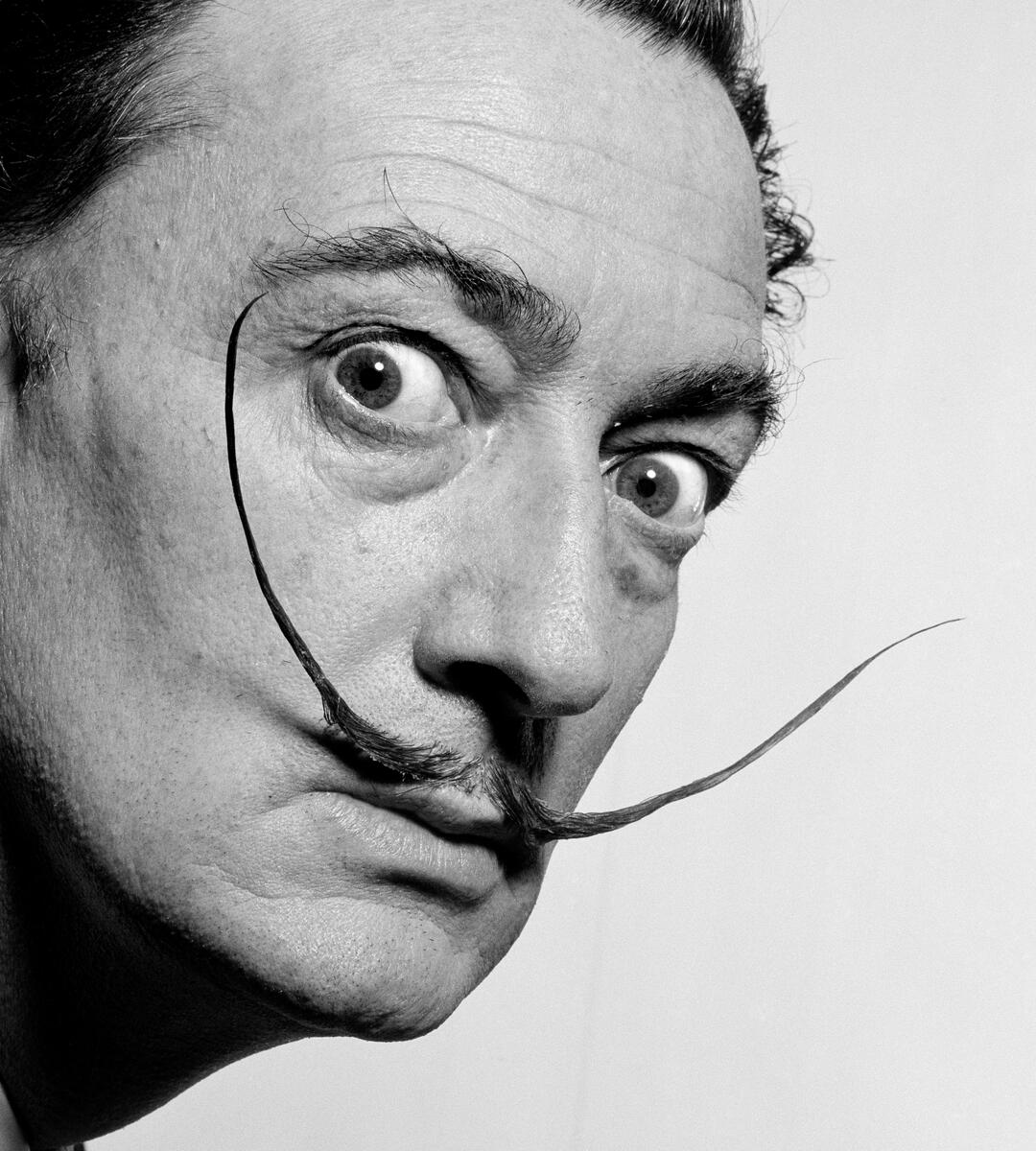
Salvador Dalí was not merely a painter; he was a pioneer of self-branding and performance art long before the advent of modern media. His signature aesthetic—characterized by impeccably tailored suits, a cane, wildly wide eyes, and his iconic, waxed, upturned mustache inspired by Spanish Golden Age painter Diego Velázquez—turned him into a living, walking artwork. Dalí understood the psychology of mass media with astonishing foresight, using outrageous stunts, bizarre television appearances (such as his legendary 1957 interview on What’s My Line?), and dramatic press conferences to capture global headlines.
Although Dalí passed away decades before the digital revolution, his visual legacy has exploded across modern social media platforms. His theatrical persona, surreal imagery, and eccentric quotes resonate powerfully with younger generations on TikTok, Instagram, and Pinterest. Contemporary pop culture continues to draw heavily from his visual repertoire: the iconic Dali masks and red jumpsuits featured in the international Netflix hit series La Casa de Papel (Money Heist) introduced his face to hundreds of millions of modern viewers, transforming his image into a global symbol of resistance and theatrical bravado.
Dalí’s profound influence spans across fine art, fashion, cinema, pop culture, and digital design. Contemporary artists like Jeff Koons, Damien Hirst, and Takashi Murakami cite Dalí as the foundational pioneer who made it acceptable for fine artists to blur the lines between high art, commercial branding, and mass entertainment. His revolutionary techniques in double imagery continue to inspire modern graphic design, optical illusions, and AI-generated imagery.
7. Current Season Campaigns, Title Defense & Future Ambitions
While Salvador Dalí passed away on January 23, 1989, at the age of 84 due to heart failure in Figueres, his artistic enterprise remains extraordinarily active into the twenty-first century. The official management and protection of his vast intellectual, artistic, and cultural estate are spearheaded by the Gala-Salvador Dalí Foundation, established by the artist himself in 1983. Based in Figueres, the Foundation oversees the Dalí Theatre-Museum, the Salvador Dalí House-Museum in Port Lligat, and the Gala Dalí Castle in Púbol, attracting over a million international visitors annually.
The Foundation actively drives landmark global exhibitions, authenticates artworks, and executes digital preservation initiatives. In recent years, cutting-edge technology has revitalized Dalí’s legacy for new generations. The Salvador Dalí Museum in St. Petersburg, Florida, launched ‘Dalí Lives,’ a groundbreaking interactive exhibition utilizing artificial intelligence and deepfake technology to re-create a life-sized, interactive digital avatar of Dalí that converses with museum visitors about his life and artistic philosophy.
Furthermore, major international retrospectives continue to tour world capitals, reassessing Dalí’s complex political period, his contributions to cinema, and his pioneering work in Nuclear Mysticism. Through ongoing scholarly research, immersive digital exhibitions, and continuous restoration projects, the legacy of Surrealism’s most flamboyant master continues to expand across global horizons.
8. Salvador Domingo Felipe Jacinto Dalí i Domènech FAQs: Key Questions Answered
How old was Salvador Dalí when he died?
Salvador Dalí died on January 23, 1989, at the age of 84 at the Villa Nef Hospital in Figueres, Spain. He was buried in the crypt underneath the stage of his beloved Dalí Theatre-Museum.
Who was Salvador Dalí married to?
Salvador Dalí was married to Elena Ivanovna Diakonova, known universally as Gala. They met in 1929, married in a civil ceremony in 1934, and remained together until her death in June 1982.
What is Salvador Dalí’s most famous work?
Dalí’s most famous painting is The Persistence of Memory (1931), featuring soft, melting pocket watches draped across a desolate landscape. It is permanently housed in the Museum of Modern Art (MoMA) in New York City.
Why was Salvador Dalí expelled from the Surrealists?
Dalí was formally expelled from the Surrealist movement in 1934 by leader André Breton due to his refusal to align with Marxist politics, his controversial paintings featuring Vladimir Lenin and fascistic imagery, and his unapologetic commercial ambitions.


