
From Málaga to La Llotja: The Academic Ascent of Pablo Diego José Francisco de Paula Juan Nepomuceno María de los Remedios Cipriano de la Santísima Trinidad Ruiz y Picasso
Born on October 25, 1881, in the sun-drenched coastal city of Málaga in southern Spain, Pablo Ruiz y Picasso was introduced to the world under extraordinary circumstances. According to family lore, the newborn was initially believed to be stillborn due to his complete silence, until his uncle, a physician named Don Salvador, blew cigar smoke into his nostrils, provoking a sudden, sharp gasp of life. Christened with an extensive chain of names honoring ancestors and Catholic saints—Pablo Diego José Francisco de Paula Juan Nepomuceno María de los Remedios Cipriano de la Santísima Trinidad Ruiz y Picasso—the young prodigy would eventually discard his father’s relatively common surname, Ruiz, in favor of his mother’s rarer Andalusian maternal surname, Picasso.
Art was embedded in Picasso’s immediate environment from birth. His father, Don José Ruiz y Blasco, was a painter who specialized in naturalistic depictions of birds and game, working as a professor of drawing at the local School of Crafts and curator of the city museum. Picasso’s mother, María Picasso y López, recognized her son’s talent early on, famously claiming that his very first spoken word was “piz,” short for lápiz (the Spanish word for pencil). Don José began providing formal instruction to his son when Pablo was just seven years old, instilling rigorous academic techniques in oil painting, anatomy, and classical drawing.
The family relocated to A Coruña in northern Spain in 1891 when Don José secured a new teaching position at the School of Fine Arts. It was here that Picasso’s prodigal abilities eclipsed those of his teacher. Legend recounts that upon watching the thirteen-year-old Pablo complete an intricate sketch of a pigeon with stunning realism, Don José handed his own brushes and palette over to his son, declaring that the boy had surpassed him and that he himself would never paint again.
Tragedy struck the family in 1895 when Picasso’s younger sister, seven-year-old Conchita, succumbed to diphtheria. Deeply traumatized by the loss, Picasso bargained desperately in his mind, vowing to give up his art if God saved her life; her death left him with a lifelong philosophical wrestling match regarding mortality, faith, and the existential function of creative output. Later that year, the family moved to Barcelona, where Don José accepted a professorship at the prestigious La Llotja School of Fine Arts. Picasso’s father persuaded school administrators to let his 13-year-old son take the advanced entrance examination—a grueling evaluation typically taking applicants a full month to complete. Picasso finished the entire portfolio in one week, astounding the faculty who admitted him immediately.
By 1897, sixteen-year-old Picasso was sent to Madrid to attend Spain’s premier art academy, the Real Academia de Bellas Artes de San Fernando. However, the young genius chafed under rigid academic instruction, frequently skipping formal lectures to spend endless hours inside the Museo del Prado. There, he meticulously studied masterworks by Diego Velázquez, Francisco Goya, El Greco, and Peter Paul Rubens, absorbing classical technique while preparing to dismantle it entirely.

Blue and Rose Epochs: Pablo Diego José Francisco de Paula Juan Nepomuceno María de los Remedios Cipriano de la Santísima Trinidad Ruiz y Picasso Reshapes Modern Art
Returning to Barcelona in 1899, Picasso gravitated toward the avant-garde intellectual scene that gathered at Els Quatre Gats (“The Four Cats”), a bohemian café modeled after Le Chat Noir in Paris. Immersing himself in Symbolism, Modernisme, and anarchistic political philosophies, Picasso staged his very first solo exhibition at the café in February 1900, presenting over one hundred portraits of local figures and intellectuals. Encouraged by local acclaim, the nineteen-year-old artist set his sights on the reigning capital of the art world: Paris.
In October 1900, Picasso made his first journey to Paris accompanied by his close friend, the poet and painter Carles Casagemas. Arriving during the Exposition Universelle—where one of Picasso’s canvases, Derniers Moments, was being exhibited in the Spanish pavilion—the young painter absorbed the visual lexicon of Impressionism, Post-Impressionism, and Parisian nightlife. He studied the expressive brushwork of Henri de Toulouse-Lautrec, Paul Cézanne, and Vincent van Gogh, synthesizing these influences into his rapidly evolving aesthetic.
The true turning point of Picasso’s early career emerged not from rapid financial success, but from immense personal tragedy. In February 1901, while Picasso was staying in Spain, Carles Casagemas committed suicide by shooting himself in a Parisian café following an unrequited romantic obsession with model Germaine Gargallo. Devastated by the tragic loss of his closest confidant, Picasso fell into a deep psychological depression that directly birthed his historic Blue Period (1901–1904).
Reflecting on this transformative epoch, Picasso famously remarked that he began painting in blue upon thinking of Casagemas’s death. Dominating his work from late 1901 through 1904, the Blue Period saw Picasso cast aside cheerful palette tones in favor of somber hues of Prussian blue, cobalt, and sea-green. His subjects shifted exclusively to society’s marginalized and suffering outcasts: beggars, prostitutes, blind street musicians, impoverished mothers, and weary outlaws. Key masterpieces from this era, such as La Vie (1903) and The Old Guitarist (1903–1904), featured elongated, Greco-inspired figures conveying profound grief, existential isolation, and spiritual transcendence.
Though the Blue Period generated minimal income at the time—leaving Picasso in chronic poverty where he occasionally burned his own drawings to warm his cold Paris room—it established his reputation among visionary dealers like Ambroise Vollard and influential collectors like Gertrude Stein. It proved that Picasso was not merely a prodigious academic painter, but a revolutionary artistic soul capable of channeling raw human emotion directly onto canvas.
From Les Demoiselles d'Avignon to Guernica: Architectural Masterpieces of Pablo Diego José Francisco de Paula Juan Nepomuceno María de los Remedios Cipriano de la Santísima Trinidad Ruiz y Picasso
The Cubist Breakthrough: Pablo Diego José Francisco de Paula Juan Nepomuceno María de los Remedios Cipriano de la Santísima Trinidad Ruiz y Picasso Crafts Analytic and Synthetic Forms
By mid-1904, Picasso settled permanently in Paris, setting up his studio in the famous Bateau-Lavoir building in Montmartre. A blossoming romance with bohemian artist Fernande Olivier, coupled with growing critical attention, helped lift his melancholy, ushering in his Rose Period (1904–1906). Warm terracotta, coral, pink, and ochre shades replaced the cold blues of the previous years. Picasso became fascinated by circus performers, acrobats, and harlequins—figures known as saltimbanques. His monumental 1905 canvas, Family of Saltimbanques, captured both the grace and emotional detachment of wandering performers, signaling his rise into the elite ranks of the Parisian avant-garde.
During this era, Picasso attracted the patronage of American expatriate siblings Gertrude Stein and Leo Stein, whose weekly salons introduced him to key artistic contemporaries, including Henri Matisse. Matisse and Picasso forged a complex lifelong relationship marked by intense rivalry and mutual creative inspiration. Gertrude Stein commissioned Picasso to paint her portrait (1905–1906), for which she famously posed over eighty times. When observers noted that Stein did not look like the sculpted, mask-like portrait, Picasso famously retorted: “Never mind, she will.”
In 1907, Picasso executed a work that completely shattered five centuries of Western artistic convention: Les Demoiselles d’Avignon. Influenced heavily by Iberian sculpture and African tribal masks—which he spent hours studying at the Trocadéro Ethnographic Museum—the sprawling canvas depicted five naked prostitutes in a Barcelona brothel. Rather than employing traditional perspective, smooth shading, or idealized proportions, Picasso rendered the women using sharp, angular planes, fragmented geometric torsos, and asymmetrical faces. When first shown to his inner circle of friends and art dealers, the reaction was sheer shock and dismay; Matisse viewed it as an outrageous joke, while painter André Derain warned that Picasso would end up hanging himself behind his canvas. Yet, Les Demoiselles d’Avignon became the foundational cornerstone of modern painting, unlocking the door to abstract art.
International Exhibitions: Pablo Diego José Francisco de Paula Juan Nepomuceno María de los Remedios Cipriano de la Santísima Trinidad Ruiz y Picasso Takes Over European Galleries
Building upon the structural breakthroughs of 1907, Picasso joined forces with French painter Georges Braque to invent Cubism, one of the most influential art movements in human history. Between 1909 and 1914, working in such close synchronization that they frequently signed only the backs of their canvases to emphasize their unified vision, Picasso and Braque developed two distinct phases of Cubism:
Analytic Cubism (1909–1912): Picasso and Braque deconstructed physical objects and human figures into complex geometric facets, presenting multiple viewpoints of the subject simultaneously on a single flat plane. Colors were reduced to neutral monochromatic tones of brown, gray, and ochre to focus purely on form and spatial structure, as seen in landmark works like Portrait of Daniel-Henry Kahnweiler (1910).
Synthetic Cubism (1912–1919): Reintroducing vibrant colors and simplified shapes, Picasso pioneered the technique of collage (from the French coller, meaning “to glue”). By pasting real-world fragments—newspaper print, oilcloth, wallpaper, sand, and sheet music—directly onto canvas or constructing three-dimensional wooden objects (such as Guitar, 1912), Picasso permanently dissolved the traditional boundary between art object and physical reality.
The onset of World War I momentarily disrupted his circle as French artists were mobilized to the frontlines. Picasso, remaining a neutral Spanish citizen in Paris, transitioned into a period of Neoclassicism and Surrealism (1919–1929). Collaborating with Jean Cocteau and Serge Diaghilev’s famed Ballets Russes, Picasso designed avant-garde stage sets, costumes, and curtains for productions like Parade (1917) and Pulcinella (1920). This period saw him return to classical draftsmanship and monumental, sculptural figures of heavy, serene proportions, inspired by a trip to Italy, alongside works reflecting Surrealist dream-logic and distorted anatomical forms.
The defining masterpiece of Picasso’s career—and arguably the most powerful anti-war painting ever created—came in 1937. Commissioned by the Spanish Republican government to create a mural for the Spanish Pavilion at the Paris International Exposition, Picasso spent months contemplating a subject. On April 26, 1937, Nazi Germany’s Luftwaffe, operating at the behest of Spanish Nationalist commander Francisco Franco, carpet-bombed the Basque town of Guernica, slaughtering hundreds of innocent civilians and devastating the historic village.
Enraged by news reports and photographs of the atrocity, Picasso produced Guernica in a feverish burst of creative fury over thirty days. The colossal canvas, stretching over 25 feet wide and 11 feet high, rendered the horrors of war in a stark monochromatic palette of black, white, and gray. Featuring a screaming mother holding a dead child, a gored horse, a dismembered soldier holding a broken sword, and a roaring bull, Guernica became an immediate international symbol of civilian suffering, brutal tyranny, and humanity’s outcry against fascism.

Neoclassicism to Surrealism: The Ever-Evolving Canvas of Pablo Diego José Francisco de Paula Juan Nepomuceno María de los Remedios Cipriano de la Santísima Trinidad Ruiz y Picasso
Throughout World War II, Picasso remained in German-occupied Paris, stoically refusing to flee to the United States despite constant harassment from Nazi authorities, who classified his art as “degenerate.” Though forbidden from exhibiting publicly, he continued creating prolifically in his studio on the Rue des Grands-Augustins. When a Gestapo officer reportedly walked into his studio, pointed at a photograph of Guernica, and asked, “Did you do that?”, Picasso famously replied, “No, you did.”
Following the liberation of Paris in 1944, Picasso joined the French Communist Party, aligning himself with international peace movements. He designed the iconic Dove of Peace emblem for the 1949 International Peace Congress in Paris, an image that became a global icon for the anti-war movement. His political engagement earned him the prestigious International Lenin Peace Prize twice, in 1950 and 1962.
In his post-war decades, Picasso relocated to the French Riviera, setting up studios in Vallauris, Cannes, and Mougins. Far from slowing down, his creative energy diversified into completely new mediums. At the Madoura Pottery studio in Vallauris, he revolutionized ceramic art, producing over 4,000 distinct ceramic plates, vases, and sculptures that combined folk aesthetics with classical mythic iconography.
In his final decades, Picasso undertook a celebrated series of reinterpretations of historical masterpieces, creating bold, explosive variations of Velázquez’s Las Meninas, Édouard Manet’s Le Déjeuner sur l’herbe, and Delacroix’s Women of Algiers. His late work was characterized by a rapid, wildly expressive brushwork that critics initially dismissed as crude, but which art historians later realized was a prophetic precursor to modern Neo-Expressionism.
By the time of his death in 1973 at age 91, Picasso was universally acknowledged as the most prolific visual artist in recorded history. Estimates from the Guinness Book of World Records calculate that over his eight-decade career, Picasso produced approximately 13,500 paintings, 100,000 prints and engravings, 34,000 book illustrations, and 300 sculptures and ceramic pieces.
Muses of the Canvas: The Private Studios and Relationships of Pablo Diego José Francisco de Paula Juan Nepomuceno María de los Remedios Cipriano de la Santísima Trinidad Ruiz y Picasso
Picasso’s personal life was as tumultuous, passion-filled, and complex as his vast artistic output. Throughout his 91 years, his relationships with women were deeply intertwined with his creative phases; every major stylistic shift in his painting corresponded almost directly to a new romantic relationship and a new female muse.
His first long-term companion was Fernande Olivier, a French artist and model who lived with him during the impoverished Bateau-Lavoir years and inspired his Rose Period and early Cubist studies. As Picasso achieved fame and financial security, their relationship dissolved, and in 1912 he began a passionate affair with Eva Gouel (born Marcelle Humbert). Picasso declared his love for Eva by embedding the phrases “J’aime Eva” (“I love Eva”) into several of his Synthetic Cubist paintings. Tragically, Eva died of tuberculosis in 1915, leaving Picasso grief-stricken.
In 1917, while designing set pieces for the Ballets Russes in Rome, Picasso met Russian ballerina Olga Khokhlova. They married in July 1918 at the Russian Orthodox Cathedral in Paris. Olga introduced Picasso to high society, refined Parisian dinner parties, and luxury living. In 1921, she gave birth to Picasso’s first child, a son named Paulo Picasso. However, the stark contrast between Olga’s bourgeois social ambitions and Picasso’s bohemian lifestyle generated severe domestic friction.
In 1927, forty-five-year-old Picasso initiated a secretive, intense affair with seventeen-year-old Marie-Thérèse Walter, whom he spotted stepping off the Paris Métro. Marie-Thérèse became his principal muse during the late 1920s and 1930s, inspiring some of his most celebrated erotic masterpieces, including Le Rêve (1932) and Girl before a Mirror (1932). In 1935, Marie-Thérèse gave birth to Picasso’s second child, a daughter named Maya Widmaier-Picasso. When Olga Khokhlova discovered the affair and the birth of Maya, she immediately separated from Picasso and moved to the South of France with Paulo. Because French law dictated that Picasso would have to split his entire net worth and artistic estate equally in a divorce, he refused to grant her a legal divorce; they remained legally married until Olga’s death in 1955.
By 1936, Picasso had begun another parallel relationship with French photographer, poet, and intellectual Dora Maar. Intelligent, fiery, and surrealist-aligned, Maar documented the step-by-step creation of Guernica in his studio and served as the model for his famed 1937 series The Weeping Woman. The psychological tension between Picasso’s simultaneous relationships with Marie-Thérèse and Dora Maar famously culminated in a physical confrontation between the two women inside Picasso’s studio while he painted Guernica; when asked to choose between them, Picasso later claimed he told them they had to fight it out themselves.
In 1943, sixty-two-year-old Picasso met twenty-one-year-old art student Françoise Gilot. Their decade-long relationship produced two children: Claude Picasso (born 1947) and Paloma Picasso (born 1949), who would later achieve fame as a renowned jewelry designer for Tiffany & Co. Unlike Picasso’s previous partners, Gilot maintained her fierce independent artistic identity. Tired of his volatile temper andinfidelities, Gilot broke society norms by walking out on Picasso in 1953—making her the only woman to ever leave him voluntarily.
In 1961, eighty-year-old Picasso married thirty-five-year-old Jacqueline Roque, who worked at the Madoura Pottery studio in Vallauris. Devoted, fierce, and protective of Picasso’s privacy, Jacqueline remained his wife, exclusive muse, and gatekeeper until his death in 1973. During their twelve years together, Picasso painted more portraits of Jacqueline than of any other woman in his lifetime, rendering her distinct profile in over 400 canvases.

Geopolitical Conflicts and Institutional Debates Surrounding Pablo Diego José Francisco de Paula Juan Nepomuceno María de los Remedios Cipriano de la Santísima Trinidad Ruiz y Picasso
The 1911 Louvre Inquiry: Pablo Diego José Francisco de Paula Juan Nepomuceno María de los Remedios Cipriano de la Santísima Trinidad Ruiz y Picasso and the Iberian Statuette Affair
Among the most dramatic legal scandals of Picasso’s life occurred in late August 1911, when Leonardo da Vinci’s world-famous masterpiece, the Mona Lisa, was stolen from the Musée du Louvre in Paris. The daring heist sent shockwaves throughout global media, and French authorities launched a frantic international manhunt.
The investigation unexpectedly led directly to Picasso and his close friend, the avant-garde poet Guillaume Apollinaire. Years earlier, in 1907, an eccentric acquaintance named Honoré Joseph Géry Pieret had stolen several ancient Iberian stone statues from the Louvre and sold them to Picasso for a modest sum of money. Picasso, fascinated by the archaic facial carvings, used these stolen artifacts as direct visual references to sculpt the faces in Les Demoiselles d’Avignon.
When the Mona Lisa disappeared, Pieret sent an anonymous letter to a Paris newspaper boasting about how easily items could be stolen from the Louvre, turning over another stolen statuette as proof. French police quickly traced the leads back to Apollinaire and arrested him. Terrified that police would discover the stolen Iberian sculptures in his studio, Picasso and Apollinaire packed the artifacts into a suitcase and spent a panicked night wandering along the Seine, intending to throw them into the river, but ultimately lacked the nerve.
On September 5, 1911, Picasso was summoned to court by the magistrate examining the Mona Lisa theft. Faced with legal prosecution, deportation back to Spain, and potential imprisonment, a terrified Picasso broke down on the witness stand. When asked by the judge if he knew Apollinaire, Picasso infamously panicked and blurted out, “I have never seen this man before in my life!” Ultimately, the magistrate determined that neither Picasso nor Apollinaire had any involvement in the theft of the Mona Lisa (which was later recovered in 1913 after being stolen by Louvre employee Vincenzo Peruggia). The stolen Iberian statues were quietly returned, and the charges against Picasso were dropped, though the memory of his courtroom betrayal weighed heavily on his friendship with Apollinaire for years.
The Post-1973 Estate Settlements and Archival Bequests of Pablo Diego José Francisco de Paula Juan Nepomuceno María de los Remedios Cipriano de la Santísima Trinidad Ruiz y Picasso
Picasso’s extraordinary financial success and refusal to execute a formal written will resulted in one of the most contentious legal and emotional battles in modern history following his death on April 8, 1973. Leaving behind an estate estimated to be worth hundreds of millions of dollars—comprising real estate, cash, stock investments, and thousands of uncatalogued artworks—his death sparked decades of bitter legal feuds among his widow Jacqueline Roque, his surviving legitimate and illegitimate children, and his grandchildren.
The immediate fallout of his passing was marked by immense personal tragedy. Excluded from attending Picasso’s funeral by Jacqueline Roque, Picasso’s grandson Pablito (son of Paulo) drank a bottle of bleach in despair and died several days later. Paulo Picasso, plagued by alcoholism and financial distress, died two years later in 1975. In 1977, Picasso’s long-time muse Marie-Thérèse Walter committed suicide by hanging herself. In 1986, Jacqueline Roque herself died by suicide, shooting herself in her home in Mougins.
It took six years of turbulent litigation for the legal heirs—Claude Picasso, Paloma Picasso, Maya Widmaier-Picasso, Bernard Ruiz-Picasso, and Marina Picasso—to settle the estate. The French government ultimately accepted dozens of prime artworks from the family as payment for inheritance taxes, which formed the foundational collection of the Musée National Picasso in Paris.
In contemporary art discourse, Picasso’s personal legacy has faced intense critical scrutiny. Scholars, art historians, and feminist critics have re-examined his treatment of the women in his life, pointing to his well-documented narcissistic traits, emotional manipulation, and volatile interpersonal dynamics. In her explosive 1964 memoir Life with Picasso, Françoise Gilot exposed the dark, controlling aspects of his personality. Yet, despite these profound personal complexities and intense post-mortem debates, Picasso’s artistic stature remains unchallenged: he is remembered as a heroic yet deeply flawed titan whose creative courage redefined visual expression for all of human history.

Artistic Legacy: How Pablo Diego José Francisco de Paula Juan Nepomuceno María de los Remedios Cipriano de la Santísima Trinidad Ruiz y Picasso Revolutionized 20th-Century Visual Culture
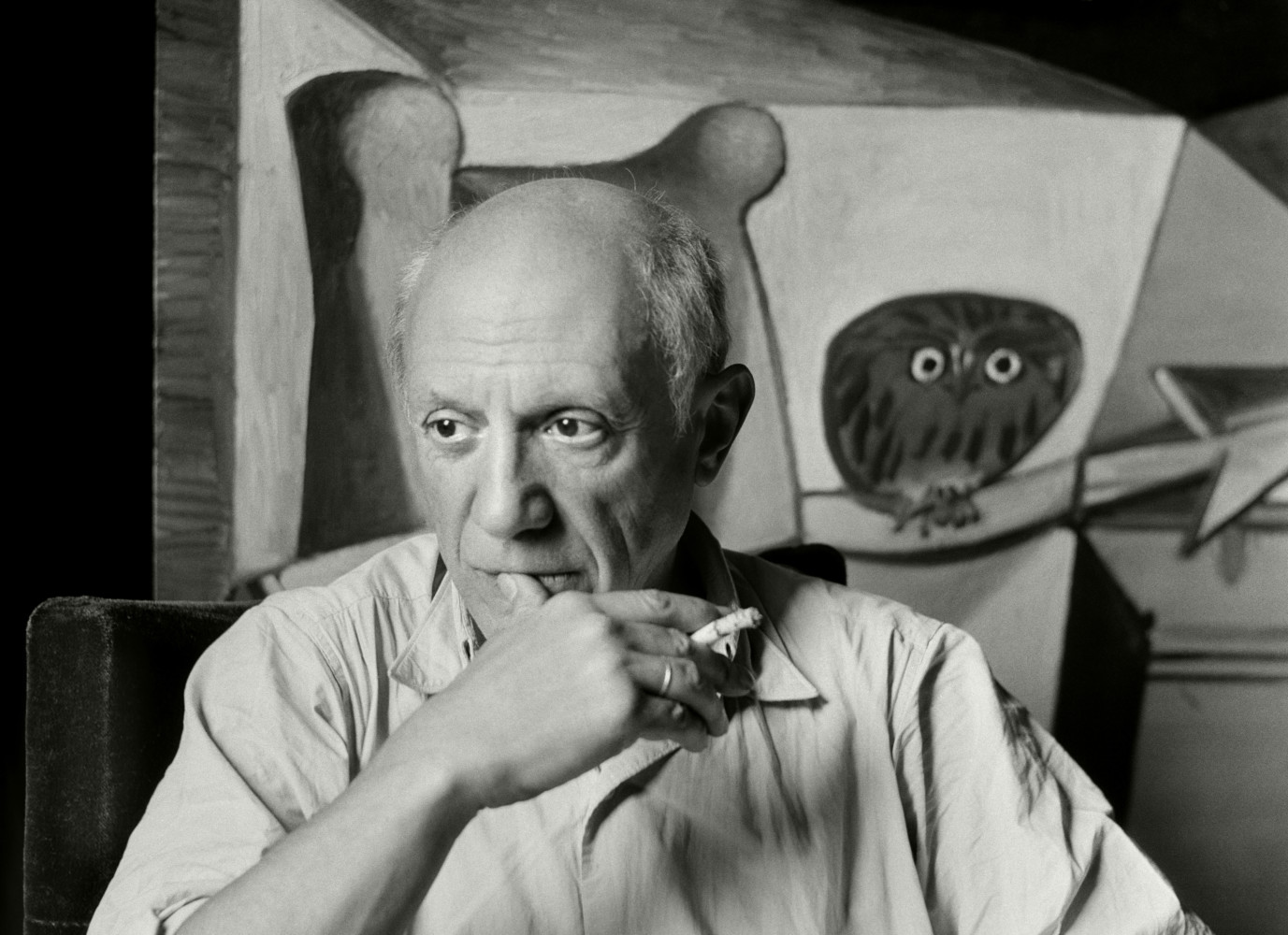
Picasso’s aesthetic footprint is woven into the very fabric of 20th and 21st-century modern culture. Beyond his seismic breakthroughs in Cubism and Surrealism, his distinctive personal style became legendary. His signature sartorial look—a striped Breton nautical shirt (the classic French marinière), wide-cut trousers, sand-colored shorts, and a stark, piercing gaze—turned him into the world’s very first pop-star artist, photographed extensively by photojournalists such as Henri Cartier-Bresson, Robert Capa, and David Douglas Duncan.
Because Picasso lived and produced art long before the creation of the digital age, he does not maintain active social media accounts on modern platforms like Instagram, X (formerly Twitter), TikTok, or YouTube. However, his cultural presence online remains massive. Dedicated educational institutions, such as the Picasso Administration, the Musée Picasso Paris, and the Museu Picasso Barcelona, manage digital archives that reach millions of art enthusiasts globally.
His influence spans far beyond galleries and museums. From modern architecture, graphic design, and fashion to cinema and commercial branding, Picasso’s conceptual liberation of form continues to inspire contemporary creators. The phrase “Picasso-esque” has entered the global lexicon to describe anything wildly innovative, asymmetrical, or groundbreakingly original.
The Mougins Years: Final Canvases and Institutional Retrospectives of Pablo Diego José Francisco de Paula Juan Nepomuceno María de los Remedios Cipriano de la Santísima Trinidad Ruiz y Picasso
While Pablo Picasso passed away in 1973, his global legacy continues to expand through high-profile exhibitions, major auctions, and retrospective scholarship worldwide. The 50th-anniversary milestone of his passing sparked “Picasso Celebration 1973–2023,” an unprecedented international network of over fifty major exhibitions staged across Spain, France, the United States, Germany, and Monaco, coordinated by the Musée National Picasso-Paris and the official Picasso Administration.
Major auction houses like Christie’s and Sotheby’s regularly set world-record sales for Picasso works. In 2015, his 1955 painting Les Femmes d’Alger (Version ‘O’) sold for a staggering $179.4 million at auction, making it one of the most expensive paintings ever sold. Digital archiving projects are currently cataloging his complete oeuvre, bringing high-definition 3D renders of his ceramics and sculptures to audiences worldwide, ensuring that new generations of art lovers, students, and artists will continue to draw inspiration from his boundless creative genius for centuries to come.
Pablo Diego José Francisco de Paula Juan Nepomuceno María de los Remedios Cipriano de la Santísima Trinidad Ruiz y Picasso FAQs: Key Questions Answered
How old was Pablo Picasso when he died?
Pablo Picasso passed away on April 8, 1973, at the age of 91 at his estate in Mougins, France.
Who was Pablo Picasso married to?
Picasso was legally married twice: first to Russian ballerina Olga Khokhlova from 1918 until her death in 1955 (they separated in 1935), and second to Jacqueline Roque from 1961 until his death in 1973.
What is Pablo Picasso’s most famous painting?
While Picasso created numerous world-famous masterpieces, his 1937 anti-war mural Guernica and his 1907 revolutionary work Les Demoiselles d’Avignon are widely considered his most monumental and historically influential works.
Did Pablo Picasso have children?
Yes, Picasso had four children: Paulo Picasso (with Olga Khokhlova), Maya Widmaier-Picasso (with Marie-Thérèse Walter), and Claude Picasso and Paloma Picasso (both with Françoise Gilot).


