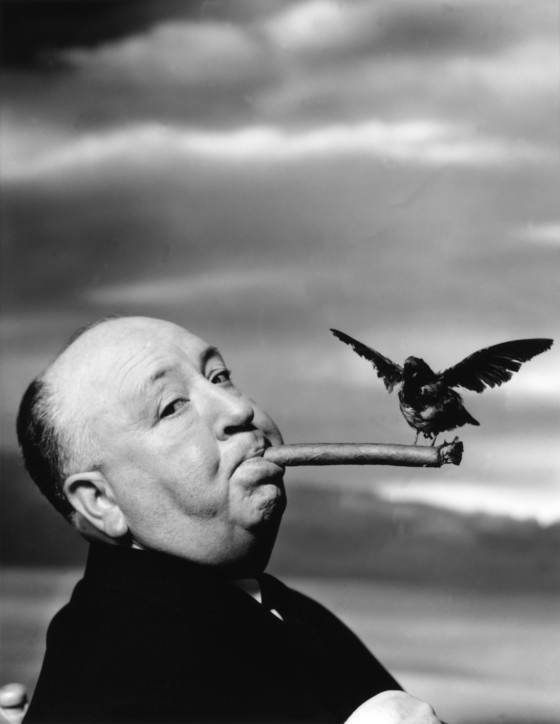
: “
Sir Alfred Joseph Hitchcock: From Leytonstone Greengrocer Roots to Islington Title Card Designer
Sir Alfred Joseph Hitchcock was born on August 13, 1899, above his parents’ greengrocer shop in Leytonstone, Essex, just outside London. He was the youngest of three children born to William Edgar Hitchcock, a fruit merchant and poulterer, and Emma Jane Whelan. Raised in a strict, devout Roman Catholic household of mixed English and Irish descent, young Hitchcock’s childhood was marked by discipline, emotional solitude, and a deep-seated fascination with order and fear. A frequently retold story from his youth encapsulates this psychological foundation: when Alfred was around five years old, his father sent him to the local police station with a handwritten note. Upon reading it, the officer on duty locked the boy in a cell for several minutes, warning him, ‘This is what happens to naughty boys.’ The incident left Hitchcock with a lifelong terror of police officers and a profound anxiety regarding false imprisonment, themes that would relentlessly permeate his cinematic universe.
Hitchcock’s primary education began at Howrah House Convent in Poplar, followed by rigors at Salesian College in Battersea and St Ignatius’ College in Stamford Hill, a Jesuit institution known for strict corporal punishment. The methodical, analytical atmosphere of Jesuit schooling sharpened his intellect while reinforcing his inner reserve. In 1914, following his father’s untimely death, fifteen-year-old Hitchcock left formal schooling to help support his family, taking a position as a technical clerk and draftsman at the Henley Telegraph and Cable Company. Simultaneously, he enrolled in evening courses at the University of London, studying art history, economics, drafting, and fine arts.
During his tenure at Henley, Hitchcock’s latent artistic talent surfaced. He contributed witty essays and intricate line drawings to the company’s internal magazine, showcasing an early mastery of visual storytelling and macabre humor. When World War I broke out, he was declared unfit for full military service due to his physique, serving instead in a home-defense cadet unit of the Royal Engineers. Meanwhile, his obsession with the fledgling medium of cinema grew exponentially. He devoured film journals, studied American directors like D.W. Griffith, and spent his free time haunting London’s picture palaces. In 1919, learning that Famous Players-Lasky (the European arm of Paramount Pictures) was establishing a studio in Islington, London, Hitchcock submitted a portfolio of title-card designs. His meticulous craftsmanship earned him an immediate job as a title card designer, officially launching his historic entry into the film industry.
Sir Alfred Joseph Hitchcock: Master0ing Silent Cinema at Famous Players-Lasky and Directing The Lodger
Working at the Islington studio served as Hitchcock’s ultimate cinematic apprenticeship. Moving swiftly from title design to art direction, scriptwriting, and assistant directing, he absorbed every facet of movie-making. It was during these formative years that he met Alma Reville, a sharp-witted film editor and assistant director who would become his lifelong intellectual partner and wife. In 1925, studio executive Michael Balcon granted Hitchcock his first solo directorial assignment for The Pleasure Garden, a co-production filmed in Munich, Germany. The experience exposed him to German Expressionism, a style characterized by dramatic lighting, distorted angles, and psychological symbolism that forever transformed his visual approach.
His true breakthrough arrived with his third directorial effort, The Lodger: A Story of the London Fog (1927). Centered on a landlady who suspects her mysterious new tenant is a Jack the Ripper-style serial killer, the film introduced the core narrative motifs that would define his legacy: the wrong man wrongfully accused, the icy blonde heroine, and visual suspense. Hitchcock made his very first on-screen cameo in The Lodger, initiating a playful tradition that became a signature mark throughout his career. Critically hailed as the greatest British film made to that date, The Lodger established Hitchcock as a major new voice in world cinema.
As cinema transitioned from silence to sound, Hitchcock demonstrated characteristic innovation. In 1929, he directed Blackmail, initially shot as a silent film before being reworked into Britain’s first feature-length ‘talkie’. Rather than treating sound as a novelty, Hitchcock used audio expressionistically; in a famous scene, a traumatized heroine hears a neighbor’s conversation blurred into incomprehensible noise, except for the endlessly repeated word ‘knife’. Blackmail was a massive critical and financial triumph, solidifying Hitchcock’s status as Britain’s top film director.
Sir Alfred Joseph Hitchcock: Defining Thrillers From Blackmail to Psycho and The Birds
Sir Alfred Joseph Hitchcock: Crafting Cinematic Suspense in Rear Window, Vertigo, and North by Northwest
Throughout the 1930s, Hitchcock crafted a series of sophisticated thriller masterpieces that defined the golden era of British cinema. Works such as The Man Who Knew Too Much (1934), The 39 Steps (1935), and The Lady Vanishes (1938) refined his signature narrative velocity and tight pacing. The 39 Steps, starring Robert Donat and Madeleine Carroll, introduced the concept of the ‘MacGuffin’—a plot device or artifact that drives the characters’ motivations but remains secondary to the psychological tension. The film’s critical acclaim brought Hitchcock international notice, attracting the attention of legendary Hollywood producer David O. Selznick.
In 1939, Hitchcock signed a lucrative contract with Selznick and relocated his family to Southern California. His Hollywood debut, Rebecca (1940), starring Laurence Olivier and Joan Fontaine, was a gothic romantic thriller adapted from Daphne du Maurier’s novel. Despite intense creative clashes between Hitchcock’s visual autonomy and Selznick’s micromanagement, the film was a colossal success, earning 11 Academy Award nominations and winning the Oscar for Best Picture. The victory catapulted Hitchcock into the top tier of Hollywood directors, establishing him as a household name who could command big budgets and star-studded casts.
The 1940s proved an extraordinarily fertile era for Hitchcock as he navigated wartime intrigue and psychological mystery. He directed Foreign Correspondent (1940), Suspicion (1941), and Shadow of a Doubt (1943)—the latter featuring Joseph Cotten as a charismatic serial killer and consistently cited by Hitchcock as his personal favorite film. In 1945, he collaborated with producer David O. Selznick and artist Salvador Dalí on Spellbound, incorporating dream sequences designed by Dalí to explore psychoanalysis. This was followed by Notorious (1946), a high-stakes espionage drama starring Cary Grant and Ingrid Bergman. Notorious showcased Hitchcock’s technical mastery, including a famous continuous crane shot tracking from a grand balcony down to a tiny key held in Bergman’s hand, cementing his reputation for groundbreaking visual economy.
Sir Alfred Joseph Hitchcock: Launching Transatlantic Hits and Redefining Studio Filmmaking
The 1950s marked the absolute zenith of Hitchcock’s artistic and commercial dominance, a period of unparalleled creativity where he produced consecutive masterpieces. Transitioning into Technicolor and widescreen formats, Hitchcock forged celebrated collaborations with cinematic icons such as James Stewart and Grace Kelly. In 1954, he released Rear Window, a claustrophobic psychological thriller starring Stewart as a wheelchair-bound photographer spying on his neighbors. Filmed entirely on a single elaborate set constructed at Paramount Studios, the film served as a brilliant meta-commentary on voyeurism, cinema audience engagement, and urban isolation.
Hitchcock continued his streak with Dial M for Murder (1954) and the lavish romantic thriller To Catch a Thief (1955), both starring Grace Kelly, whose refined elegance and cool demeanor embodied Hitchcock’s ideal lead actress. In 1958, he unleashed Vertigo, starring James Stewart and Kim Novak. A deeply personal, haunting exploration of obsession, fear of heights, and male romantic illusion, Vertigo introduced the ‘dolly zoom’ technique (a camera zoom paired with a reverse tracking shot to simulate acrophobia). Though initially met with mixed reviews and modest box-office returns, Vertigo underwent a massive critical reappraisal over the decades, culminating in 2012 when it dethroned Citizen Kane to rank #1 in Sight & Sound‘s prestige international critics poll of the greatest films ever made.
In 1959, Hitchcock delivered North by Northwest, the ultimate globe-trotting spy adventure starring Cary Grant and Eva Marie Saint. Featuring iconic set-pieces such as the crop-duster chase in an open cornfield and the climax on Mount Rushmore, the film set the template for the modern action-espionage genre. Yet Hitchcock was not content to repeat his success. In 1960, working with his television crew on a modest $800,000 budget, he shot the low-budget black-and-white thriller Psycho. Defying studio skepticism, Hitchcock employed unprecedented marketing secrecy, insisting theaters deny entry to latecomers. Featuring Anthony Perkins as Norman Bates and Janet Leigh in the shock shower murder scene—edited with 78 quick cuts over 45 seconds—Psycho shattered Hollywood taboos surrounding violence and sexuality, grossing over $50 million and revolutionizing the horror genre.
Sir Alfred Joseph Hitchcock: Pioneer of Visual Storytelling, Pure Cinema, and the Irving G. Thalberg Award
Beyond his feature film output, Hitchcock became a media icon through his ground-breaking television anthology series, Alfred Hitchcock Presents (1955–1965). Entering living rooms weekly with his deadpan intro (‘Good evening’), stylized profile silhouette, and sardonic epilogues mocking corporate sponsors, Hitchcock transformed himself into the most recognizable film director on Earth. He built a media empire that included mystery short-story magazines and book anthologies bearing his name.
Hitchcock’s filmic evolution continued in 1963 with The Birds, starring newcomer Tippi Hedren. A landmark in natural horror and special effects, the film used complex composite shots and electronic sound design to portray an inexplicable avian assault on a coastal California town. Though his subsequent films—Marnie (1964), Torn Curtain (1966), and Topaz (1969)—received mixed reactions during changing cinematic tides, Hitchcock scored a critical comeback with the gritty British thriller Frenzy (1972), filmed in his native London. His final feature film, the lighthearted mystery Family Plot, was released in 1976.
Despite five nominations for the Academy Award for Best Director (for Rebecca, Lifeboat, Spellbound, Rear Window, and Psycho), Hitchcock famously never won a competitive Oscar. The Academy acknowledged this oversight in 1968 by bestowing upon him the prestigious Irving G. Thalberg Memorial Award; Hitchcock accepted the honor with what is considered the shortest speech in Oscar history: ‘Thank you… very much indeed.’ He received numerous lifetime achievement accolades, including the BAFTA Fellowship (1971), the AFI Life Achievement Award (1979), and a Knight Commander of the Order of the British Empire (KBE) from Queen Elizabeth II in the 1980 New Year Honours, just months before his death.
Sir Alfred Joseph Hitchcock: His Lifelong Partnership with Alma Reville and Family Life in Bel-Air
Behind the public persona of the grand, darkly humorous director was a deeply private man whose home life was anchored by an extraordinary fifty-four-year marriage. Hitchcock married Alma Reville on December 2, 1926, at the Brompton Oratory in London. Reville, a brilliant film technician, editor, and screenwriter in her own right, was Hitchcock’s closest collaborator, sounding board, and editor. Though rarely demanding screen credit, Alma reviewed every script, advised on casting choices, and oversaw crucial post-production edits. Hitchcock frequently admitted that without Alma’s approval, a scene would not make it to the final cut. During the editing of Psycho, it was Alma who noticed that Janet Leigh’s character blinked after her death in the shower scene, prompting a quick correction that saved the shot’s realism.
In 1928, the couple welcomed their only child, Patricia ‘Pat’ Hitchcock. Patricia grew up to become an actress, appearing in several of her father’s productions, including Stage Fright (1950), Strangers on a Train (1951), and Psycho (1960), where she played Caroline, Marion Crane’s office coworker. The Hitchcock family maintained a quiet, comfortable lifestyle far removed from Hollywood’s wild party scene. They split their time between a formal estate in Bel-Air, Los Angeles, and a vineyard ranch in Scotts Valley, California, where Hitchcock indulged his love for fine wine, gourmet cooking, and art collecting.
Hitchcock was notorious for his regimented personal habits. He dressed perpetually in dark, tailored suits, adhered to strict dining schedules, and kept a immaculately ordered domestic life. Friends and colleagues described him as a generous host who loved practical jokes, though his humor could sometimes border on the unsettling. As he aged, Hitchcock faced health struggles, including severe arthritis, heart complications, and alcohol consumption issues, yet he remained devoted to Alma until his final days, particularly as her health declined in the late 1970s.
Sir Alfred Joseph Hitchcock: Navigating Set Tension, Studio Oversight, and Industry Friction
Sir Alfred Joseph Hitchcock: The Psychological Intensity and Complexities Behind The Birds and Marnie
While Alfred Hitchcock’s genius was universally celebrated, his working relationships with his leading ladies—most notably actress Tippi Hedren—became the subject of intense controversy and historic scrutiny in later years. Hitchcock had long cultivated a specific preference for cool, icy blonde heroines on screen, including Grace Kelly, Ingrid Bergman, Kim Novak, and Doris Day. However, during the production of The Birds (1963) and Marnie (1964), his professional interest in model-turned-actress Tippi Hedren evolved into what Hedren later described as an abusive, obsessive fixation.
The controversy first gained major media traction decades after the director’s death, highlighted in Hedren’s 2016 memoir Tippi and Donald Spoto’s biography The Dark Side of Genius. Hedren revealed that during the filming of The Birds, Hitchcock subjected her to traumatic physical conditions. During the famous attic attack sequence, Hedren was assured that mechanical birds would be used; instead, Hitchcock ordered live gulls and crows thrown directly at her for five grueling days, resulting in severe physical injuries, facial gouges, and emotional trauma that forced a physician to order a week of medical rest. Hedren further alleged that Hitchcock exercised obsessive control over her personal life, demanding to dictate her wardrobe, monitoring her whereabouts, and making unwanted sexual advances, including forcibly trying to kiss her in the back of a limousine.
When Hedren rejected his advances and refused to work with him after Marnie, Hitchcock allegedly threatened to destroy her career. Because Hedren was signed to an exclusive multi-year contract with Hitchcock’s production company, he refused to cast her in other projects or release her from her contract, effectively stalling her acting momentum during her prime career years. While Hitchcock’s defenders and family members, including his daughter Pat Hitchcock, disputed the severity of these claims—characterizing him as a strict director whose humor and intensity were misunderstood—the allegations dramatically shifted critical assessments of Hitchcock, forcing modern film historians to confront the unsettling power dynamics between auteur directors and contract actresses during Hollywood’s studio era.
Sir Alfred Joseph Hitchcock: Outsmarting Production Code Censorship to Deliver Psycho and Frenzy
Throughout his half-century career, Hitchcock repeatedly engaged in high-stakes battles with studio executives and industry censorship bodies, specifically the Motion Picture Production Code (Hays Code). During the making of Psycho (1960), Paramount Pictures executives flatly refused to finance the picture, deeming the source material too sordid, violent, and explicit. Undeterred, Hitchcock risked his personal fortune to finance the film himself. He deferred his directorial fee, agreed to shoot on a stripped-down budget using his television crew at Universal Studios, and secured a 60% ownership stake in the film’s negative.
When the film was submitted to censors, Hitchcock fought tooth and nail to preserve the iconic shower scene, which raised alarms due to implied nudity and extreme violence. Censors also objected to a scene showing a flushing toilet—a historic tabooless visual on American screens at the time. Hitchcock outmaneuvered the censors by making slight, imperceptible edits while leaving key sequences intact, relying on the power of suggestion to convince audiences they had seen far more violence than was actually shown. The immense financial success of Psycho—which earned Hitchcock tens of millions of dollars and an equity stake in MCA/Universal—proved to be an unprecedented triumph of artistic independence over corporate conservatism, permanently altering how films were financed and marketed in Hollywood.
Sir Alfred Joseph Hitchcock: Alfred Hitchcock Presents Cameos, The Silhouette Brand, and Cinematic Legacy
Alfred Hitchcock fundamentally altered the grammar of cinema. His directorial style—often termed ‘Hitchcockian’—is characterized by pure visual storytelling, where camera movement, editing rhythm, and spatial design take precedence over dialogue. He championed the concept of ‘subjective cinema’, positioning the camera to force the viewer to experience the claustrophobia, vertigo, or guilt of the protagonist. Key cinematic innovations pioneered or popularized by Hitchcock include:
- The MacGuffin: A narrative device that drives the plot forward (e.g., the stolen money in Psycho, the government secrets in North by Northwest) despite being ultimately irrelevant to the core character dynamics.
- The Wrong Man Trope: An innocent, ordinary individual thrust into extraordinary nightmare scenarios due to mistaken identity.
- The Dolly Zoom (Vertigo Effect): Optically zooming in while physically tracking back, creating a disorienting perspective shift.
- Montage and Pacing: Masterful, tight cross-cutting to build tension, best exemplified by the shower scene in Psycho and the cymbal crash sequence in The Man Who Knew Too Much.
Though Hitchcock passed away decades before the dawn of the digital age, his social media footprint and cultural stature remain immense. Across platforms like Instagram, X (formerly Twitter), and YouTube, film preservation societies, cinephiles, and accounts dedicated to classic Hollywood regularly share clips of his cameos, technical breakdowns of his camera movements, and vintage interviews. His iconic profile silhouette—drawn by his own hand—remains one of the most recognized personal brands in history. Modern filmmakers from Steven Spielberg, Martin Scorsese, and Brian De Palma to David Fincher, Christopher Nolan, and Jordan Peele routinely cite Hitchcock as a foundational influence on their work.
Sir Alfred Joseph Hitchcock: Unproduced Projects, Late-Career Directing, and Lifetime Achievements
Sir Alfred Hitchcock passed away from kidney failure at his Bel-Air home on April 29, 1980, at the age of 80. His ashes were scattered over the Pacific Ocean. However, his artistic legacy continues to thrive through ongoing archival discoveries, digital restorations, and cultural adaptations. Film archives and studio vaults around the world regularly restore his classic catalog into 4K Ultra HD formats, ensuring that new generations of filmgoers experience his visual mastery with unprecedented clarity.p>
Academic institutions and film societies continually re-examine his extensive oeuvre. Documentaries exploring his techniques, such as 78/52: Hitchcock’s Shower Scene and My Name Is Alfred Hitchcock, keep his cinematic innovations at the forefront of contemporary film scholarship. In addition, stage adaptations of his works—such as the smash-hit comedy theater production of The 39 Steps—continue to entertain audiences worldwide. The Hitchcock estate and film heritage institutions preserve his historic archives, preserving his working scripts, storyboards, and correspondence for researchers, ensuring that the Master of Suspense remains an enduring cornerstone of global culture.
Sir Alfred Joseph Hitchcock FAQs: Key Questions Answered
How old was Alfred Hitchcock when he died?
Sir Alfred Hitchcock was 80 years old when he passed away from kidney failure on April 29, 1980, in Bel Air, Los Angeles, California.
Who was Alfred Hitchcock married to?
Alfred Hitchcock was married to Alma Reville, a film editor and screenwriter, from December 2, 1926, until his death in 1980. They had one daughter, Patricia Hitchcock.
What is Alfred Hitchcock’s most famous movie?
While Hitchcock directed over 50 feature films, Psycho (1960), Vertigo (1958), Rear Window (1954), and North by Northwest (1959) are considered his most famous and influential works. Vertigo topped the 2012 Sight & Sound critics poll as the greatest film ever made.
Did Alfred Hitchcock ever win an Academy Award for Best Director?
No, despite being nominated five times for Best Director, Hitchcock never won a competitive Oscar. However, his film Rebecca won Best Picture in 1941, and the Academy honored him with the Irving G. Thalberg Memorial Award for lifetime achievement in 1968.