
1. Early Life, Education & The Entrepreneurial Spark
Mark Elliot Zuckerberg was born on May 14, 1984, in White Plains, New York, into a prosperous and intellectually stimulating household. He was raised in the picturesque suburban village of Dobbs Ferry, New York, alongside his three sisters—Randi, Donna, and Arielle. His father, Edward Zuckerberg, was a practicing dentist who operated a clinic attached to the family residence, while his mother, Karen Kempner-Zuckerberg, worked as a psychiatrist before dedicating herself to managing the family home. Raised in a Reform Jewish household, Zuckerberg was exposed to technology at an exceptionally early age, displaying a natural affinity for mathematics and computer logic that quickly set him apart from his peers.
By the time he was twelve years old, Zuckerberg began writing software programs on an Atari BASIC framework. Recognizing his son’s technical genius, Edward Zuckerberg commissioned a private tutor, software engineer David Newman, to give Mark weekly computer science lessons. During this period, Mark created an instant messaging system he named “ZuckNet,” which allowed the computers in his home and his father’s dental office to communicate via an internal network—effectively prefiguring the core inter-connectivity concepts that would define his professional life. He also built computer games based on drawings provided by his childhood friends, writing code that rendered dynamic visual elements and basic interactive mechanics.
Zuckerberg initially attended Ardsley High School before transferring to the prestigious Phillips Exeter Academy in New Hampshire for his junior and senior years. At Exeter, he excelled across diverse disciplines, earning classical honors in Latin and Ancient Greek while serving as captain of the varsity fencing team. Simultaneously, his coding endeavors became increasingly sophisticated. For his senior project, Zuckerberg co-created Synapse Media Player, an intelligent music player that utilized machine learning algorithms to analyze a user’s listening habits and automatically generate customized playlists. The software attracted immediate attention from major tech conglomerates, including Microsoft and AOL, who offered to acquire Synapse and hire the high school prodigy. Choosing independence, Zuckerberg declined the lucrative buyout offers, filed for a patent on the technology, and enrolled at Harvard University in the fall of 2002.

2. From Garage to Market: Early Ventures & Initial Liquidity Events
At Harvard University, Zuckerberg chose a double major in computer science and psychology, residing in the historic Kirkland House dormitory. His unique intellectual pairing of human behavioral psychology with high-level software engineering became the foundation for his future products. He rapidly established a legendary reputation across campus as a coding prodigy. In his sophomore year, he built CourseMatch, a software program that enabled Harvard students to select their classes based on the course choices of other undergraduates and form study groups online.
Shortly thereafter, during a late-night hacking session in October 2003, Zuckerberg created a controversial site called Facemash. The application hacked into Harvard’s online housing directories, pulled photos of student residents, and presented them side-by-side in a hot-or-not ranking format. Within four hours, Facemash generated over 22,000 page views from 450 active visitors, temporarily crashing Harvard’s campus network switches. The university administration shut down the website and subjected Zuckerberg to administrative disciplinary proceedings. Facing charges of breaching security, violating student privacy, and breaching copyright, Zuckerberg publicly apologized to his peers, yet the underlying viral success of Facemash confirmed his core thesis: people possessed an insatiable desire to view and interact with real photos of their peers online.
Inspired by Phillips Exeter Academy’s student directory—informally known as “The Photo Address Book” or “The Facebook”—Zuckerberg set out to build a digital directory for the Ivy League. On February 4, 2004, working out of room H-33 in Kirkland House alongside his roommates Eduardo Saverin, Dustin Moskovitz, Chris Hughes, and Andrew McCollum, Zuckerberg officially launched “TheFacebook.com”. Designed to serve as a digital social directory for Harvard undergraduates, the platform required a valid harvard.edu email address to sign up. Within 24 hours, over 1,200 Harvard students had created profiles, posting photos, listing personal interest categories, and forging digital connections. Within a month, over half of Harvard’s undergraduate student body was actively engaged on the platform.
3. Scaling the Empire: Flagship Companies, Disruptive Tech & Growth
3.1. Flagship Launches & Market Penetration
Recognizing the extraordinary demand for digital networking, Zuckerberg and his co-founders rapidly expanded TheFacebook to Columbia, Stanford, Yale, and eventually all Ivy League and higher education institutions across the United States. In the summer of 2004, Zuckerberg made the fateful decision to drop out of Harvard after his sophomore year, relocating operations to a rented house in Palo Alto, California. Armed with an initial $500,000 angel investment from PayPal co-founder Peter Thiel in exchange for a 10.2% stake, the young entrepreneur incorporated Facebook and set up the company’s first official corporate headquarters.
Under Zuckerberg’s leadership as Chief Executive Officer, Facebook experienced unprecedented growth trajectories. In 2005, the company officially purchased the domain name Facebook.com for $200,000, dropping the prefix “The”. Zuckerberg made the revolutionary move to expand access beyond educational institutions, opening registration to high school students and corporate employees, and finally, in September 2006, opening the platform to anyone over the age of 13 with a valid email address. That same year, Zuckerberg introduced the “News Feed” feature—a centralized, real-time algorithmic stream of updates, photos, and status changes from a user’s network. Though initial user resistance was fierce, the News Feed completely revolutionized social software design, transforming passive online profiles into active media destinations.
As Facebook’s user metrics multiplied exponentially, tech giants scrambled to acquire the platform. Yahoo offered $1 billion in 2006, an enormous figure that Facebook’s board urged Zuckerberg to accept. Demonstrating unmatched strategic vision and long-term ambition, the 22-year-old CEO refused the offer, asserting that Facebook was only at the beginning of its true potential. His conviction was validated in 2007 when Microsoft acquired a 1.6% stake in Facebook for $240 million, giving the young company an astounding valuation of $15 billion.
3.2. High-Stakes M&A Deals & Global Expansion
By 2010, Facebook had surpassed 500 million active users worldwide, establishing itself as the dominant social network on Earth. Time Magazine named Mark Zuckerberg its Person of the Year for 2010, hailing his profound role in reshaping global human interaction, political movements, and commercial marketing. In May 2012, Zuckerberg guided Facebook through its historic Initial Public Offering (IPO) on the NASDAQ stock exchange. Raising $16 billion, it marked the largest tech IPO in American history at the time, establishing Facebook as a corporate powerhouse and elevating Zuckerberg into the upper echelons of global wealth while maintaining his total voting control over the company through dual-class share structures.
Recognizing the shifting consumer landscape toward mobile hardware, Zuckerberg executed a series of brilliant strategic acquisitions that eliminated emerging competitive threats and consolidated his dominance over modern communications. In April 2012, Facebook acquired the photo-sharing app Instagram for $1 billion in cash and stock—a move initially mocked by Wall Street analysts but later hailed as one of the most visionary acquisitions in corporate history. Under Zuckerberg’s umbrella, Instagram expanded from a modest 30-million-user photo filtering app into a global social behemoth generating tens of billions in annual advertising revenue.
Two years later, in February 2014, Zuckerberg stunned the corporate world again by acquiring mobile messaging application WhatsApp for $19 billion. By integrating WhatsApp alongside Facebook Messenger and Instagram, Zuckerberg secured control over the primary communication infrastructure utilized by billions of individuals across North America, Latin America, Europe, and Asia. In March 2014, he further expanded his horizon by purchasing virtual reality pioneer Oculus VR for $2 billion, laying the groundwork for his long-term ambition to pioneer computing platforms beyond smartphones.

3.3. Enterprise Valuation & Industry Disruption
In October 2021, facing intense geopolitical scrutiny and seeking to chart the future of human computing, Mark Zuckerberg announced a monumental corporate rebranding, changing Facebook Inc.’s name to Meta Platforms Inc. The rebranding signaled an aggressive, multi-billion-dollar strategic pivot toward building the “Metaverse”—an interconnected network of 3D virtual and augmented reality experiences powered by Meta’s Reality Labs division.
Despite heavy initial financial burn and skepticism from Wall Street regarding Reality Labs’ spending, Zuckerberg maintained unwavering focus on technological innovation. He launched the Quest VR headset series, establishing Meta as the market leader in consumer virtual reality hardware. Furthermore, as generative artificial intelligence surged across the tech ecosystem, Zuckerberg pivoted Meta into a primary powerhouse of open-source AI development. By funding and releasing the Llama (Large Language Model Meta AI) open-source architecture, Meta provided global developers, researchers, and enterprises with cutting-edge foundational AI models, earning widespread praise from software engineers worldwide.
In July 2023, Zuckerberg launched Threads, a text-based social conversation platform designed to directly compete with X (formerly Twitter). Registering over 100 million sign-ups within its first five days, Threads set the world record for the fastest-growing consumer software application in history, demonstrating Meta’s unmatched distribution power and Zuckerberg’s relentless competitive drive. By the mid-2020s, with Meta’s family of apps serving over 3.2 billion active daily users across Facebook, Instagram, WhatsApp, and Threads, Zuckerberg stood alongside figures like Steve Jobs and Bill Gates as one of the defining architects of human technology.
4. Family Ties, Private Estates & Life Away from the Boardroom
Throughout his rise from collegiate programmer to global corporate titan, Mark Zuckerberg’s personal life has maintained a steady focus on family, long-term romantic stability, and philanthropy. During his second year at Harvard University in 2003, Zuckerberg met Priscilla Chan at a fraternity party while standing in line for the bathroom. Chan, the daughter of Chinese-Vietnamese refugees, was studying biology at Harvard and later pursued a medical degree in pediatrics at the University of California, San Francisco. The couple began dating shortly before Zuckerberg launched Facebook, navigating his dramatic rise to fortune and public visibility together.
In September 2010, Chan moved into Zuckerberg’s rented Palo Alto residence. On May 19, 2012—just one day after Facebook’s historic public stock offering—the couple hosted a surprise wedding ceremony in the backyard of their Palo Alto home. Guests had been invited under the guise of celebrating Chan’s graduation from medical school, only to discover the couple was getting married. Together, Zuckerberg and Chan have three daughters: Maxima (born December 2015), August (born August 2017), and Aurelia (born March 2023).
In December 2015, following the birth of their first daughter, Zuckerberg and Chan published an open letter pledging to donate 99% of their Meta shares—valued at over $45 billion at the time—over their lifetimes to advance human potential and promote equality through the Chan Zuckerberg Initiative (CZI). CZI focuses on eradicating human diseases, improving educational systems, and addressing systemic inequalities through direct funding and scientific research institutes.

Away from the executive boardroom, Zuckerberg leads a high-energy personal life filled with intensive physical disciplines and eccentric pursuits. Over the years, he has taken up high-level Brazilian Jiu-Jitsu and Mixed Martial Arts (MMA), competing in official tournaments and earning medals in gi and no-gi categories. He is also an avid hydrofoil surfer, classic literature enthusiast, and animal lover who previously brought internet fame to his Hungarian Puli dog, Beast. The Zuckerberg family maintains primary residences in Palo Alto, California, alongside massive private estates in Kauai, Hawaii, and historic properties across North America.
5. High-Stakes Lawsuits, Antitrust Feuds & Market Turbulence
5.1. High-Stakes Founders' Wars: Resolving the ConnectU Lawsuit and Eduardo Saverin Equity Feud
The foundation of Facebook was immediately surrounded by bitter legal warfare that threatened Zuckerberg’s ownership and public credibility. In late 2003, senior Harvard students Cameron Winklevoss, Tyler Winklevoss, and Divya Narendra hired Zuckerberg to finish coding a social networking website for Harvard students called HarvardConnection (later renamed ConnectU). Shortly after agreeing to assist them, Zuckerberg stepped away from the project and launched Facebook in February 2004. The Winklevoss brothers subsequently filed a high-profile lawsuit alleging that Zuckerberg had intentionally delayed their project while stealing their intellectual property, source code, and business concept to create Facebook. After years of contentious litigation, Facebook settled the lawsuit in 2008 for $65 million in cash and company stock.
Simultaneously, Zuckerberg became embroiled in a bitter battle with his original Harvard co-founder and former best friend, Eduardo Saverin. Saverin had provided initial seed funding for Facebook and served as its first chief financial officer. However, as the company moved to California and sought venture capital funding, Zuckerberg diluted Saverin’s ownership stake from roughly 34% down to less than 1%, while removing him from the company’s official management records. Saverin filed a breach-of-fiduciary-duty lawsuit, which Facebook settled out of court, restoring Saverin’s designation as an official co-founder. These tumultuous founding disputes were immortalized in David Fincher‘s critically acclaimed 2010 film The Social Network, starring Jesse Eisenberg as Zuckerberg. Though Zuckerberg disputed the film’s portrayals of his motivations, the narrative forever cemented a public persona of a hyper-rational, ruthless tech operative.
5.2. The Cambridge Analytica Fallout: Mark Elliot Zuckerberg’s Congressional Testimony and Privacy Reform
The most severe crisis of Mark Zuckerberg’s career erupted in March 2018, when investigative reports revealed that political consulting firm Cambridge Analytica had improperly harvested the personal data of up to 87 million Facebook users without their explicit consent. The harvested data was used to build voter profiles and deploy targeted political advertising during the 2016 U.S. Presidential Election and the UK’s Brexit referendum. The exposure triggered global outrage, massive drops in Facebook’s stock value, and a widespread #DeleteFacebook movement among consumers.
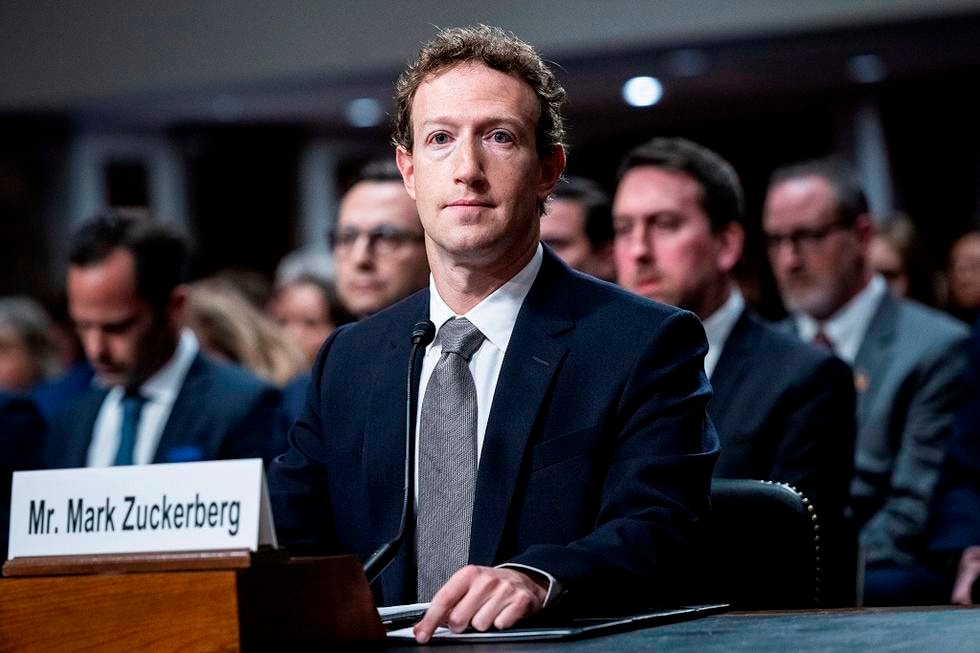
In April 2018, Zuckerberg was summoned to Washington, D.C., to testify before joint sessions of the United States Senate and House of Representatives. Facing hours of televised questioning from lawmakers regarding user privacy, political manipulation, algorithmic transparency, and monopolistic dominance, Zuckerberg took full personal responsibility for failing to prevent platform abuse. The scandal culminated in a historic $5 billion fine levied against Facebook by the U.S. Federal Trade Commission (FTC) in 2019 for privacy violations—the largest civil penalty ever imposed on a tech firm.
Subsequent years brought further systemic controversies, including allegations regarding Facebook’s role in facilitating foreign disinformation campaigns, algorithmic amplification of polarizing content, and internal whistleblower leaks—such as the 2021 Facebook Papers revealed by Frances Haugen—which suggested Meta prioritized engagement metrics over teenager mental health and public safety. In response, Zuckerberg completely overhauled Meta’s platform moderation infrastructure, investing tens of billions of dollars into artificial intelligence content filters, third-party fact-checking networks, and enhanced privacy controls, while maintaining his firm grip on company leadership and navigating the storm to achieve record corporate profitability.
6. Corporate Culture, Innovation Doctrine & Global Leadership
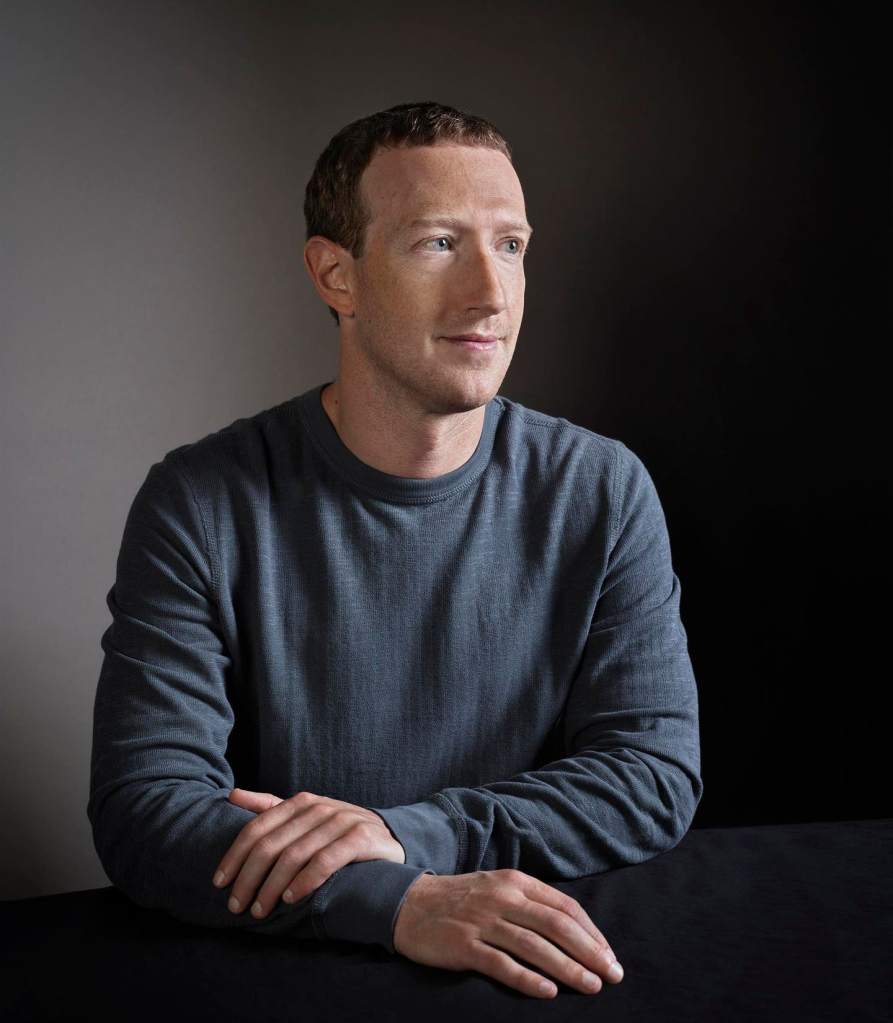
Mark Zuckerberg’s personal image has undergone a dramatic cultural evolution over two decades in the spotlight. In the early era of Facebook, he was famous for his ultra-minimalist, uniform aesthetic—wearing gray t-shirts, dark hoodies, and jeans daily to minimize decision fatigue. This sartorial simplicity became an iconic symbol of Silicon Valley startup culture, widely emulated by young tech entrepreneurs worldwide.
In recent years, however, Zuckerberg’s public style and social media presence have undergone a striking transformation. Embracing a more relaxed, modern look featuring tailored streetwear, gold chains, and longer curly hair, Zuckerberg has systematically humanized his public persona. His active Instagram profile showcases his personal life, from intense MMA training sessions and hydrofoiling tricks to family celebrations and humorous viral videos. His meme-worthy public moments—such as his surf outings wearing thick white zinc sunscreen or his viral backyard grilling videos—have made him an omnipresent figure in internet culture.
Across social media platforms, Zuckerberg commands immense influence, leveraging his personal accounts on Facebook and Instagram to directly unveil Meta’s strategic pivots, product features, and open-source models. His leadership decisions over the past two decades have fundamentally altered how global journalism operates, how political elections are contested, and how human relationships are maintained in the digital age.
7. Long-Term Bets, Global Initiatives & Next-Gen Innovations
As Meta Platforms advances through the late 2020s, Mark Zuckerberg remains focused on executing two colossal technological bets: artificial intelligence supremacy and the next generation of spatial computing hardware. Under his guidance, Meta is investing heavily in vast data center infrastructure and specialized hardware to train next-generation multimodal AI models. Zuckerberg envisions a future where personalized AI assistants actively assist every individual and business, seamlessly integrated across Meta’s software family.
Simultaneously, Zuckerberg continues to champion the hardware evolution of mixed reality. Through ongoing developments in Ray-Ban Meta smart glasses and light-weight holographic AR glasses, Zuckerberg aims to transition humanity away from smartphone screens and into immersive augmented reality interfaces. Backed by an unprecedented personal fortune and undisputed voting control over Meta Platforms, Mark Zuckerberg’s relentless pursuit of innovation ensures that he will remain one of the primary architects shaping the future of global technology for decades to come.
Mark Elliot Zuckerberg FAQs: Key Questions Answered
How old is Mark Zuckerberg?
Mark Zuckerberg was born on May 14, 1984, making him 42 years old.
Who is Mark Zuckerberg dating or married to?
Mark Zuckerberg is married to pediatrician and philanthropist Dr. Priscilla Chan. The couple met at Harvard University in 2003 and got married on May 19, 2012.
What is Mark Zuckerberg’s most famous work?
Mark Zuckerberg is world-famous for co-founding Facebook in 2004 out of his Harvard dorm room and leading its evolution into Meta Platforms, which oversees Facebook, Instagram, WhatsApp, Threads, and Quest VR.
What awards and recognitions has Mark Zuckerberg won?
Mark Zuckerberg was named Time Magazine’s Person of the Year in 2010, ranked among CEO of the Decade lists, and granted an honorary Doctor of Laws degree by Harvard University in 2017.


