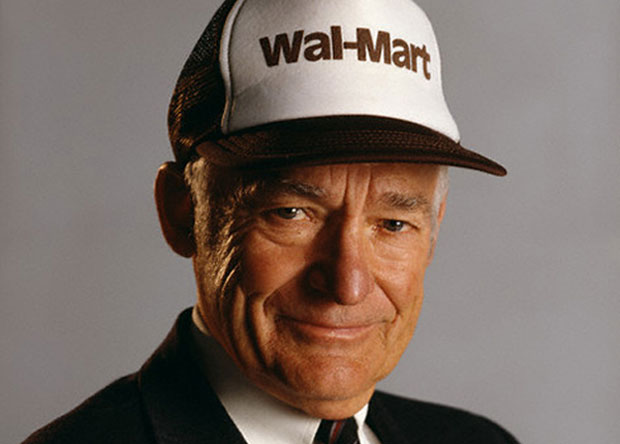
From Kingfisher to Mizzou ROTC: Samuel Moore Walton’s Great Depression Roots and Academic Foundations
Samuel Moore Walton was born on March 29, 1918, in the rural town of Kingfisher, Oklahoma, to Thomas Gibson Walton and Nancy Lee. Raised during the onset of the Great Depression, Walton experienced firsthand the economic strain that paralyzed rural America in the 1920s and 1930s. His father, a farm mortgage banker for the Walton Mortgage Company—an agent for Metropolitan Life Insurance—was tasked with foreclosing on struggling farms. Watching proud agricultural families lose their livelihoods instilled in young Sam an abiding empathy for small-town working families and an acute obsession with financial frugality, capital conservation, and pragmatic value.
To support his household, Walton entered the labor force at an early age. He milked the family cow, bottled the surplus milk, and drove it to local customers, while simultaneously running a paper route for the Columbia Daily Tribune and selling door-to-door magazine subscriptions. The family relocated frequently across Missouri, eventually settling in Columbia. At David H. Hickman High School, Walton emerged as a natural leader, serving as student council president and quarterbacking the high school football team to a state championship. His classmates voted him ‘Most Versatile Boy,’ recognizing an early blend of intense competitiveness and accessible charm.
In 1936, Walton enrolled at the University of Missouri, aiming to earn a Bachelor of Arts in Economics to secure a stable future for his family. Financing his education through various jobs—including waiting tables in exchange for meals and continuing paper routes—he became deeply active in campus leadership. Walton served as an ROTC cadet, was tapped by the prestigious QEBH senior honor society, served as president of the Burall Bible Class, and joined the Zeta Phi chapter of Beta Theta Pi. Upon graduating in 1940, his peers designated him ‘permanent president’ of the graduating class. The rigorous discipline of ROTC combined with his academic studies in microeconomics solidified his conviction that operational efficiency and volume turnover were the foundational engines of commercial success.

Military Intelligence Logistics and the $25,000 Ben Franklin Franchise Seed Capital in Newport
Upon graduating from university in 1940, Walton joined retail giant E. I. du Pont de Nemours and Company as a management trainee in Des Moines, Iowa. Though he showed early promise, he resigned in 1942 to prepare for military service during World War II. Walton joined the United States Army Military Intelligence Corps, supervising security at aircraft plants and prisoner-of-war camps across the home front, reaching the rank of Captain. His military service honed his expertise in logistics, security protocols, and high-volume organizational mechanics.
In 1945, using $5,000 of his own savings and a $20,000 loan from his father-in-law, Walton acquired a Ben Franklin variety store franchise in Newport, Arkansas. The store was part of the Butler Brothers chain, but Walton immediately broke away from standard franchise directives. He sought out independent wholesalers, negotiated bulk volume discounts, and passed the savings directly to consumers through low-margin pricing. By lowering profit margins from the traditional 40% down to 20% or 25%, he quadrupled sales volume. Within three years, Walton grew the Newport store’s revenue from $80,000 to over $225,000 annually, turning it into the top Ben Franklin franchise in his six-state region.
However, Walton suffered a catastrophic setback due to early transactional naivety. His initial lease agreement lacked a right-of-renewal option. Seeing the store’s massive profitability, the landlord refused to renew the lease in 1950, intending to reclaim the physical location for his own son. Walton was forced to sell the store’s inventory and fixtures at a steep discount, relinquishing the thriving business he had built from scratch. Rather than accepting defeat, Walton viewed the loss as a crucial lesson in corporate real estate control and asset security. Moving to Bentonville, Arkansas, he purchased a small store on the town square, opening ‘Walton’s 5&10’ in July 1950. He systematically acquired additional variety stores across Arkansas, Kansas, and Missouri, forging a regional chain of Ben Franklin outlets while meticulously refining his low-cost, high-volume retail doctrine.
The Birth of Walmart: How Samuel Moore Walton Engineered Rural Discount Retail Dominance
By the early 1960s, Walton recognized a structural shift in American commerce: suburban consumers were increasingly gravitated toward massive discount stores. However, major discount chains like Gibson’s, Kmart, and Woolco focused exclusively on dense metropolitan markets, dismissing small rural towns as financially unviable. Walton postulated that if he offered prices as low as city stores in towns with populations under 10,000, local consumers would abandon traditional mom-and-pop outlets and shop locally.
On July 2, 1962, Sam Walton, alongside his brother James ‘Bud’ Walton, opened the very first Walmart store—initially designated ‘Wal-Mart Discount City’—in Rogers, Arkansas. The business model relied on extreme volume turnover, aggressive price-cutting, and strict overhead control. When traditional franchisors refused to back his vision for small-town discount mega-stores, Walton funded the expansion by taking on massive personal debt and syndicating store ownership with trusted store managers.

Low-Margin, High-Volume Logistics: Samuel Moore Walton’s Operational Architecture
Walmart’s expansion throughout the late 1960s and 1970s was driven by innovative logistics infrastructure. Rather than relying on third-party distributors, Walton established regional distribution centers serving stores within a one-day drive radius. This spoke-and-hub model minimized transportation costs and guaranteed reliable inventory control. To accelerate corporate growth, Wal-Mart Stores, Inc. completed its Initial Public Offering (IPO) on October 1, 1970, listing on the New York Stock Exchange under the ticker symbol WMT. The capital raised enabled Walton to pay off lingering debts and aggressively construct new distribution networks across the sunbelt and Midwest.
Walton was an early pioneer of technological innovation in logistics. In 1983, Walmart partnered with M/A-COM to build a private, company-wide satellite communications network costing $24 million—the largest private satellite system in the United States at the time. This network linked every individual store directly to Bentonville headquarters, granting real-time data tracking for inventory levels, sales velocity, and point-of-sale transactions. Walton pioneered the universal implementation of Universal Product Code (UPC) barcode scanners, enabling automated reordering and operational cost reductions that legacy competitors could not match.

Launching Sam's Club and Scaling Walton's Supply Chain into Global Markets
Recognizing the untapped potential of wholesale club operations, Walton founded Sam’s Club in Midwest City, Oklahoma, in 1983. Designed to serve small business owners and bulk retail consumers, Sam’s Club operated on a low-fee membership subscription model, creating a high-margin recurring cash flow stream that fueled further corporate expansion. Under Walton’s leadership, Walmart executed key strategic acquisitions, buying out competing chains such as Mohr Value, Big K, and Super Saver Warehouse Club to consolidate market dominance.
In 1988, Walton introduced the Supercenter concept—massive retail facilities combining traditional general merchandise with full-service grocery stores under one roof. By integrating grocery distribution, Walmart achieved unprecedented consumer visit frequency. By the time Walton stepped down as CEO in 1988 (retaining his seat as Chairman of the Board), Walmart had evolved from a regional network of Arkansas variety shops into the undisputed titan of American retail, eclipsing Sears, Roebuck & Co. as the nation’s largest retailer by 1990.
Satellites and Supercenters: Samuel Moore Walton’s Technological Infrastructure
Following Sam Walton’s passing in April 1992, the executive framework he engineered continued its rapid domestic and international expansion. Walmart entered global markets including Mexico, Canada, the United Kingdom, Japan, and China. The company transformed its supply chain into an international network, pioneering automated cross-docking distribution systems where incoming vendor trucks offload goods directly onto outbound delivery vehicles with zero warehouse storage overhead.
Today, Walmart stands as the world’s largest public corporation by annual revenue, exceeding $700 billion annually and employing over 2.1 million associates worldwide. Operating more than 10,500 retail units across dozens of countries, the company remains a dominant force in global commerce, successfully expanding into e-commerce, digital advertising, financial services, and automated fulfillment networks—all anchored by the core low-cost logistics blueprint drafted by Sam Walton six decades prior.
Bentonville Roots: Samuel Moore Walton’s Family Legacy, Flight Routine, and Wealth Preservation
At the peak of his career in the late 1980s and early 1990s, Sam Walton consistently ranked as the single wealthiest individual in the United States according to Forbes magazine. Adjusting for modern economic standards and inflation, Walton’s peak personal fortune equates to upwards of $100 billion in contemporary purchasing power. However, Walton rarely held wealth as liquid capital or speculative instruments; virtually his entire financial net worth was concentrated in equity shares of Wal-Mart Stores, Inc.
Walton’s enduring fortune was shielded from extreme corporate taxation through sophisticated estate planning structures executed early in his career. In 1954, long before Walmart went public or attained billion-dollar valuations, Walton established Walton Enterprises, an umbrella holding company. He distributed 80% of the holding company’s shares equally among his four children—Rob, John, Jim, and Alice—retaining a 20% stake for himself and his wife, Helen. Consequently, as Walmart expanded into a trillion-dollar corporate giant, the resulting equity accumulation was distributed across the family trust, preventing catastrophic inheritance tax liquidations upon his death.

Today, the Walton family stands as the wealthiest family empire on Earth, possessing a collective net worth exceeding $520 billion. The family maintains control over approximately 45% of Walmart’s outstanding common stock through Walton Enterprises LLC and the Walton Family Holdings Trust. Additionally, family members hold substantial equity across Arvest Bank—a financial institution primarily owned by the Walton family operating across Arkansas, Oklahoma, Missouri, and Kansas—alongside vast commercial real estate portfolios, utility investments, and elite sports franchises, including the Denver Broncos acquired by Rob Walton’s investment group.
Navigating Executive Governance: Samuel Moore Walton’s Boardroom Battles and Shareholder Strategies
Sam Walton’s managerial doctrine redefined modern corporate leadership. Eschewing executive detachment, Walton managed from the field. He flew his personal light aircraft (a twin-engine Cessna) directly to regional store locations, landing on unpaved rural airstrips to conduct unannounced, detailed store inspections. He spent hours walking retail aisles, conversing with frontline store clerks—whom he officially designated as ‘associates’—and interrogating line workers about product movement, inventory blockages, and customer complaints.
Walton operated under 10 core corporate rules, published in his autobiography Made in America. Central to his philosophy was the relentless pursuit of cost efficiency coupled with total transparency. He implemented an open-door policy across all corporate levels, instituted employee profit-sharing plans, and gave store managers partial equity stakes in new store openings, fostering an ownership mindset among frontline personnel. Walton was famous for his personal frugality, driving an old 1979 Ford F-150 pickup truck, flying coach class, and staying in budget motels even while occupying the status of America’s richest man.
A key element of Walton’s management style was his operational humility regarding competitor analysis. He routinely visited rival stores—including Kmart, Target, and regional operators—carrying a pocket tape recorder to document store layouts, pricing structures, and merchandising innovations. If a competitor executed a specific display or stocking method better than Walmart, Walton immediately integrated the technique across his entire store network within days. This relentless adaptability ensured Walmart remained agile despite scaling to massive corporate dimensions.
5. Boardroom Conflicts, Shareholder Debates & Executive Resilience
The Main Street Debate: Samuel Moore Walton Facing Antitrust and Local Economic Displacement
As Walmart scaled rapidly through the 1980s and 1990s, its expansion provoked intense public backlashes across rural and suburban America. Critics coined the term ‘The Walmart Effect’ to describe the macroeconomic displacement triggered when a Walmart Supercenter opened on the outskirts of a small municipality. Leveraging unmatched purchasing power, Walmart purchased goods directly from manufacturers at volume discounts unavailable to local merchants, pricing items below local cost thresholds. This led to widespread closures of historic downtown commercial districts, sparking organized community opposition, zoning battles, and municipal anti-big-box ordinances designed to block Walmart store construction.
Antitrust regulators and small business coalitions accused Walmart of predatory pricing practices under the Robinson-Patman Act. Independent retailers alleged that Walmart deliberately sustained localized operating losses to bankrupt regional competitors before raising prices once local monopolies were secured. Walton vehemently defended his practices, arguing that lower consumer prices represented pure economic efficiency, effectively giving working-class families an immediate raise in real purchasing power. Though Walmart faced numerous state and federal inquiries, the judiciary consistently ruled that aggressive price competition benefitted the end consumer, establishing legal precedents that shielded big-box logistics models from federal antitrust dissolution.
Organized Labor Friction and Walmart’s Non-Union Workforce Policies Under Samuel Moore Walton
Throughout his tenure, Sam Walton maintained an uncompromising anti-union stance. He believed third-party organized labor created adversarial barriers between executive leadership and frontline associates. To counter unionization attempts by organizations such as the United Food and Commercial Workers (UFCW), Walton created an aggressive corporate labor-defense protocol. Headquarters deployed specialized ‘rapid response’ labor relations teams via private jet to any store where union organizing activity was detected. These executives conducted mandatory employee meetings, emphasizing profit-sharing benefits while warning of potential store closures if unionization succeeded.

Critics, labor activists, and regulatory bodies targeted Walmart’s labor practices, alleging systemic wage suppression, insufficient employee healthcare coverage, and strict overtime regulations that forced associates to work off the clock. The company faced federal scrutiny over worker classification and labor standards. Walton defended his compensation model by asserting that profit-sharing bonuses, store equity programs, and rapid internal promotion tracks provided greater long-term economic mobility than fixed union unionized wage structures. Nevertheless, labor disputes and public relations battles regarding associate pay structures remained one of the most enduring brand challenges in corporate history.
The Walton Family Foundation and Samuel Moore Walton’s Enduring Capital Endowment
Sam Walton believed that corporate success carried an obligation to improve local communities, though his philanthropic philosophy initially focused heavily on localized economic development rather than high-profile institutional donations. In 1987, Sam and Helen Walton formally established the Walton Family Foundation, a philanthropic vehicle designed to fund systemic initiatives in K-12 education reform, environmental conservation, and regional economic revitalization across the Mississippi Delta and Ozark regions.
The foundation became one of the largest philanthropic trusts in the United States, placing particular emphasis on public charter school expansion, educational choice programs, and higher education endowments. The family made unprecedented financial commitments to the University of Missouri and the University of Arkansas, donating $300 million to the University of Arkansas in 2002 to establish the Sam M. Walton College of Business and fund undergraduate research initiatives.
Beyond education, Walton directed corporate initiatives toward domestic manufacturing support. In the mid-1980s, he launched the ‘Bring It Home to the USA’ program, offering long-term supply contracts to American manufacturers who could produce goods at price points competitive with overseas factories. Though global trade pressures later shifted manufacturing footprints, Walton’s early emphasis on domestic sourcing highlighted his commitment to rural American employment bases.
4. Personal Life, Family Heritage & Private Wealth Foundations
On February 14, 1943, Sam Walton married Helen Robson, a graduate of the University of Oklahoma with a degree in business. Helen was a formidable partner whose financial acumen and insistence on living in a modest small town profoundly shaped Walton’s career choices; it was Helen who insisted they reside in a town with a population under 10,000, prompting their move to Bentonville. The couple had four children: Samuel Robson ‘Rob’ Walton (born 1944), John Thomas Walton (1946–2005), James Carr ‘Jim’ Walton (born 1948), and Alice Louise Walton (born 1949).
Despite his staggering personal wealth, Walton maintained an extraordinarily unpretentious, outdoors-oriented lifestyle. An avid bird hunter, he spent his personal leisure time trekking through rural fields with his beloved English pointers, Ol’ Roy (after whom Walmart’s private-label dog food brand was named) and Roy Jr. He eschewed private security details, drove himself around Bentonville, bought his clothes off the rack at Walmart stores, and frequented local diners.
In his final years, Walton battled multiple myeloma, a rare form of bone marrow cancer. On March 17, 1992, President George H. W. Bush visited Walton in Bentonville to present him with the Presidential Medal of Freedom—the highest civilian honor in the United States—recognizing his entrepreneurial spirit and contributions to the American economy. Less than three weeks later, on April 5, 1992, Sam Walton passed away at the University of Arkansas for Medical Sciences hospital in Little Rock at the age of 74. He was buried at Bentonville Cemetery, leaving behind a global business titan that forever transformed retail commerce.
Samuel Moore Walton FAQs: Key Questions Answered
What was Sam Walton’s net worth at the time of his death?
At the time of his passing in 1992, Sam Walton’s personal net worth was estimated at over $21 billion (equivalent to upwards of $100 billion today adjusted for inflation). However, because he had restructured his business holdings into Walton Enterprises in 1954, the vast majority of his wealth was shared equally across trusts held by his wife and four children, preventing catastrophic estate tax liquidations.
What companies did Sam Walton found?
Sam Walton founded Walmart (originally Wal-Mart Discount City) in Rogers, Arkansas, in 1962, and Sam’s Club in Midwest City, Oklahoma, in 1983. He also operated numerous franchised Ben Franklin variety stores and Walton’s 5&10 early in his career.
Where did Sam Walton attend college?
Sam Walton attended the University of Missouri, where he joined the ROTC, served as class president, and graduated in 1940 with a Bachelor of Arts degree in Economics.
How large is the Walton family net worth today?
As of 2026, the combined net worth of the Walton family heirs exceeds $520 billion, solidifying their standing as the single wealthiest family empire in the world, primarily driven by their collective 45% equity holding in Walmart Inc.