
1. Youth, Ivy League Roots & The Making of an Executive
William Henry Gates III was born on October 28, 1955, in Seattle, Washington, into an upper-middle-class family with a rich lineage of civic involvement and enterprise. His father, William H. Gates Sr., was a prominent attorney, while his mother, Mary Maxwell Gates, served on the board of directors for First Interstate BancSystem and the United Way. From an early age, Gates displayed a ferocious competitive drive, an insatiable curiosity for reading, and a profound affinity for analytical thinking. Recognizing his extraordinary intellectual energy, his parents enrolled him at Lakeside School, an elite private preparatory academy in Seattle, when he was thirteen years old.
It was at Lakeside where Gates experienced the defining pivot of his early youth. In 1968, the school’s Mothers Club used proceeds from a jumble sale to purchase teletype terminal time on a General Electric computer. Gates was instantly captivated by the machine, teaching himself BASIC programming. Alongside fellow students Paul Allen, Ric Weiland, and Kent Evans, Gates formed the Lakeside Programmers Group. The teenagers spent endless hours exploiting bugs in local mainframe systems to gain free computing time. When the Computer Center Corporation banned them for taking advantage of software glitches, the boys negotiated a deal to debug the company’s software in exchange for extra computer access.
During his high school years, Gates translated his technical obsession into real-world software ventures. At age 15, he and Paul Allen created Traf-O-Data, a rudimentary traffic-monitoring system built on an Intel 8008 processor that processed raw traffic counter data for municipality usage. The venture netted $20,000 and established their early commercial blueprint. By the time Gates graduated from Lakeside in 1973 as a National Merit Scholar with a near-perfect SAT score of 1590 out of 1600, his identity as a software prodigy was firmly cemented.
In the autumn of 1973, Gates matriculated at Harvard University, initially enrolling as a pre-law major to satisfy his father’s expectations. However, his focus remained consumed by computer science and advanced mathematics. At Harvard, Gates solved a famous open problem in theoretical computer science regarding pancake sorting, co-authoring a seminal paper with computer scientist Christos Papadimitriou. Yet academic routine could not compete with the burgeoning microcomputer revolution taking place outside the classroom walls.

2. The Startup Breakthrough: Early Capital & Disruptive Visions
The catalytic spark for Gates’s global journey occurred in December 1974, when Paul Allen showed him the January 1975 issue of Popular Electronics featuring the Altair 8800 microcomputer. Developed by Micro Instrumentation and Telemetry Systems (MITS) in Albuquerque, New Mexico, the Altair was the world’s first commercially viable minicomputer kit. Gates and Allen immediately recognized that the hardware would remain useless without software to run on it, specifically an accessible programming language interpreter.
Gates contacted MITS founder Ed Roberts, boldly claiming that he and Allen had developed an operational BASIC interpreter for the Altair chip. In reality, they had not written a single line of code for the system. Over the next eight weeks, working frantically out of Harvard’s Aiken Computer Center, Gates and Allen wrote an emulator for the Altair’s Intel 8080 chip on a PDP-10 computer and developed the BASIC interpreter. When Allen flew to Albuquerque to demonstrate the software to MITS, it ran flawlessly on the first attempt—a monumental achievement given that neither had ever operated a physical Altair system prior to that morning.
MITS contracted with the duo to distribute Altair BASIC. Realizing that the personal computing revolution was accelerating at an unstoppable rate, Gates made the fateful decision to take an official leave of absence from Harvard in 1975, never to return. He moved to New Mexico alongside Allen and registered the partnership name ‘Micro-Soft’ in November 1976. Operating out of modest offices in Albuquerque, Gates served as the business mastermind and lead architect, overseeing software design while relentlessly negotiating licensing terms with early hardware manufacturers across the globe.

3. High-Stakes Corporate Milestones & Industry Disruption
3.1. Strategic Milestones & Technological Innovation
The ultimate turning point that transformed Microsoft from a specialized programming tools company into a global colossus occurred in late 1980. International Business Machines (IBM), then the undisputed titan of mainframe computing, sought an operating system for its secret project: the IBM Personal Computer (PC). After initial negotiations between IBM and Digital Research broke down, IBM approached Gates. Recognizing the magnitude of the opportunity, Gates pivoted swiftly, licensing an operating system called 86-DOS from Seattle Computer Products for $50,000.
Gates adapted the system into MS-DOS (Microsoft Disk Operating System) and executed what is widely considered the single most lucrative licensing agreement in technology history. Rather than selling MS-DOS to IBM outright, Gates insisted on retaining the copyright and non-exclusive licensing rights, allowing Microsoft to sell MS-DOS to other hardware vendors. When IBM released its PC in 1981, other hardware manufacturers raced to build IBM-compatible ‘clones.’ Because every clone required MS-DOS, Microsoft achieved an overwhelming, self-reinforcing monopoly over personal computer operating systems practically overnight.
By 1986, Microsoft relocated its headquarters to a massive corporate campus in Redmond, Washington, and went public on March 13, 1986, at $21 per share. The stock soared immediately, raising $61 million and making Gates an instant multi-millionaire at age 30. Within months, as the stock price compounded exponentially, Gates became the youngest self-made billionaire in history at the time. Microsoft expanded its dominant software ecosystem with the launch of Microsoft Office in 1989, unifying Word, Excel, and PowerPoint into an inescapable business productivity suite.

3.2. Strategic Acquisitions & Multi-Billion Dollar Transactions
The pinnacle of Gates’s corporate reign arrived on August 24, 1995, with the historic global launch of Windows 95. Supported by a unprecedented $300 million marketing campaign featuring the Rolling Stones’ song ‘Start Me Up,’ Windows 95 integrated a graphical user interface directly with MS-DOS, introducing universal staples such as the Start Button, Taskbar, and long file names. The launch sparked global frenzy, with consumers queuing around block corners at midnight to buy copies. Windows 95 sold seven million copies in its first five weeks alone, consolidating Microsoft’s operating systems across more than 90% of the world’s personal computers.
As the Internet expanded dramatically in the mid-1990s, Gates recognized that Microsoft had initially lagged behind web browser pioneers like Netscape. In May 1995, he issued his famous internal memo, ‘The Internet Tidal Wave,’ instructing every engineering division to pivot toward web connectivity. Microsoft bundled its Internet Explorer browser directly into Windows, igniting the fierce ‘Browser Wars.’ By leveraging its operating system dominance, Microsoft dramatically erased Netscape’s market share, cementing Gates’s status as an unbeatable corporate strategist who controlled the gateway to the digital world.
Under Gates’s stewardship as CEO and Chief Software Architect, Microsoft grew into the most valuable corporation on Earth during the late 1990s. In 1999, at the height of the dot-com boom, Gates’s personal fortune briefly surpassed $100 billion, establishing him as the world’s undisputed wealthiest individual—a title he held on the Forbes list for 13 consecutive years from 1995 to 2007, and 18 years overall.

3.3. Corporate Evolution & Current Market Standing
Beyond operating systems, Gates oversaw pivotal evolutionary shifts that reshaped consumer entertainment and digital infrastructure. Realizing the potential of home interactive entertainment, Gates spearheaded Microsoft’s entry into the video game console industry, launching the original Xbox in November 2001. The move successfully broke Japan’s long-standing dominance in global gaming hardware and laid the groundwork for Xbox Live, pioneering modern online multiplayer ecosystems.
In January 2000, Gates stepped down as Chief Executive Officer of Microsoft, passing the executive reigns to long-time friend Steve Ballmer while assuming the specialized title of Chief Software Architect. Over the subsequent decade, Gates systematically phased out his daily operational responsibilities at Microsoft to focus entirely on global philanthropy. He relinquished his full-time executive duties in June 2008 and ultimately stepped down as Chairman of the Board in February 2014, remaining a technology advisor to CEO Satya Nadella before resigning his board seat entirely in March 2020.
Gates’s legacy as a tech icon has been recognized with the world’s most prestigious honors. In 2005, he was made an Honorary Knight Commander of the Order of the British Empire (KBE) by Queen Elizabeth II for his services to global philanthropy and IT innovation. In 2015, alongside Melinda French Gates, he received the Padma Bhushan, India’s third-highest civilian award, followed by the Presidential Medal of Freedom awarded by President Barack Obama in 2016.
4. Personal Life, Family Heritage & Private Wealth Foundations
Bill Gates’s personal life has remained a subject of intense public fascination for decades. In 1987, at a Microsoft trade fair dinner in New York, Gates met Melinda French, a brilliant product manager at Microsoft who held an MBA from Duke University. Their romance blossomed over several years, culminating in a lavish, private wedding on January 1, 1994, on the Hawaiian island of Lanai. To protect their privacy, Gates rented out all available hotel rooms and chartered every helicopter on the island to prevent paparazzi intrusion.
The couple raised three children together: Jennifer Katharine Gates (born 1996), Rory John Gates (born 1999), and Phoebe Adele Gates (born 2002). The family resided in ‘Xanadu 2.0,’ a legendary 66,000-square-foot earth-sheltered mansion in Medina, Washington, overlooking Lake Washington. Valued at over $130 million, the home became famous for its cutting-edge technological integration, featuring automated climate and lighting sensors worn by guests, an underground garage accommodating 23 cars, a 60-foot swimming pool with an underwater music system, and a magnificent private library holding Leonardo da Vinci’s Codex Leicester, which Gates bought at auction in 1994 for $30.8 million.

After 27 years of marriage, Bill and Melinda Gates shocked the world in May 2021 by announcing their decision to divorce, stating they no longer believed they could grow together as a couple in the next phase of their lives. The high-profile divorce, finalized in August 2021, involved complex financial negotiations dividing billions in assets while maintaining their joint commitments to their charitable foundation. In 2023, Gates began a high-profile relationship with Paula Hurd, the widow of late Oracle CEO Mark Hurd. The couple has since made public appearances together at global tennis championships, high-society gatherings, and international gala events.
5. Boardroom Conflicts, Shareholder Debates & Executive Resilience
5.1. United States v. Microsoft Corp: William Henry Gates III Faced Federal Antitrust Monopolization Charges
The defining corporate crisis of Bill Gates’s career erupted in May 1998, when the United States Department of Justice (DOJ), alongside 20 state attorneys general, filed a landmark antitrust lawsuit against Microsoft (United States v. Microsoft Corp.). The federal government accused Microsoft of abusing its desktop operating system monopoly to crush competition, specifically alleging that bundling Internet Explorer into Windows violated the Sherman Antitrust Act by crippling rival web browser Netscape Navigator.
The trial exposed Gates to unprecedented public scrutiny. During his videotaped deposition in August 1998, Gates appeared combative, evasive, and dismissive of government prosecutors, offering pedantic definitions of words like ‘compete’ and ‘ask.’ His deposition performance severely damaged Microsoft’s public image. In November 1999, District Judge Thomas Penfield Jackson issued findings of fact determining that Microsoft possessed monopoly power and used it to suppress competition. In June 2000, the court ordered the ultimate penalty: the breakup of Microsoft into two separate corporate entities—one producing operating systems and the other focused on software applications.
Microsoft aggressively appealed the decision, and in June 2001, the D.C. Circuit Court of Appeals overturned Judge Jackson’s breakup order, citing judicial misconduct and improper public comments made by the judge. Microsoft eventually settled with the DOJ in November 2001, agreeing to share its application programming interfaces (APIs) with third-party developers and submit to independent compliance monitoring. Though Microsoft survived intact, the legal siege heavily drained Gates’s executive energy and directly prompted his decision to step down as CEO in 2000.
5.2. Microsoft Board Resignation and Divorce Settlement: William Henry Gates III Restructured Personal Capital
In the years following his divorce announcement in 2021, Gates faced intense media scrutiny regarding his personal conduct and past professional relationships. Reports surfaced detailing an investigation conducted by Microsoft’s board of directors in 2019 concerning an extra-marital relationship Gates had with a company employee in the year 2000. Gates’s spokesperson acknowledged that an affair had occurred over two decades prior but maintained that it ended amicably and had no bearing on his 2020 decision to exit the board.
Additionally, media reports highlighted past meetings between Gates and disgraced financier Jeffrey Epstein. Gates publicly expressed deep regret over those interactions, clarifying in multiple interviews that he met with Epstein solely in pursuit of securing philanthropic funding for global public health projects—a initiative that ultimately yielded no results. Gates acknowledged that agreeing to those meetings was a major error in judgment.
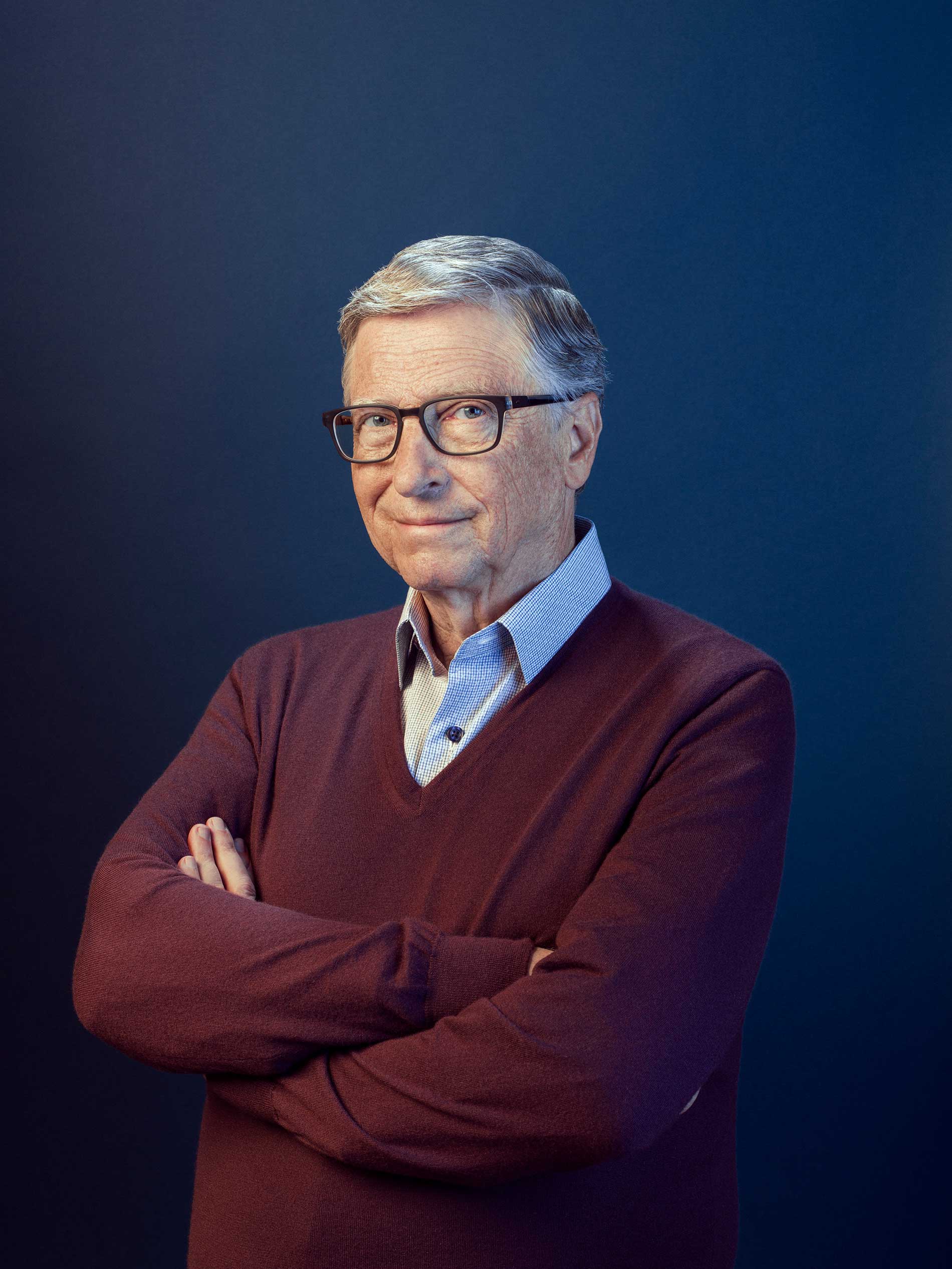
Despite these media storms, Gates focused his energy on institutional stability. In the wake of the divorce settlement, Melinda French Gates formally stepped down from her co-chair position at the Gates Foundation in May 2024 to pursue independent philanthropic ventures. Gates assumed sole leadership of the foundation, implementing structural governance reforms, expanding the board of trustees, and pledging to direct 99% of his remaining wealth to the foundation over the next two decades, ensuring his philanthropic legacy remains firmly protected against personal controversies.
6. Leadership Framework, Operational Ethos & Industry Stature
Bill Gates’s personal style and public image have undergone a striking cultural transformation. During the 1980s and 1990s, Gates was viewed as the quintessential ultra-intense tech mogul—famous for wearing oversized glasses, casual sweater vests, and rocking back and forth intensely during technical briefings. As he transitioned from tech executive to global philanthropist, his aesthetic evolved into an approachable, intellectual grandfatherly style characterized by tailored sweaters, button-down shirts, and relaxed casual wear.
In the digital age, Gates has established a massive digital footprint across social media channels, utilizing his platform to educate the public on global health, renewable energy, and climate science. Through his personal blog, Gates Notes, his active YouTube channel, and millions of followers across X (formerly Twitter) and Instagram, Gates regularly publishes book recommendations, interviews with scientific pioneers, and deep-dive essays on artificial intelligence and disease eradication. His biannual reading lists have become major cultural events in the publishing industry, capable of propelling obscure non-fiction titles onto global bestseller lists overnight.
7. Capital Deployment, Philanthropy & Strategic Horizons
Today, Gates operates at the intersection of global health, clean energy innovation, and advanced artificial intelligence. Through the Bill & Melinda Gates Foundation—which holds an endowment exceeding $70 billion—Gates remains intensely focused on eradicating infectious diseases such as polio, malaria, and measles worldwide. He has committed tens of billions toward vaccine development, sanitation infrastructure in developing nations, and agricultural resilience in low-income regions facing severe climate disruption.
In the private sector, Gates leads TerraPower, a nuclear energy design company he founded in 2006 to build advanced, zero-emission sodium-cooled fast reactors. Breakthrough Energy, another initiative launched by Gates, directs venture capital investments toward zero-carbon technologies across manufacturing, electricity, and agriculture. Furthermore, Gates remains deeply involved in the evolution of artificial intelligence, serving as an advisor to top research labs and advocating for AI’s deployment in accelerating medical discoveries and personalized education in underfunded regions.
8. William Henry Gates III FAQs: Key Questions Answered
How old is Bill Gates?
Bill Gates was born on October 28, 1955, making him 70 years old.
Who is Bill Gates dating or married to?
Bill Gates was married to Melinda French Gates from 1994 until their divorce was finalized in August 2021. He is currently in a relationship with Paula Hurd.
What is Bill Gates’s most famous work?
Bill Gates is most famous for co-founding Microsoft Corporation and architecting the MS-DOS and Windows operating systems, which revolutionized personal computing globally.
What awards has Bill Gates won?
Gates has received numerous prestigious awards, including an Honorary Knighthood (KBE) from Queen Elizabeth II, the Presidential Medal of Freedom, and India’s Padma Bhushan award for his global philanthropic work.


