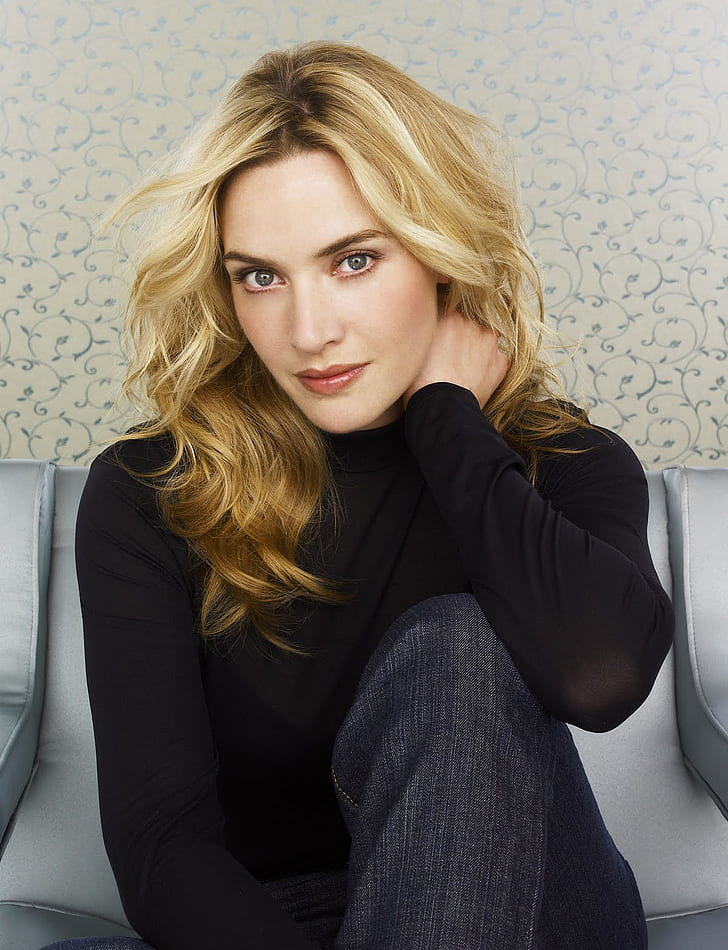
: “
1. Early Life, Formative Theatre & Acting Roots
Kate Elizabeth Winslet was born on October 5, 1975, in Reading, Berkshire, England, into a family steeped in the traditions of theatrical performance. Her father, Roger John Winslet, worked primarily as a swimming pool contractor while maintaining an acting career, and her mother, Sally Ann Winslet (née Bridges), balanced work as a barmaid and waitress with her artistic pursuits. Performance ran deep in her lineage; her maternal grandparents, Oliver and Linda Bridges, founded and managed the Reading Repertory Theatre, and her uncle, Robert Bridges, was a prominent actor in London’s West End. Raised alongside three siblings—sisters Anna and Beth, both of whom pursued acting, and brother Joss—Winslet grew up in an environment where artistic expression was encouraged despite financial hardship. The family relied on community support and charitable assistance during lean periods, a background that grounded Winslet in a work ethic characterized by modesty and determination.
Winslet’s immersion in the performing arts began exceptionally early. She attended St Mary and All Saints’ Church of England Primary School, where she eagerly participated in school dramatic productions. Recognizing her burgeoning talent and fierce passion, her parents enrolled her at the Redroofs Theatre School in Maidenhead when she was just eleven years old. Redroofs functioned as both a academic institution and a agency, allowing young students to secure professional work. Winslet made her screen debut at age eleven, starring in a television commercial for Sugar Puffs cereal, directed by Tim Pope. During her adolescent years at Redroofs, she performed in over twenty stage productions, taking on roles such as Miss Agatha Hannigan in Annie, Pandemonium in The Lion, the Witch and the Wardrobe, and Wendy Darling in Peter Pan. Her formal education at Redroofs provided her with a rigorous foundation in classical technique, vocal control, and dramatic improvisation, setting the stage for her transition into adult dramatic roles.

2. Stepping in Front of the Camera: Early Roles & Festival Acclaim
Winslet’s professional television debut arrived in 1991 when she was cast in the BBC science fiction series Dark Season. This was quickly followed by appearances in the television movie Anglo-Saxon Attitudes (1992) and an episode of the medical drama Casualty (1993). However, her cinematic breakthrough came in 1994 when New Zealand filmmaker Peter Jackson selected her from among 175 young actresses to star in the psychological drama Heavenly Creatures. Cast as Juliet Hulme, an intense, highly imaginative teenager who collaborates with her best friend (played by Melanie Lynskey) to murder her mother, Winslet delivered a haunting, extraordinarily mature performance. The film premiered to unanimous critical acclaim at the Venice Film Festival, instantly establishing the eighteen-year-old British actress as a prodigy capable of complex emotional depth.
Building on this momentum, Winslet auditioned for Ang Lee’s 1995 feature film adaptation of Jane Austen’s Sense and Sensibility. Initially considered for a minor supporting role, Winslet’s passionate audition convinced Lee and screenwriter Emma Thompson to cast her as the romantic, impulsive Marianne Dashwood. Starring alongside Thompson, Alan Rickman, and Hugh Grant, Winslet brought a breathtaking vulnerability and fiery spirit to the screen. The film was a critical and commercial triumph, grossing over $134 million worldwide. For her portrayal, the twenty-year-old Winslet received the BAFTA Award for Best Supporting Actress and earned her first Academy Award nomination, announcing her arrival as a powerhouse of dramatic cinema.
3. Iconic Filmography, Box Office Smashes & Award-Winning Roles
3.1. Landmark Film Roles & Critical Masterpieces
Following her success in period drama, Winslet consolidated her reputation as a versatile period heroine in Michael Winterbottom’s dark literary adaptation Jude (1996) and Kenneth Branagh’s epic four-hour production of Hamlet (1996), where she portrayed a tragic, emotionally shattered Ophelia. Critics praised her ability to tackle classical text with naturalistic fervor. Yet, it was her next project that would fundamentally transform her life and career trajectories, elevating her from an acclaimed art-house performer to a global icon.
In 1996, director James Cameron began casting for his legendary, high-budget epic Titanic (1997). Winslet pursued the role of Rose DeWitt Bukater with relentless intensity, repeatedly calling Cameron and writing him letters signed “From your Rose.” Her conviction won her the part opposite Leonardo DiCaprio. The production was famously grueling, involving months of filming in massive water tanks in Rosarito, Mexico, cold temperatures, and demanding physical stunts. Upon its release in December 1997, Titanic became a cultural phenomenon, breaking every box office record to become the highest-grossing film of all time up to that point, surpassing $1.8 billion globally. Winslet’s passionate, rebellious performance earned her a second Academy Award nomination—this time for Best Actress—making her, at age 22, the youngest person ever to receive two Oscar nominations.

3.2. Global Cinema Impact & Renowned Collaborations
Rather than leveraging her post-Titanic mega-fame to pursue lucrative studio blockbusters, Winslet deliberately retreated to independent, character-driven cinema. She turned down lead roles in major studio films like Shakespeare in Love and Anna and the King to star in Gillies MacKinnon’s low-budget indie Hideous Kinky (1998), playing a young mother seeking spiritual enlightenment in 1970s Morocco. She followed this with Jane Campion’s unconventional drama Holy Smoke! (1999), demonstrating a willingness to take radical, unglamorous artistic risks.
The 2000s marked an unprecedented period of artistic brilliance for Winslet. In 2001, she starred alongside Dame Judi Dench in Iris, portraying the young novelist Iris Murdoch, a role that earned Winslet her third Academy Award nomination. In 2004, she delivered one of the defining performances of modern cinema in Michel Gondry’s surreal romantic drama Eternal Sunshine of the Spotless Mind. Playing Clementine Kruczynski, an eccentric, free-spirited woman with ever-changing hair colors who undergoes a procedure to erase her ex-boyfriend (Jim Carrey) from her memory, Winslet shattered her period-drama archetype. The role brought her a fourth Oscar nomination. Just two years later, she secured her fifth Oscar nomination for her haunting performance as Sarah Pierce, an unhappily married suburban mother in Todd Field’s Little Children (2006).

3.3. Directorial Vision & Enduring Cinematic Stature
Winslet’s peak career epoch culminated in 2008 with two monumental performances. She reunited with Leonardo DiCaprio in Sam Mendes’s Revolutionary Road, delivering a devastating portrayal of April Wheeler, a 1950s housewife suffocated by suburban conformity. Simultaneously, she starred in Stephen Daldry’s adaptation of Bernhard Schlink’s novel The Reader, playing Hanna Schmitz, a former Nazi concentration camp guard who engages in an affair with a teenage boy. At the 66th Golden Globe Awards, Winslet achieved the rare feat of winning two awards in a single evening: Best Actress in a Drama for Revolutionary Road and Best Supporting Actress for The Reader. The following month, she won the Academy Award for Best Actress for The Reader, solidifying her status as the preeminent actress of her generation.
In the 2010s and 2020s, Winslet seamlessly transitioned into prestige television while continuing her high-profile film work. She won her first Primetime Emmy Award for starring in HBO’s miniseries Mildred Pierce (2011). In 2015, she portrayed Joanna Hoffman in Danny Boyle’s Steve Jobs, earning her seventh Oscar nomination and a third BAFTA Award. In 2021, Winslet dominated global television with her performance as Mare Sheehan, a gritty, grieving small-town detective in HBO’s critical masterpiece Mare of Easttown. Her raw, unpolished performance earned widespread acclaim, winning her a second Primetime Emmy Award. In 2022, she reunited with James Cameron for the sci-fi spectacle Avatar: The Way of Water, learning free-diving to hold her breath underwater for over seven minutes during production. She followed this by producing and starring in the historical drama Lee (2023), depicting real-life war photojournalist Lee Miller, and the HBO satire series The Regime (2024).
4. Intimate World, Romances & Family Dynamics Away from the Lights
Winslet’s personal life has been closely followed by the global press, marked by high-profile relationships, devotion to motherhood, and an unwavering commitment to personal privacy. Her first major romance was with actor and writer Stephen Tredre, whom she met in 1991 during the filming of Dark Season. The couple lived together in London for four and a half years. Although they separated in 1995, they remained exceptionally close. Tredre was tragically diagnosed with bone cancer and passed away in December 1997, just as Titanic was premiering globally. Winslet skipped the film’s high-profile Los Angeles premiere to attend Tredre’s funeral in London, an act that highlighted her grounded priorities over Hollywood glamour.
In November 1998, Winslet married assistant director Jim Threapleton, whom she met on the set of Hideous Kinky. The couple welcomed a daughter, Mia Honey Threapleton, in October 2000. However, the marriage was short-lived, ending in divorce in December 2001. Following her divorce, Winslet began a relationship with Academy Award-winning director Sam Mendes. They married in May 2003 on Anguilla island and had a son, Joe Alfie Winslet Mendes, in December 2003. The couple relocated between New York City and the English countryside, collaborating professionally on Revolutionary Road before announcing an amicable separation in 2010, finalizing their divorce in 2011.
In August 2011, while vacationing at Richard Branson’s Necker Island estate, a catastrophic house fire broke out due to a lightning strike. Winslet famously helped carry Branson’s 90-year-old mother to safety. During this eventful trip, she met Branson’s nephew, Edward Abel Smith (formerly known by the eccentric name Ned Rocknroll). The pair formed a deep connection and married in a private New York ceremony in December 2012, with her Titanic co-star Leonardo DiCaprio walking her down the aisle. Together, they welcomed a son, Bear Blaze Winslet, in December 2013. Today, Winslet resides primarily in a restored 17th-century country estate in West Sussex, England, leading a quiet family-oriented lifestyle centered on cooking, gardening, and raising her children away from the intrusive eye of paparazzi.
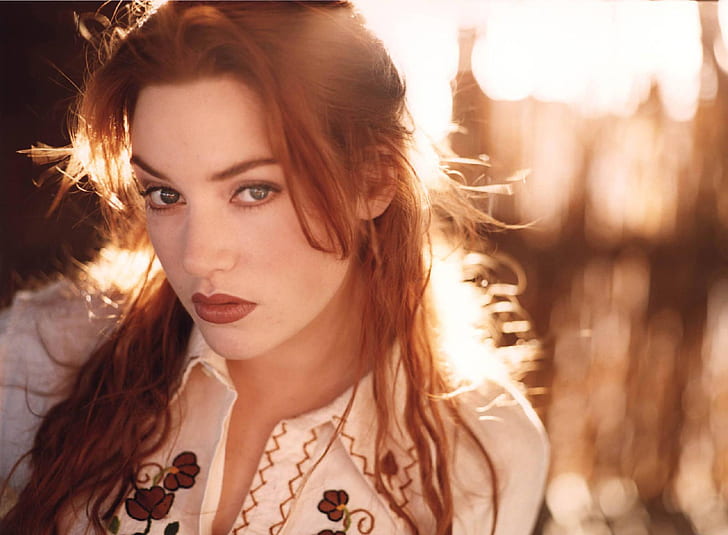
5. High-Stakes Controversies, Media Storms & Career Resilience
5.1. Confronting Post-Titanic Body Shaming: Kate Elizabeth Winslet's Stand Against 1990s Tabloid Culture
From the outset of her career in the mid-1990s, Winslet faced relentless, invasive body-shaming from tabloid media, critics, and industry executives. During her teenage years, drama teachers told her she would only succeed if she settled for “fat girl” roles. Following the immense global success of Titanic, the press subjected her physical appearance to intense scrutiny. Cruel headlines and commentary analyzed her weight, with talk show hosts and columnists making disparaging remarks about her figure. The media pressure made her early twenties exceptionally difficult, creating a hostile environment that Winslet later described as “horrible” and deeply damaging to young women.
In 2003, the British edition of GQ magazine published a cover photograph of Winslet that had been heavily altered using digital retouching, drastically slimming her legs and body. Winslet publicly condemned the magazine for modifying her image without her consent, asserting firmly: “The retouching is excessive. I do not look like that and more importantly I don’t desire to look like that.” Her candid stance sparked a global discussion regarding unrealistic beauty standards in print media and solidified her reputation as a fearless advocate for body positivity and authentic representation.
5.2. Defending Artistic Integrity: Kate Elizabeth Winslet on Press Boundaries and Studio Accountability
Winslet’s commitment to protecting her personal life and reputation has led to decisive legal actions. In 2009, she sued the British newspaper Daily Mail after the publication printed a libelous article claiming she had lied about her exercise routine and body-positivity statements. The High Court ruled in her favor, ordering the publication to issue a public apology and pay damages, which Winslet donated to an autism charity. This legal victory sent a clear message that she would not tolerate journalistic fabrication regarding her character or private life.
In addition to legal battles, Winslet has navigated complex public debates regarding her professional associations with controversial filmmakers, notably Woody Allen (with whom she worked on Wonder Wheel in 2017) and Roman Polanski (in Carnage, 2011). In the wake of the #MeToo movement, Winslet faced public scrutiny for her past comments defending or deflecting questions about these directors. Demonstrating accountability, Winslet addressed these criticisms directly in a groundbreaking 2020 interview with Vanity Fair. She publicly expressed deep regret for working with both directors, acknowledging the painful history surrounding them and stating: “It’s like, what was I doing working with Woody Allen and Roman Polanski? It’s unbelievable to me now how those men were held in such high regard, so widely across the film industry and for so long. It’s shameful.” Her willingness to confront her past decisions earned respect across the entertainment industry.

6. Fashion Iconography, Media Footprint & Artistic Resonance
Winslet’s approach to red-carpet fashion and public presence is defined by timeless elegance, regal simplicity, and an insistence on natural beauty. Frequently appearing on best-dressed lists worldwide, she favors structured silhouettes from classic fashion houses such as Alexander McQueen, Stella McCartney, Giorgio Armani, and Givenchy. Unlike many of her contemporaries, Winslet has consistently maintained a strict anti-cosmetic surgery stance and openly refuses digital retouching on her promotional film posters and advertising campaigns, including her high-profile ambassadorial work with Lancôme.
In an era dominated by constant online engagement, Winslet stands out for her total absence from social media platforms. She does not maintain active public accounts on Instagram, X (Twitter), Facebook, or TikTok. Winslet has publicly criticized social media for its toxic impact on youth mental health, self-esteem, and family communication. She has banned social networking platforms inside her home for her children, describing social media as a pervasive distraction that erodes self-worth. Her non-digital lifestyle has reinforced her status as an enigmatic star who relies entirely on performance and artistic craft rather than online algorithms or curated personal branding.
7. Next Big Screen Releases, Production Deals & Creative Horizons
Entering her fifties, Winslet continues to expand her artistic footprint, increasingly stepping behind the camera as a lead producer. Through her production company, she has prioritized woman-led narratives, historical biopics, and character-driven television projects. Following the critical success of her biographical drama Lee (2023) and the political satire The Regime (2024), Winslet remains deeply committed to developing film and television properties that explore complex, flawed female characters.
She is slated to return to James Cameron’s blockbuster sci-fi franchise in future installments of Avatar, reprising her role as Ronal, the free-diving Na’vi leader. Furthermore, Winslet continues her extensive philanthropic work. She is the co-founder of the Golden Hat Foundation, a non-profit organization dedicated to changing public perceptions and raising awareness for individuals with autism spectrum disorders. Through her artistry, producing endeavors, and humanitarian activism, Winslet continues to shape the cultural landscape with unyielding integrity.
8. Kate Elizabeth Winslet FAQs: Key Questions Answered
How old is Kate Winslet?
Kate Winslet was born on October 5, 1975, making her 50 years old.
Who is Kate Winslet dating or married to?
Kate Winslet has been married to Edward Abel Smith (formerly known as Ned Rocknroll) since December 2012. She was previously married to film director Sam Mendes (2003–2011) and assistant director Jim Threapleton (1998–2001).
What is Kate Winslet’s most famous work?
Kate Winslet is internationally best known for her iconic role as Rose DeWitt Bukater in James Cameron’s 1997 epic Titanic. Other highly acclaimed performances include Eternal Sunshine of the Spotless Mind, The Reader, Sense and Sensibility, Revolutionary Road, and the HBO miniseries Mare of Easttown.
What awards has Kate Winslet won?
Kate Winslet has won an Academy Award (Best Actress for The Reader), two Primetime Emmy Awards (for Mildred Pierce and Mare of Easttown), a Grammy Award (Best Spoken Word Album for Children), three BAFTA Awards, and five Golden Globe Awards.