
: “
1. Upbringing, Early Canvases & Intellectual Roots
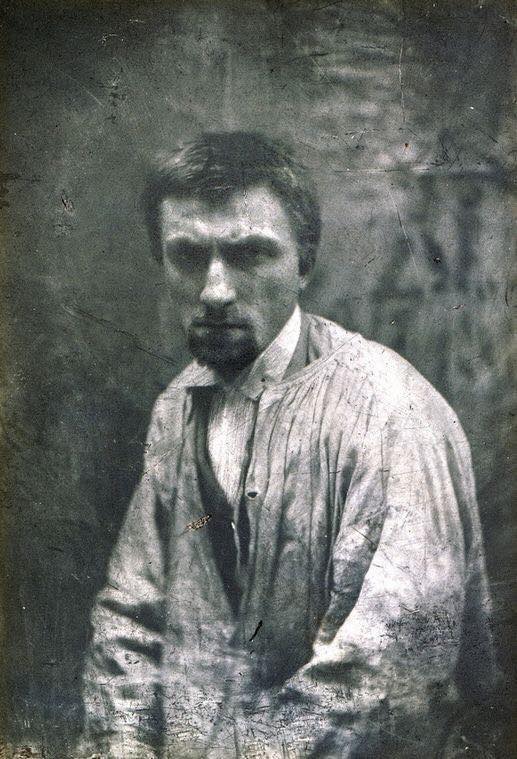
François-Auguste-René Rodin was born on November 12, 1840, in the working-class Mouffetard district of Paris, France. Raised in modest circumstances, his father, Jean-Baptiste Rodin, worked as a police department clerk, while his mother, Marie Cheffer, maintained a deeply religious and structured household. From a very young age, Rodin showed little interest or aptitude for standard academic subjects. Unbeknownst to his parents and teachers at the time, his struggles in reading and mathematics were exacerbated by severe nearsightedness, an uncorrected condition that left the blackboard a blurry haze. Deprived of clarity in distant figures, young Auguste turned his sharp visual instincts inward and toward immediate physical forms, filling every scrap of paper he could find with sketches and line drawings.
Recognizing his son’s passionate obsession with drawing, Rodin’s family enrolled him at the age of fourteen at the Petite École (École Impériale Spéciale de Dessin et de Mathématiques), an institution dedicated to decorative arts and craft trades. Here, under the inspired guidance of Horace Lecoq de Boisbaudran, Rodin developed a profound capacity for memory drawing and observed anatomical form with radical intensity. He frequented the Musée du Louvre to copy classical masters and devoured anatomical manuals. Between 1857 and 1859, feeling prepared for higher artistic glory, Rodin applied three separate times for admission to the prestigious École des Beaux-Arts—the supreme gatekeeper of French fine art. To his devastating humiliation, he was rejected on all three attempts. The grand academic jury regarded his expressive, textured clay modeling as rough, unconventional, and lacking classical refinement.
The repeated rejections dealt a heavy blow to Rodin’s confidence and financial security. When his beloved older sister, Maria, passed away from peritonitis in 1862, a grief-stricken Rodin abandoned his artistic ambitions entirely and joined a religious order, the Congregation of the Blessed Sacrament. Seeing the young man’s raw creative spirit suffocating in monastic life, the order’s founder, Father Pierre-Julien Eymard, urged him to return to his true calling. Accepting that he would have to forge a career outside elite institutional sanction, Rodin spent the next two decades laboring in commercial workshops, producing decorative architectural stonework, ornaments, and porcelain designs to earn a living.

2. Early Creative Ascendance: Landmark Solo Shows & Critical Buzz
Rodin’s emergence from anonymous commercial artisan to internationally debated master was paved by crucial formative experiences. In 1864, while executing decorative plasterwork, he met Rose Beuret, a seamstress from Champagne who became his primary model, lifelong companion, and eventual wife. The same year, Rodin sculpted The Man with the Broken Nose, a portrait bust of a local neighborhood worker named Bibi. Rather than idealizing the subject, Rodin meticulously documented every scar, facial asymmetry, and coarse feature. When a sudden winter frost cracked the back of the clay skull, Rodin embraced the fragment as a finished masterpiece. Although rejected by the Paris Salon in 1865 due to its unconventional realism, the bust marked Rodin’s deliberate break from artificial neoclassical perfection.
The true turning point arrived in 1875 during a transformative journey to Italy. Studying the marble giants of Michelangelo in Florence and Rome, Rodin unlocked the secret he had sought for years: how to infuse dead stone and bronze with internal muscular tension, raw vitality, and psychological motion. Upon returning to Belgium—where he had been working on public monuments—Rodin poured his newfound insights into a life-sized male nude titled The Age of Bronze (originally named The Vanquished).
When The Age of Bronze was exhibited at the Cercle Artistique in Brussels in 1877 and subsequently at the Paris Salon, it caused an immediate international sensation. The anatomical precision, skin texture, and fluid vitality were so uncannily realistic that conservative art critics accused Rodin of fraud. They alleged that he had not sculpted the piece by hand, but had instead committed surmoulage—taking a direct plaster mold from the living body of his model, a Belgian soldier named Auguste Neyt. Rather than destroying him, this high-stakes artistic controversy forced the French art establishment to evaluate Rodin’s extraordinary technical mastery, launching his name into global headlines.
3. Major Bibliography, Global Retrospectives & Artistic Feats
3.1. Landmark Masterworks & Global Acclaim
To defend his artistic integrity against the accusations surrounding The Age of Bronze, Rodin gathered affidavits from prominent sculptors and commissioned full-scale photographs of his model to prove the subtle anatomical variations between the live body and his sculpture. The government ultimately cleared his name, purchasing the bronze statue for the state in 1880. This victory established Rodin as an indisputable master of figurative realism and brought him to the attention of Edmond Turquet, the Under-Secretary of Fine Arts.
In 1880, the French state awarded Rodin a prestigious commission that would define the rest of his professional life: a massive decorative entrance gate for the planned Museum of Decorative Arts in Paris. Drawing inspiration from Dante Alighieri’s Inferno and Lorenzo Ghiberti’s Gates of Paradise, Rodin conceived The Gates of Hell. Though the museum itself was never built and the monumental doors remained unfinished in plaster at his death, The Gates of Hell functioned as the incubator for his most famous standalone sculptures. Figures originally modeled as small components of this grand portal—including The Thinker (representing Dante contemplating his creation), The Kiss, The Three Shades, and Ugolino and His Children—were enlarged, cast in bronze, and sculpted in marble to achieve independent global renown.

3.2. Museum Retrospectives & Cultural Footprint
During the 1880s and 1890s, Rodin consolidated his position as the world’s most sought-after sculptor, securing high-profile public and portrait commissions. In 1884, the city of Calais commissioned him to create a monument commemorating a heroic episode from the Hundred Years’ War. The resulting masterpiece, The Burghers of Calais (completed in 1889), revolutionized civic sculpture. Instead of placing the six historical figures on a lofty, heroic pedestal, Rodin rendered them at ground level in heavy garments, with enlarged hands and expressive, grief-stricken faces, capturing their raw human fear and self-sacrifice.
Simultaneously, Rodin became the premier portraitist of Western intellectual elites, sculpting definitive busts of Jules Dalou, Victor Hugo, and Pierre Puvis de Chavannes. His studio transformed into a sprawling commercial factory employing dozens of assistants, stone-carvers, foundry specialists, and plaster casters. Rodin retained absolute conceptual control, focusing on clay modeling and surface texturing while supervising his workshop in executing large-scale marble and bronze replicas for international collectors, civic institutions, and foreign museums.
3.3. Peer Accolades & Enduring Cultural Standing
By the turn of the century, Rodin’s artistic evolution had shifted from detailed anatomical realism toward radical expressionism, fragmentism, and impressionistic light play. He pioneered the concept of the partial figure—exhibiting headless torsos, isolated hands, and unpolished stone blocks—arguing that a fragment of the human body could carry as much psychological power as a complete figure. Works like The Walking Man stripped away narrative distraction to focus entirely on momentum, weight, and form.
The pinnacle of Rodin’s international stature occurred during the 1900 Paris Exposition Universelle. Recognizing his peerless influence, the French state granted him an entire dedicated pavilion on the Place de l’Alma. The retrospective showcased over 150 of his works, drawing hundreds of thousands of international visitors, art collectors, critics, and younger artists. The exhibition solidified Rodin’s financial prosperity and global reputation, cementing his status as a living legend across Europe, North America, and Asia.
4. Relationships, Private Solitude & Personal Bonds
Behind his monumental public career lay a complex, turbulent personal life marked by intense passion, emotional neglect, and complicated domestic arrangements. Rodin’s primary anchor was Rose Beuret, whom he met in 1864. Rose served as his initial model, household manager, and steadfast companion through decades of severe poverty and artistic struggle. In 1866, Rose gave birth to their son, Auguste-Eugène Beuret. However, Rodin refused to officially legitimize the child or grant him his surname, fearing that domestic family obligations would derail his artistic ascension. His relationship with his son remained distant and strained throughout his life.
Despite Rose’s lifelong devotion, Rodin was notoriously unfaithful, engaging in countless fleeting affairs with models, society women, and artistic patrons who visited his studio. His most famous and tragic romantic entanglement began in 1883 when he met Camille Claudel, an extraordinarily gifted eighteen-year-old sculptor who joined his studio as a student and assistant. Claudel quickly became Rodin’s primary muse, creative collaborator, and passionate mistress. For over a decade, the two engaged in a stormy relationship that blurred the lines of romantic passion and intense artistic rivalry. Claudel heavily influenced Rodin’s work—contributing directly to the modeling of hands and feet in The Gates of Hell—while Rodin championed her independent exhibitions.
However, the relationship was fraught with tension. Claudel desperately wished for Rodin to leave Rose Beuret, but Rodin refused to abandon his lifelong partner. Devastated by his refusal, exhausted by society’s dismissal of her work as merely derivative of Rodin’s, and suffering from growing paranoia, Claudel broke off the affair in 1898. Their separation plunged Claudel into deep psychological distress, ultimately culminating in her institutionalization in 1913. Rodin was deeply haunted by the tragic breakdown of Claudel’s life and secretly sent financial support to her care facility until his own death.
In his final years, living at the Villa des Brillants in Meudon, Rodin was surrounded by competing factions of friends, art dealers, and mistresses seeking control over his estate. Chief among his late-life companions was the American-born Duchess de Choiseul, who exercised immense influence over his affairs until his inner circle intervened. On January 29, 1917, after 53 years together, Rodin finally married the aging Rose Beuret. Rose passed away just two weeks after the wedding. Ten months later, on November 17, 1917, Rodin died of severe influenza and chest congestion at age 77. He was buried alongside Rose at Meudon, under the eternal gaze of a bronze casting of The Thinker.

5. Censorship Battles, Critical Feuds & Aesthetic Clashes
5.1. The Societé des Gens de Lettres Rejects François-Auguste-René Rodin’s Monument to Balzac
Throughout his career, Rodin’s refusal to abide by conventional aesthetic expectations provoked major public feuds and institutional rejections. The most explosive scandal of his mature career erupted over his commission for a monument to the celebrated French novelist Honoré de Balzac. Commissioned in 1891 by the Société des Gens de Lettres (Society of Men of Letters)—promoted heavily by writer Émile Zola—Rodin spent seven years researching, modeling, and executing the memorial.
Rather than depicting Balzac in conventional bourgeois attire surrounded by literary props, Rodin sought to express the novelist’s raw creative genius. He sculpted a towering, radical figure wrapped in a loose, drapery-like monk’s cloak, with an exaggerated, rough-hewn head thrown backward. When the plaster model was unveiled at the Salon de Champ-de-Mars in 1898, it provoked widespread outrage. Critics, the press, and the public mocked the sculpture, labeling it a “snowman,” a “sack of coal,” and an “insult to French literature.”
The Société des Gens de Lettres formally rejected the work, declaring that it refused to recognize Rodin’s plaster model as a portrait of Balzac. A fierce culture war broke out across Paris, splitting the artistic community into pro-Rodin “Dreyfusard” modernists and anti-Rodin conservative traditionalists. Deeply hurt by the public ridicule, Rodin refused to sell the sculpture to private collectors who offered to buy it. He withdrew the plaster model to his home in Meudon, where it remained uncast in bronze during his lifetime. It was not until 1939—more than two decades after Rodin’s death—that the bronze monument was finally erected at the intersection of Boulevard Raspail and Boulevard Montparnasse in Paris, today recognized as a cornerstone of modern sculpture.
5.2. Studio Rivalries: François-Auguste-René Rodin and the Artistic Autonomy of Camille Claudel
In addition to the Balzac affair, Rodin faced severe public fallout surrounding his commission for the Monument to Victor Hugo. Originally intended for the Panthéon, his initial design depicted the literary giant nude, surrounded by tragic muses. French officials rejected the design as inappropriate for a national sanctuary, forcing Rodin to create a secondary, seated version for the Luxembourg Gardens.
Beyond public commissions, Rodin was frequently embroiled in bitter disputes regarding his studio practices and intellectual attribution. Following his split with Camille Claudel, critics aligned with Claudel accused Rodin of plagiarizing her original compositions and using his immense institutional power to suppress her career. Claudel herself publicly denounced him as “The Ferret,” alleging that his circle intercepted her correspondence and stole her stylistic innovations. While modern art historians recognize that their creative influence was mutual and symbiotic, the tragic fate of Claudel remains a complex, highly debated shadow over Rodin’s personal and professional legacy.
6. Aesthetic Signature, Philosophy of Art & Enduring Footprint
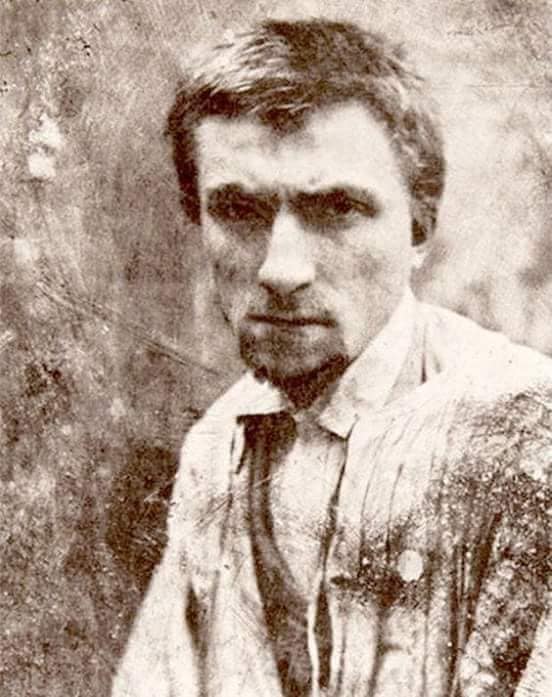
Rodin’s artistic style completely reshaped the landscape of Western sculpture. Before Rodin, 19th-century sculpture was dominated by rigid neoclassicism—characterized by smooth surfaces, idealized proportions, and literal historical illustration. Rodin abandoned these formulas, prioritizing physical expressiveness, raw texture, and the psychological reality of the human condition. He deliberately left tool marks, seams, and rough stone unpolished, allowing light to fracture across surfaces and impart a sense of kinetic energy.
In the contemporary digital era, Rodin’s cultural footprint remains vast. Though he predated the internet and social media by a century, his masterpieces—particularly The Thinker and The Kiss—are among the most iconic, widely recognized, and remixed images across global pop culture. Modern institutions such as the Musée Rodin in Paris (@museerodinparis) maintain active social media presences, broadcasting his bronzes, plasters, and personal correspondence to millions of art enthusiasts globally. His work continues to inspire modern fashion designers, film directors, digital animators, and figurative artists worldwide.
7. Enduring Artistic Heritage, Archival Collections & Future Works
Although Auguste Rodin passed away in 1917, his creative estate remains uniquely active. In his final testament, Rodin bequeathed his entire personal collection, original plasters, drawings, and intellectual rights to the French state. Crucially, he granted the French nation the legal right to produce posthumous bronze casts from his original molds. Under French law, up to twelve official original bronze editions of his works may be produced by the Musée Rodin, ensuring that his legacy and physical artwork continue to expand into global public institutions and international exhibitions.
Major international exhibitions, conservation projects, and scientific studies of his casting techniques are continuously undertaken by the Musée Rodin in Paris and the Rodin Museum in Philadelphia. Modern 3D scanning and high-definition casting technologies are revealing new insights into how Rodin and his studio assistants assembled multi-figure compositions, ensuring that the master sculptor’s techniques and vision remain central to ongoing art historical scholarship.
François-Auguste-René Rodin FAQs: Key Questions Answered
How old was Auguste Rodin when he died?
Auguste Rodin died at the age of 77 on November 17, 1917, at his home in Meudon, France, following complications from severe influenza.
Who was Auguste Rodin married to?
Rodin was married to Rose Beuret. The couple lived together for over 50 years before officially marrying on January 29, 1917, just two weeks before Rose passed away.
What is Auguste Rodin’s most famous sculpture?
Auguste Rodin’s most famous sculpture is The Thinker (originally titled The Poet), conceived in 1880 as part of his monumental portal The Gates of Hell. Other world-famous works include The Kiss, The Age of Bronze, and The Burghers of Calais.
Why was Auguste Rodin’s sculpture The Age of Bronze controversial?
When The Age of Bronze was exhibited in 1877, it was so anatomically precise and realistic that critics accused Rodin of surmoulage—taking direct plaster molds from a living human model rather than sculpting the figure by hand.


