
Giesing Roots: Franz Anton Beckenbauer and the Fateful 1958 Munich 1860 Incident
Franz Anton Beckenbauer was born on September 11, 1945, in the working-class district of Giesing in Munich, Germany, amidst the immediate aftermath of World War II. Raised by his father, Franz Beckenbauer Sr., a postal worker who was initially skeptical of football’s viability as a career, and his mother, Antonie, young Franz developed an intense, almost spiritual obsession with the sport. Navigating the bomb-damaged streets and gravel lots of post-war Munich, Beckenbauer honed his early touch using improvised rubber balls, demonstrating a natural balance, vision, and tactical intellect that far exceeded his peers.
At the age of nine, Beckenbauer joined his local neighborhood team, SC 1906 München. Growing up, he idolized 1954 World Cup winner Fritz Walter and originally supported Munich 1860, the dominant club in the city at the time. However, a pivotal, fateful event occurred during an under-14 tournament in 1958. During a heated match against Munich 1860, Beckenbauer got into a verbal altercation with an opposing center-back, who slapped him across the face. Insulted and determined never to represent Munich 1860, the 13-year-old prodigy made the fateful decision to join their crosstown rivals, FC Bayern Munich, then a modest team in the regional South German leagues. This singular moment altered the trajectory of European football history.

From 1964 Bayern Debut to Wembley: Franz Anton Beckenbauer Encounters Bobby Charlton
Joining FC Bayern Munich’s youth division in 1959, Beckenbauer progressed with astonishing rapidity. Initially starting as a left winger and central midfielder, his supreme technical ability, effortless composure on the ball, and calm decision-making set him apart. He made his senior competitive debut for Bayern Munich on June 6, 1964, at the age of 18, scoring a goal from the left wing in a 4–0 promotional playoff win against St. Pauli. By the end of his debut season, he helped Bayern secure promotion to the newly created Bundesliga.
Beckenbauer’s global breakthrough occurred almost instantaneously. At just 20 years of age, he earned his first senior cap for the West Germany national team on September 26, 1965, in a high-stakes World Cup qualifier against Sweden in Stockholm, delivering a majestic performance in a 2–1 victory. Selected for the 1966 FIFA World Cup in England, the young midfield conductor took the international stage by storm. Playing as an attacking central midfielder, Beckenbauer scored four goals throughout the tournament—including two in the opening match against Switzerland and a famous long-range strike in the semi-final against the Soviet Union. In the historic final at Wembley against England, he was tasked with man-marking Bobby Charlton, a tactical battle that saw two of world football’s supreme talents neutralize each other, though England ultimately prevailed 4–2 in extra time. Beckenbauer returned from England as an international superstar, finishing as the third-highest goalscorer and winning the tournament’s Best Young Player award.
Franz Anton Beckenbauer Pioneers the Sweeper Role Across European Cup Finals
Bayern Munich's 1974–1976 European Cup Triplicate Under Franz Anton Beckenbauer
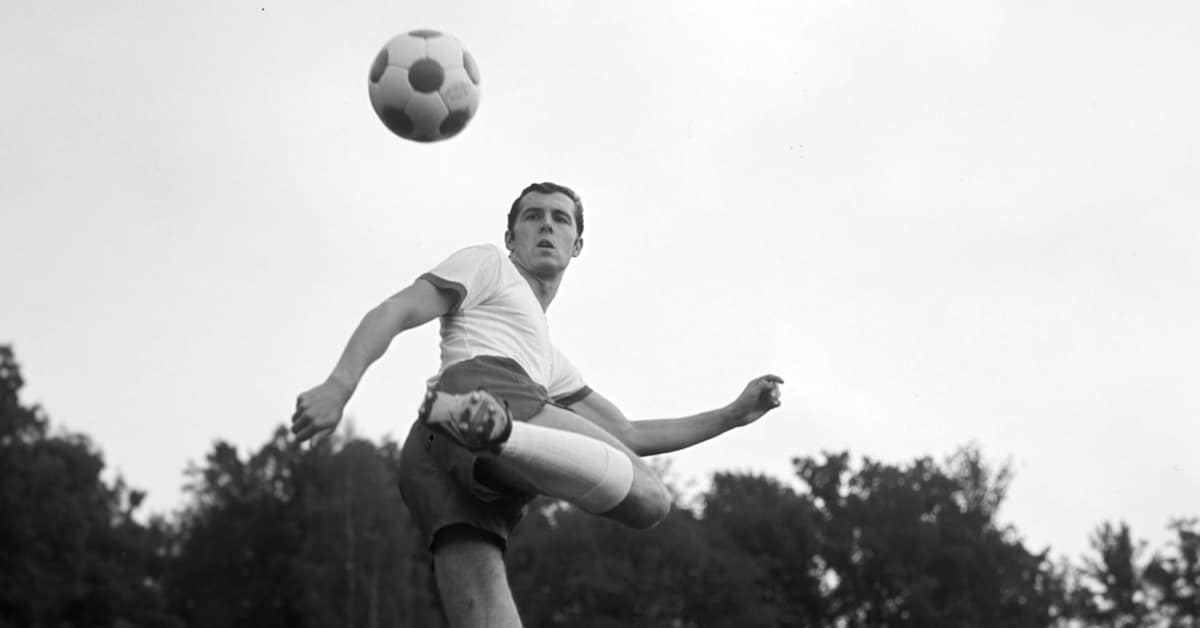
Following the 1966 World Cup, Beckenbauer initiated a revolutionary tactical evolution that changed the paradigm of defensive play forever. Transitioning from central midfield to the backline, he pioneered the position of the modern ‘libero’ or sweeper. Unlike traditional defenders who merely cleared incoming attacks, Beckenbauer operated with complete tactical freedom behind the defensive line. From this deep position, he read the game with immaculate foresight, broke up opposition attacks without making crude tackles, and stepped forward smoothly into midfield to orchestrate his team’s offensive plays as an extra playmaker.
Under the leadership of Beckenbauer as captain, alongside legendary striker Gerd Müller and pioneering goalkeeper Sepp Maier, Bayern Munich transformed from a regional club into a dominant European powerhouse. In 1969, Bayern captured their first Bundesliga championship and DFB-Pokal domestic double. Internationally, Beckenbauer again showcased his heroics at the 1970 FIFA World Cup in Mexico. During the infamous ‘Game of the Century’—the semi-final against Italy—Beckenbauer dislocated his shoulder after West Germany had used all their permitted substitutions. Refusing to leave the field, he played through extra time with his right arm strapped tightly to his body in a sling, an iconic image of sheer bravery and determination that solidified his heroic status in football lore.

Franz Anton Beckenbauer Captures World Cup Glory as Captain in 1974 and Manager in 1990
The period between 1972 and 1976 marked the golden peak of Beckenbauer’s playing career. In 1972, he captained West Germany to victory in the European Championship, defeating the Soviet Union 3–0 in the final. His sublime performances earned him his first Ballon d’Or in 1972, making him the first defender in football history to win Europe’s most prestigious individual award.
Two years later, at the 1974 FIFA World Cup hosted on home soil in West Germany, Beckenbauer achieved ultimate immortality. Captaining a formidable West German squad, he navigated the team through immense national pressure, culminating in a dramatic 2–1 victory in the final over Johan Cruyff‘s revolutionary ‘Total Football’ Netherlands side in Munich. Beckenbauer became the first team captain to lift the newly designed FIFA World Cup Trophy.
Concurrently, Bayern Munich dominated European club football. Beckenbauer captained Bayern to an unprecedented three consecutive European Champions Cup titles in 1974 (defeating Atlético Madrid), 1975 (defeating Leeds United), and 1976 (defeating Saint-Étienne). In recognition of his unrivaled dominance, tactical genius, and authoritative style on the pitch, he was bestowed the moniker ‘Der Kaiser’ (The Emperor). In 1976, he won his second Ballon d’Or trophy, cementing his status as one of the greatest footballers of all time.

Two-Time Ballon d'Or Triumphs & Cosmos Stints: Franz Anton Beckenbauer by the Numbers
In 1977, seeking new athletic horizons and a lucrative contract away from European pressure, Beckenbauer signed with the New York Cosmos in the North American Soccer League (NASL). Joining Brazilian legend Pelé, Beckenbauer became a central figure in the NASL’s high-profile, celebrity-studded era. During his four seasons in New York (1977–1980), he won three Soccer Bowl titles (1977, 1978, 1980) and was named the NASL Most Valuable Player in 1977, elevating the profile of football across North America.
Returning to West Germany in 1980, Beckenbauer joined Hamburger SV, bringing his distinguished playing career full circle by winning another Bundesliga championship in 1982. He returned for a brief final spell with the New York Cosmos in 1983 before officially retiring from professional play with 587 club appearances, 103 national team caps, and 14 major team honors.
Transitioning immediately into management without prior coaching experience, Beckenbauer was appointed manager of the West Germany national team in September 1984. He led an under-strength West German squad to the final of the 1986 World Cup in Mexico, falling 3–2 to Diego Maradona‘s Argentina. Four years later, at the 1990 FIFA World Cup in Italy, Beckenbauer achieved redemption. He coached West Germany to a 1–0 revenge victory over Argentina in the final in Rome, becoming only the second person in history (after Brazil’s Mário Zagallo, and later joined by France’s Didier Deschamps) to win the World Cup as both a player/captain and a manager. He later managed Olympique de Marseille to a French Ligue 1 title in 1991 and served as interim manager for Bayern Munich, winning the Bundesliga in 1994 and the UEFA Cup in 1996.
Behind Der Kaiser: Franz Anton Beckenbauer's Family Life, Marriages, and Losses
Off the pitch, Franz Beckenbauer’s personal life was characterized by intense media scrutiny, high-profile romances, three marriages, and deep personal tragedies. In 1966, at the age of 21, he married his first wife, Brigitte Wittmann. The couple had two sons together, Michael and Stephan, and Beckenbauer also adopted Brigitte’s son Thomas. Their marriage endured for 24 years through the height of his playing career before ending in divorce in 1990.
In 1990, Beckenbauer married his second wife, Sybille Weimar, a former secretary at the German Football Association (DFB). Their marriage lasted 14 years until 2004, when they officially divorced following public revelations surrounding Beckenbauer’s private life. During the late 1990s, Beckenbauer began an affair with Heidrun Burmester, a secretary working for FC Bayern Munich. In 2000, Heidrun gave birth to their son, Joel Maximilian, and in 2003, they welcomed a daughter, Francesca. Beckenbauer and Heidrun married in 2006 in a private ceremony in Kitzbühel, Austria, remaining together until his death.
Tragedy struck Beckenbauer’s life in July 2015 when his son, Stephan Beckenbauer—who had also played professional football and served as a youth coach at Bayern Munich—died at the age of 46 following a prolonged battle with a brain tumor. The loss of his son devastated Beckenbauer profoundly, causing him to retreat increasingly from public life as his own health began to decline in his later years.
Institutional Battles: Franz Anton Beckenbauer Navigates Football Administration Scrutiny
Investigating Germany's 2006 World Cup Hosting Bid and Franz Anton Beckenbauer's Oversight
While Beckenbauer enjoyed decades of near-unblemished public adoration as Germany’s chief football ambassador, his post-sporting executive career was embroiled in severe corruption investigations surrounding Germany’s successful bid to host the 2006 FIFA World Cup. As president of the 2006 World Cup Local Organising Committee, Beckenbauer was the central figure who secured the hosting rights in a narrow July 2000 vote against South Africa.
In October 2015, German news magazine Der Spiegel published a bombshell investigative report alleging that the German bidding committee had established a secret slush fund containing 10.3 million Swiss francs (approximately €6.7 million at the time). According to the report, the funds were secretly provided by former Adidas CEO Robert Louis-Dreyfus to secure the crucial votes of Asian FIFA executive committee members prior to the 2000 vote. In 2005, the money was allegedly funneled back to Louis-Dreyfus via a FIFA account, routed through a complex web of Swiss bank accounts belonging to Beckenbauer and his financial advisor, Robert Schwan.
The scandal led to widespread international outrage, sparking criminal investigations by German tax authorities and Swiss federal prosecutors. Beckenbauer publicly denied buying votes, maintaining that the payment was a required financial guarantee to FIFA to secure a larger organizational grant. However, subsequent independent audits commissioned by the DFB revealed complex financial transactions, unrecorded contracts, and suspicious consultancy agreements signed by Beckenbauer, severely tarnishing his executive reputation.
Franz Anton Beckenbauer Confronts Swiss Legal Inquiries and Declining Health
The fallout from the bidding scandal escalated rapidly. In March 2016, the FIFA Ethics Committee opened formal proceedings against Beckenbauer for potential bribery, breach of fiduciary duties, and conflict of interest. Earlier in 2014, Beckenbauer had already received a temporary 90-day suspension from all football activity after failing to cooperate with investigator Michael Garcia’s probe into alleged corruption surrounding the 2018 and 2022 World Cup hosting awards to Russia and Qatar.
In August 2016, the Office of the Attorney General of Switzerland (OAG) formally initiated criminal proceedings against Beckenbauer on charges of fraud, dishonourable management, money laundering, and misappropriation. The legal battle dragged on for years amidst intense global media scrutiny. However, as the legal proceedings advanced toward trial in 2019 and 2020, Beckenbauer’s health severely deteriorated. Suffering from serious cardiac conditions, undergoing multiple open-heart surgeries, hip replacements, and progressive neurological decline (Parkinson’s disease and associated dementia), his legal counsel provided medical documentation establishing that he was physically unfit to stand trial or endure questioning.
In April 2020, the Swiss criminal proceedings against Beckenbauer expired without a verdict due to the statute of limitations, which reached its 15-year limit under Swiss law during the COVID-19 pandemic delays. While he avoided criminal conviction, the protracted scandal permanently cast a dark shadow over his executive legacy and forced him into total isolation from the public eye during his final years.

The Imperial Libero: Franz Anton Beckenbauer's Commercial Footwear and Tactical Legacy
Franz Beckenbauer’s impact on global culture extended far beyond tactics and silverware. In Germany, he was widely regarded as a cultural icon whose effortless elegance, aristocratic posture on the pitch, and charming demeanor captured the spirit of post-war German reconstruction and international re-emergence. His signature style—head held high, gliding across the grass without looking down at the ball—became an enduring symbol of sporting grace and authority.
Unlike modern athletes who maintain active personal social media channels, Beckenbauer’s career spanned the traditional broadcast and print media eras. He was a master of television, serving for decades as a premier columnist for Bild and a lead analyst for major German television networks. Through his philanthropic organization, the Franz-Beckenbauer-Stiftung (founded in 1982), he raised tens of millions of euros to support disadvantaged individuals, persons with disabilities, and medical research across Germany.
Franz Anton Beckenbauer's Final Years and Global Tributes to Der Kaiser
In his final years, Beckenbauer withdrew completely from public engagements and football administration, residing quietly at his home in Salzburg, Austria, supported by his wife Heidrun and immediate family. On January 7, 2024, Franz Beckenbauer passed away peacefully in his sleep at the age of 78 due to natural causes following years of declining health.
Following his passing, the global football community united in extraordinary tributes. FC Bayern Munich held a massive national memorial service at the Allianz Arena, attended by world leaders, sports legends, and tens of thousands of fans. Tributes poured in from FIFA, UEFA, and world figures, cementing his immortal legacy as ‘Der Kaiser’—a figure whose revolutionary playing style and unprecedented World Cup triumphs as both captain and manager established him as one of the ultimate titans in the history of world sport.
Franz Anton Beckenbauer FAQs: Key Questions Answered
How old was Franz Beckenbauer when he died?
Franz Beckenbauer passed away on January 7, 2024, at the age of 78.
Who was Franz Beckenbauer married to?
Franz Beckenbauer was married three times: first to Brigitte Wittmann (1966–1990), second to Sybille Weimar (1990–2004), and third to Heidrun Burmester from 2006 until his death in 2024.
What position did Franz Beckenbauer play?
Beckenbauer began his career as an attacking central midfielder but gained worldwide acclaim for inventing and perfecting the role of the modern ‘libero’ or attacking sweeper.
What major awards and trophies did Franz Beckenbauer win?
As a player, Beckenbauer won the 1974 FIFA World Cup, the 1972 UEFA European Championship, three European Cups (1974, 1975, 1976), five Bundesliga titles, and two Ballon d’Or awards (1972, 1976). As a manager, he won the 1990 FIFA World Cup, a Bundesliga title (1994), a Ligue 1 title (1991), and the UEFA Cup (1996).


