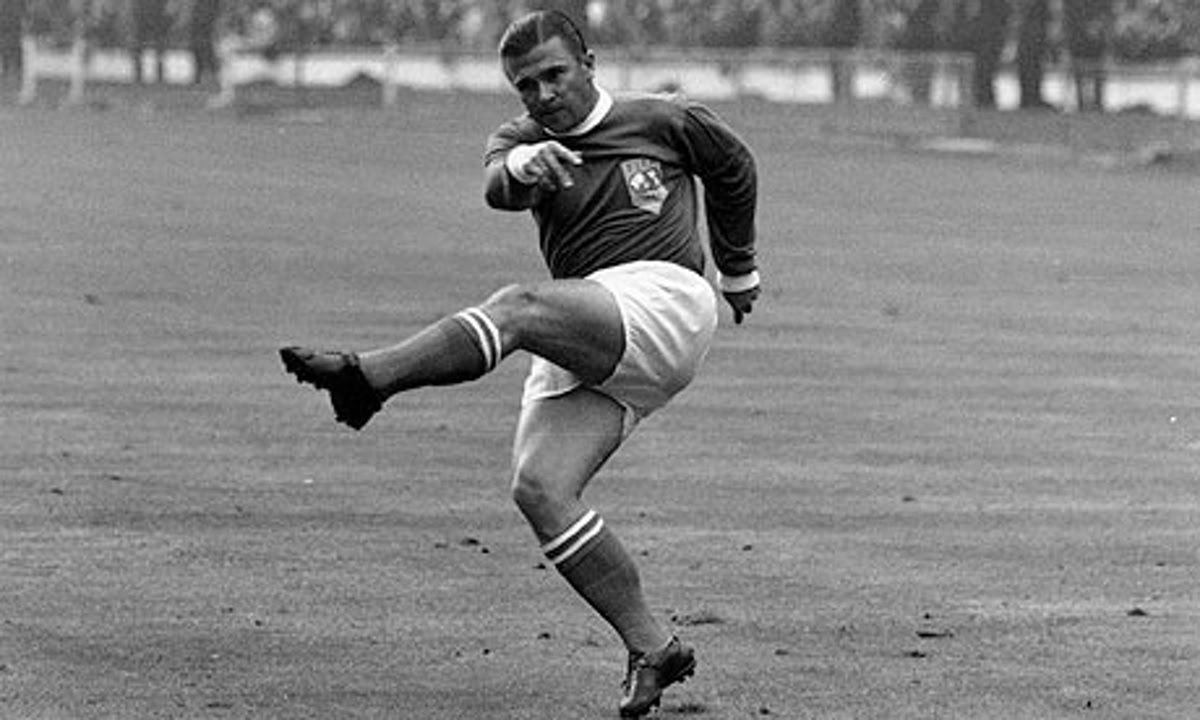
1. Grassroots Origins, Physical Gift & Formative Athletic Years

Ferenc Puskás was born Ferenc Purczeld on April 1, 1927, in Budapest, Hungary, during a tumultuous interwar period in Central Europe. Raised in Kispest, a working-class suburb on the outskirts of the capital, young Ferenc was steeped in football from his earliest moments. His father, Ferenc Purczeld Sr., was a dedicated semi-professional footballer and local coach for Kispest AC. The family lived in modest quarters adjacent to the local football pitch, allowing young Puskás to spend virtually every waking hour honing his technical skills on dusty dirt lots with improvised rag balls.
Recognizing the child’s raw talent and instinctual spatial awareness, his family nurtured his passion. In 1937, as political tensions escalated across Europe, his father changed the family surname from the German-sounding Purczeld to the traditional Hungarian Puskás. To circumvent strict age regulations requiring academy players to be at least twelve years old, young Ferenc registered with Kispest AC under the pseudonym ‘Miklós Kovács’ at age ten. His childhood friend and neighbor, József Bozsik, joined him in the youth system, forming a tactical connection that would eventually anchor both club and country.
By the time World War II disrupted European sporting infrastructure, Puskás had developed a devastatingly powerful left foot, exceptional vision, and a low center of gravity that compensated for his modest height and lack of raw sprinting speed. His formative years were spent navigating wartime scarcity, yet his dedication to ball mastery remained unwavering. His early development in Kispest laid the tactical foundation for what would soon become a revolutionary approach to attacking football.
6. Nutrition, Brand Ambassadorships & Sporting Influence
Though active long before the era of modern digital media and social networks, Ferenc Puskás remains a massive cultural presence in football. His legacy is carried online by millions of fans, official FIFA platforms, Real Madrid media channels, and dedicated historical archives that archive his goals and tactical achievements.
His cultural footprint was formalized by world football’s governing body in October 2009, when FIFA established the annual FIFA Puskás Award. Presented to the player judged to have scored the most aesthetically significant or beautiful goal of the calendar year, the award ensures that his name remains synonymous with spectacular scoring feats for generations of contemporary fans.
In Hungary, Puskás is revered as a central cultural hero. Budapest’s main sports stadium, formerly the Népstadion, was renamed the Puskás Aréna in his honor, serving as the home pitch for the national team. Statues of Puskás teaching street children how to control a ball stand in Budapest and Madrid, embodying his enduring connection to grassroots football.
7. Current Season Campaigns, Title Defense & Future Ambitions

Ferenc Puskás passed away on November 17, 2006, at the age of 79 in Budapest due to pneumonia following a prolonged battle with Alzheimer’s disease. He was accorded a full state funeral with military honors, with his casket transported from the Puskás Aréna to St. Stephen’s Basilica, where he was laid to rest.
Today, his legacy is actively preserved by the Ferenc Puskás Official Estate, the Puskás Academy (a top-tier youth training institute and club in Felcsút, Hungary), and the Puskás Museum. His estate continues to collaborate with global sport organizations, historical preservation societies, and documentary filmmakers to digitize archival footage, fund youth development programs across Eastern Europe, and maintain international educational exhibits highlighting his contributions to global football history.
Ferenc Purczeld Biró FAQs: Key Questions Answered
How old was Ferenc Puskás when he passed away?
Ferenc Puskás passed away on November 17, 2006, at the age of 79 in his hometown of Budapest, Hungary.
Who was Ferenc Puskás married to?
Ferenc Puskás was married to Erzsébet Hunyadvári from 1950 until his death in 2006. The couple had one daughter named Anikó.
What was Ferenc Puskás’s most famous career achievement?
Puskás is renowned for leading Hungary to Olympic Gold in 1952, scoring four goals in the 1960 European Cup Final for Real Madrid, and scoring 84 international goals in 85 games for Hungary.
What is the FIFA Puskás Award?
Established by FIFA in 2009 in honor of Ferenc Puskás, the FIFA Puskás Award is an annual prize awarded to the male or female footballer judged to have scored the most aesthetically significant goal of the year.