Dino Zoff's Friulian Farming Roots & Early Rejections by Inter Milan and Juventus
Dino Zoff was born on February 28, 1942, in Mariano del Friuli, a quiet municipality in the northeastern Italian region of Friuli-Venezia Giulia. Raised in a modest farming family, Zoff developed a pragmatic work ethic early in life, influenced heavily by the rural customs of his upbringing. His initial entry into competitive athletics was met with physical challenges; at fourteen years old, several professional clubs, including Inter Milan and Juventus, rejected his applications to join their youth academies due to concerns regarding his height. Despite standing under average stature during his early teens, Zoff pursued his passion for sport relentlessly while continuing studies and working as a mechanic.
Supported by his family’s emphasis on perseverance, Zoff experienced a significant growth spurt in his late teens. Encouraged by his grandmother’s traditional dietary regimens, which became part of regional sporting lore, Zoff added several inches to his frame, reaching 183 cm. His local performances caught the eye of regional talent scouts, leading to his integration into the youth system of Udinese. The discipline cultivated during his rural upbringing translated into a methodical, highly focused training routine that would define his entire athletic methodology.
Dino Zoff's 1961 Udinese Serie A Debut & Career Breakthrough at Mantova and Napoli
Zoff made his professional Serie A debut for Udinese on September 24, 1961, in a match against Fiorentina. Despite conceding five goals in a 5–2 defeat, his agility and composure under pressure demonstrated immense underlying potential. Udinese suffered relegation at the end of that season, forcing Zoff to refine his craft in Serie B, where he quickly gained invaluable match experience and established himself as a reliable shot-stopper.
In 1963, Mantova secured Zoff’s transfer, providing him with a platform to re-establish his presence in Italy’s top flight. During his four-year tenure with Mantova, Zoff made 131 appearances, displaying continuous improvement in his command of the penalty area and positioning. His exceptional consistency attracted attention from larger Italian clubs, resulting in a high-profile move to Napoli in 1967. It was at Napoli that Zoff achieved national prominence, making 143 consecutive Serie A appearances and becoming a regular selection for the Italian national squad.
Dino Zoff's Juventus Scudetto Dynasties & Unbroken 1,142-Minute International Clean Sheet Record
Dino Zoff's 1968 UEFA European Championship Conquest with Italy
Zoff made his senior international debut for Italy on April 20, 1968, against Bulgaria in the quarter-finals of the UEFA European Championship. Italy secured a 2–0 victory, and Zoff’s calm authority under pressure cemented his position as the starter for the remainder of the tournament. Italy went on to lift the 1968 European Championship trophy on home soil, giving Zoff his first major international honor in only his fourth cap for the national team.
Despite this early success, competition for the national team’s starting goalkeeper spot was intense. During the 1970 FIFA World Cup in Mexico, national team manager Ferruccio Valcareggi preferred Enrico Albertosi, leaving Zoff on the bench as Italy reached the final. Rather than expressing frustration, Zoff maintained professional discipline, continuing to sharpen his technique at Napoli before earning his place back as Italy’s undisputed first-choice goalkeeper shortly thereafter.

Dino Zoff's Historic Captaincy at the 1982 FIFA World Cup Final Victory
In 1972, at the age of 30, Zoff transferred to Juventus FC, initiating a decade of extraordinary domestic and international success. Under the guidance of managers such as Carlo Parola and later Giovanni Trapattoni, Zoff became the defensive anchor of a dominant Juventus squad. Across eleven seasons in Turin, he appeared in 330 consecutive Serie A matches, setting a record for consistency that stood for decades.
With Juventus, Zoff captured six Serie A titles (1972–73, 1974–75, 1976–77, 1977–78, 1980–81, and 1981–82), two Coppa Italia trophies (1978–79, 1982–83), and the 1976–77 UEFA Cup. Between September 1972 and June 1974, Zoff maintained an astonishing streak of 1,142 consecutive minutes without conceding a goal in international matches, a FIFA record that highlighted his tactical discipline and elite shot-stopping ability.

Dino Zoff's 112 Azzurri Caps & UEFA Golden Player Recognition
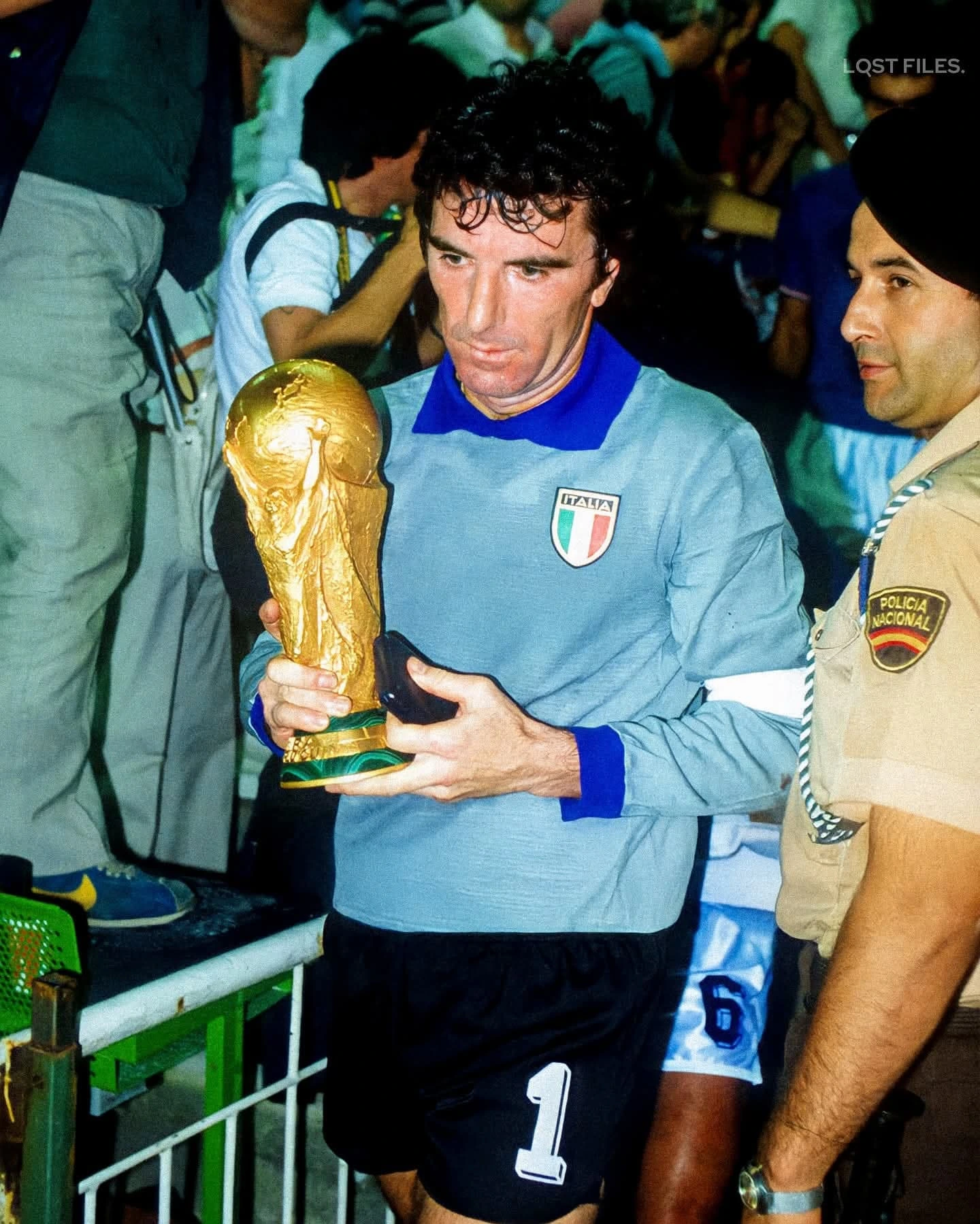
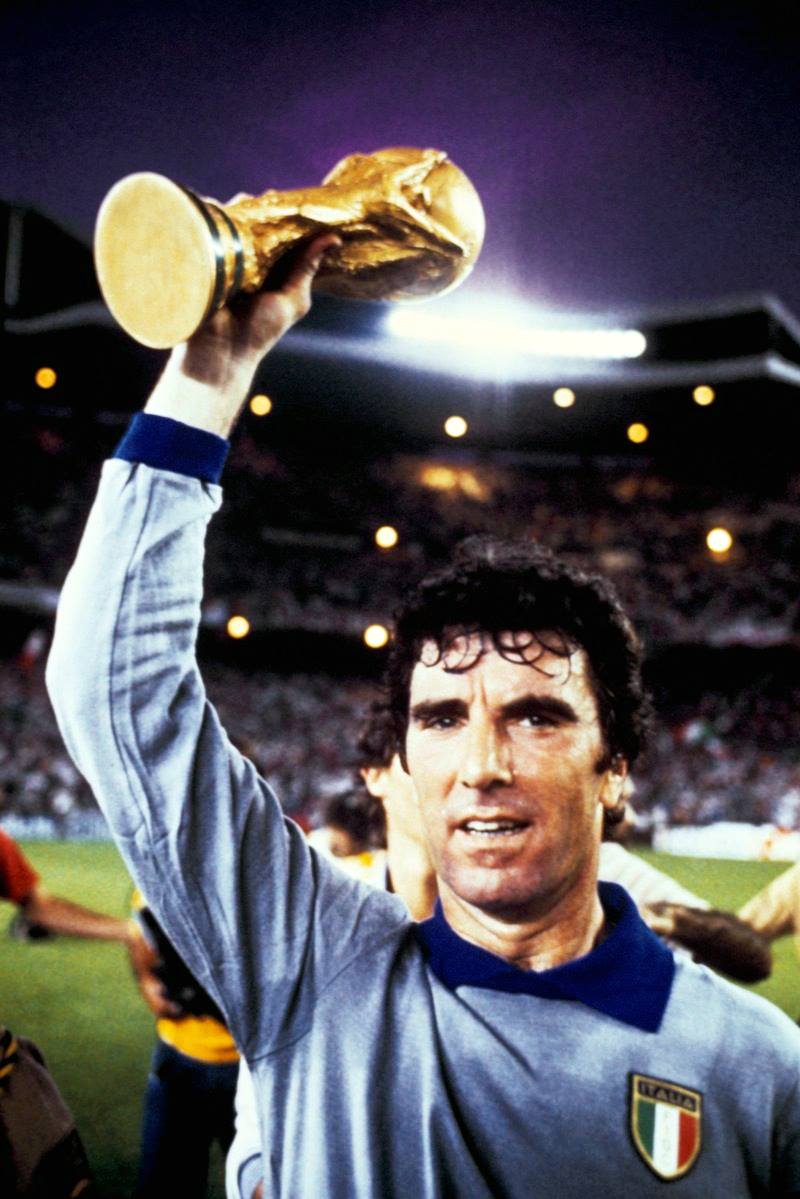
The pinnacle of Dino Zoff’s playing career occurred at the 1982 FIFA World Cup in Spain. Serving as team captain at age 40, Zoff led an Italian squad that faced intense media scrutiny following a sluggish group stage. In the second round, Zoff produced one of the iconic moments of World Cup history, making a crucial goal-line save against Brazil in the final minutes to secure a 3–2 victory and advance Italy to the semi-finals.
After defeating Poland in the semi-finals, Italy faced West Germany in the final at the Santiago Bernabéu Stadium in Madrid on July 11, 1982. Italy triumphed 3–1, and Zoff became the oldest player in history to win the FIFA World Cup—a record that still stands today. He was named the Best Goalkeeper of the Tournament and selected for the All-Star Team, concluding his international career on 112 caps.
Dino Zoff's Marriage to Annamaria Passerini & Private Family Life Beyond the Pitch
Throughout his career and subsequent retirement, Dino Zoff maintained a private and low-profile personal life. He married Annamaria Passerini, and the couple has enjoyed a stable, decades-long partnership. They have one son, Marco Zoff, who pursued a career outside of professional athletics. Zoff’s personal demeanor off the pitch mirror his professional reputation: stoic, reserved, and respectful of personal privacy.
Away from football administration and management, Zoff enjoys traditional leisure activities, including reading, playing cards, and staying connected to his roots in Friuli. He has consistently avoided public displays of vanity or sensationalist media engagements, choosing instead to let his professional body of work represent his legacy.
Dino Zoff's Press Confrontations & Tactical Resilience Across Italy's Golden Eras
Dino Zoff's Implementation of the 'Silenzio Stampa' Blackout During the 1982 World Cup
Prior to the 1982 World Cup victory, the Italian national team was subjected to severe media criticism following a series of poor friendly results and the fallout from domestic betting scandals that had impacted Italian football. The press targeted several senior players, including Zoff, questioning whether a 40-year-old goalkeeper retained the reflexes necessary for top-tier international competition.
In response to intrusive media coverage and personal attacks, Zoff, as captain, helped orchestrate the famous ‘stampa silenzio’ (press silence), where he was chosen as the sole official spokesperson for the squad. Zoff managed communication with cold professionalism, shielding younger players from hostility. His performances throughout the tournament silenced critics, culminating in widespread public apologies from prominent sports journalists following Italy’s world championship victory.
Dino Zoff's 1990 UEFA Cup Victory with Juventus & Sudden Resignation After UEFA Euro 2000
Following his retirement as a player in 1983, Zoff transitioned into coaching, managing Juventus, Lazio, and eventually the Italian national team starting in 1998. He successfully guided Italy to the final of UEFA Euro 2000, where they lost dramatically to France via a golden goal in extra time.
Despite Italy’s strong tournament run, former Prime Minister and AC Milan owner Silvio Berlusconi publicly criticized Zoff’s tactical decisions in the final, claiming Zoff should have employed individual man-marking against French playmaker Zinédine Zidane. Feeling his professional integrity and honor were publicly insulted, Zoff resigned as national team manager immediately, stating that he could not accept tactical lectures from political figures. His principled stance earned him immense respect across the sporting community for prioritizing personal dignity over high-ranking employment.

Dino Zoff's Iconic Uhlsport Gloves & Physical Longevity Training Protocol
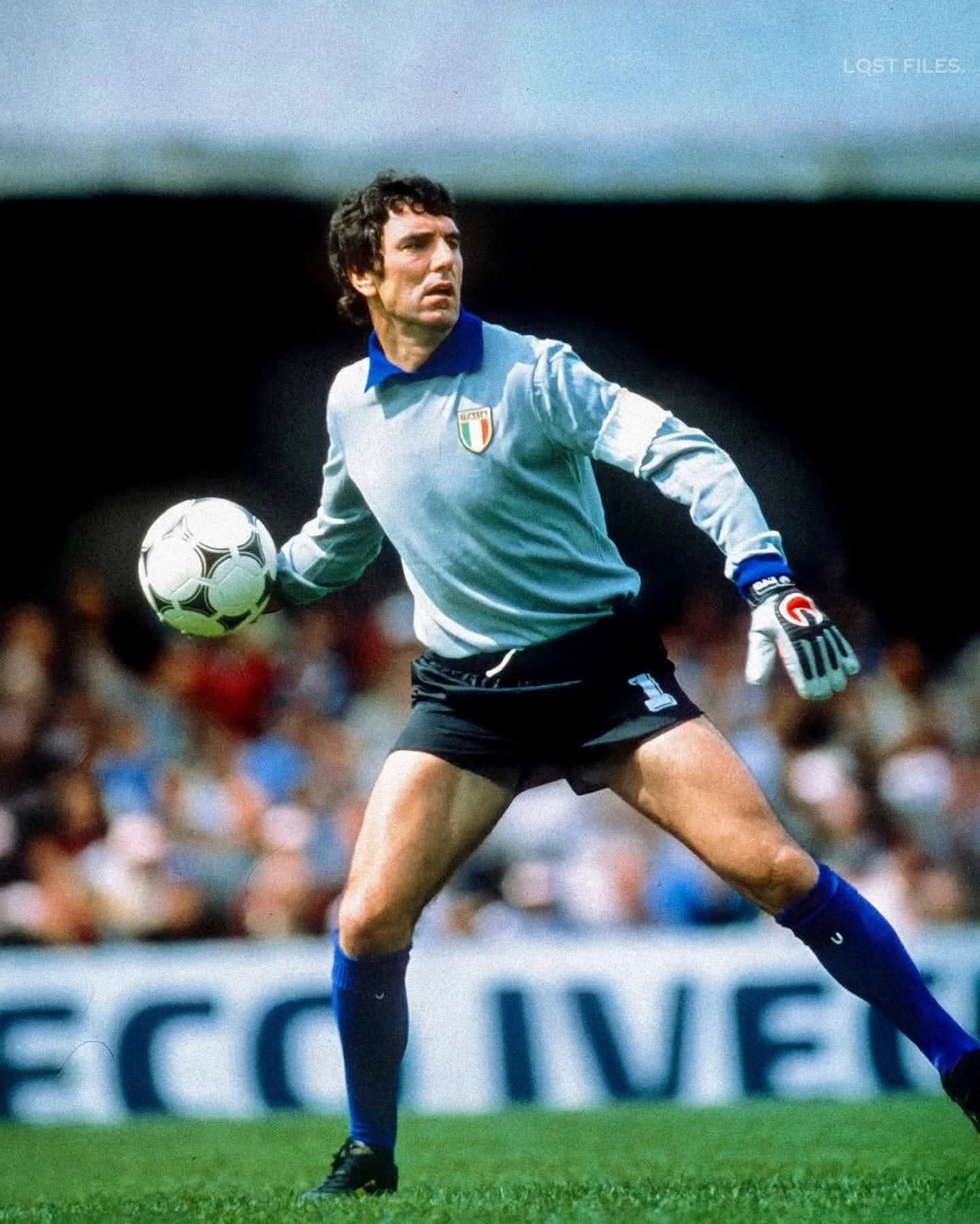
As a goalkeeper, Dino Zoff was celebrated for his efficiency, spatial positioning, and physical composure. Unlike goalkeepers who relied on spectacular dives for the cameras, Zoff prioritized anticipation, catching the ball cleanly, and organizing his defensive line to eliminate scoring chances before they materialized. His calm presence instilled confidence in his defenders, making him the archetype of the traditional Italian goalkeeping school.
As a manager, Zoff emphasized directness, tactical balance, and mutual respect within the locker room. His leadership of Juventus to a Coppa Italia and UEFA Cup double in 1990 demonstrated his ability to translate his playing standards into managerial success. Across Italy and global football, Zoff remains a gold standard for professional conduct, sportsmanship, and physical longevity.
Dino Zoff's Executive Leadership at SS Lazio & Post-Retirement Sporting Legacy
In his later years, Dino Zoff has stepped back from full-time football management, occasionally serving as a commentator, elder statesman, and guest columnist for major Italian sports outlets. His contributions to association football have been recognized with numerous accolades, including the UEFA Jubilee Award as Italy’s Golden Player in 2004 and induction into the Italian Football Hall of Fame in 2012.
Zoff’s record as the oldest World Cup winner remains unbroken, serving as an inspiration for modern athletes regarding career longevity, preparation, and professional discipline. His name remains synonymous with dignity, integrity, and elite achievement in Italian sports history.
Dino Zoff FAQs: Key Questions Answered
How old is Dino Zoff?
Dino Zoff was born on February 28, 1942, making him 84 years old.
Who is Dino Zoff married to?
Dino Zoff is married to Annamaria Passerini, with whom he shares a son, Marco Zoff.
What is Dino Zoff’s most famous career achievement?
Dino Zoff’s most famous achievement was captaining Italy to victory in the 1982 FIFA World Cup at age 40, becoming the oldest player in history to win the tournament.
Which major clubs did Dino Zoff play for?
During his senior career, Dino Zoff played for Udinese, Mantova, Napoli, and Juventus.