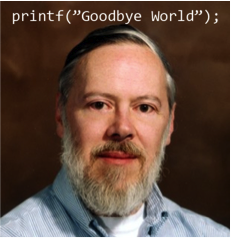
: “
1. Formative Years, Intellectual Curiosity & Academic Beginnings
Dennis MacAlistair Ritchie was born on September 9, 1941, in Bronxville, New York, a quiet suburb of New York City. From his earliest years, Ritchie was immersed in an intellectual environment steeped in technological curiosity and analytical rigor. His father, Alistair E. Ritchie, was a distinguished longtime systems engineer at AT&T Bell Laboratories and a co-author of The Design of Switching Circuits, a fundamental text in switching circuit theory. His mother, Jean McGee Ritchie, maintained a nurturing household that valued intellectual exploration and independent thought. During Dennis’s childhood, the family relocated to Summit, New Jersey, where he spent his formative years attending public schools and demonstrating an extraordinary talent for mathematics, physics, and formal logic.
Ritchie graduated from Summit High School with high honors before matriculating at Harvard University in 1959. At Harvard, he pursued a Bachelor of Science degree in physics, graduating in 1963. Despite his academic success in physical sciences, Ritchie later reflected with characteristic modesty that his experience as an undergraduate convinced him he lacked the intuitive genius needed to become a theoretical physicist. However, while attending a lecture on the UNIVAC I computer, Ritchie discovered a new passion: computational machinery and the emerging discipline of computer science.
He remained at Harvard for graduate studies in applied mathematics, completing a doctoral dissertation titled Computational Complexity and Program Structure under the supervision of computer scientist Patrick C. Fischer in 1968. Remarkably, due to administrative nuances and Ritchie’s decision not to pay the binding fees to submit a printed copy to the Harvard library, the degree was never officially conferred during his lifetime. Nevertheless, his academic background in formal logic, combined with practical computer experience gained at the Massachusetts Institute of Technology (MIT) computing center during his graduate years, laid the groundwork for a revolutionary career in software engineering.

2. The Intellectual Awakening: Landmark Breakthroughs & Public Emergence
In 1967, Dennis Ritchie was recruited by AT&T Bell Laboratories, joining the famous Computing Sciences Research Center in Murray Hill, New Jersey. Bell Labs at the time was the world’s premier research industrial laboratory, providing an unmatched environment of creative freedom, technical brilliance, and unconstrained research exploration. Shortly after arriving, Ritchie was assigned to the Multics (Multiplexed Information and Computing Service) project, a ambitious joint enterprise between Bell Labs, General Electric, and MIT aimed at building a massive, multi-user time-sharing operating system.
While Multics was groundbreaking in concept, it grew increasingly complex, bloated, and slow, leading Bell Labs management to officially withdraw from the consortium in 1969. The cancellation left Ritchie and a brilliant young colleague, Ken Thompson, without an interactive computing environment. Refusing to return to traditional mainframe batch computing, Thompson discovered a little-used Digital Equipment Corporation (DEC) PDP-7 minicomputer in a storage room. Together with Ritchie, Rudd Canaday, and Doug McIlroy, Thompson set out to build a lightweight, elegant operating system from scratch.
In 1970, researcher Brian Kernighan suggested naming the system “Unix”—a playful pun on Multics. Initial development was performed using assembly language, but the team quickly realized that assembly code was tightly bound to specific hardware processors, preventing the system from easily migrating to new computers. To overcome this limitation, Ritchie began working on a general-purpose programming language that combined high-level abstraction with low-level control over hardware memory structures. Building upon Thompson’s interpretation of the B language (which itself derived from Martin Richards’ BCPL), Ritchie designed and implemented the C programming language between 1971 and 1973.
3. The Golden Era: Magnum Opus & Revolutionary Contributions
3.1. Seminal Breakthroughs & Doctrinal Innovations
The creation of C was an unprecedented breakthrough in computer software design. Prior to C, operating system kernels were universally written in assembly language because low-level machine hardware control was deemed too critical for performance to trust to higher-level compilers. Ritchie’s compiler for C provided simple, clean abstractions—such as pointers, explicit data types, and structured control flow—while generating machine code that executed with near-assembly efficiency.
In 1973, Ritchie and Thompson took a monumental step that changed the course of computer history: they completely rewrote the Unix kernel in C. This marked the first time a major operating system was written in a high-level programming language. The architectural decision rendered Unix astonishingly portable. Instead of spending years rewriting an entire operating system for new processor architectures, developers only needed to adapt the C compiler to target a new computer; Unix could then be recompiled and run on the new system with minimal modifications.
Recognizing the academic and commercial potential of their work, Ritchie co-authored The Unix Programmer’s Manual in 1971. In 1978, alongside Brian Kernighan, Ritchie published The C Programming Language. Popularly known around the world as “K&R,” the concise, brilliantly written volume became the definitive standard reference manual for millions of programmers, translated into over two dozen languages and serving as an international benchmark for technical prose.

3.2. Global Recognition & Academic Debates
Throughout the late 1970s and 1980s, Unix and C expanded rapidly beyond corporate research labs into university computer science departments, government institutes, and global commercial hardware vendors. Because AT&T was bound by a federal anti-trust consent decree preventing it from selling software commercially, the company distributed Unix source code to universities for nominal licensing fees. A generation of computer scientists grew up studying Unix source code directly, adopting the Unix Philosophy—a set of design principles favoring small, modular tools that communicate via simple text pipes.
The architectural concepts pioneered by Ritchie directly laid the groundwork for modern enterprise computing infrastructure. When Linus Torvalds released the open-source Linux kernel in 1991, he built a Unix-compatible kernel written in C. Apple’s macOS, iOS, Android, Microsoft Windows utilities, web browsers, graphics engines, cloud datacenters, and embedded microprocessors are all fundamentally built on top of C, C++, and Unix-derived operating system kernels.
During the 1980s and 1990s, Ritchie advanced to senior research leadership roles at Bell Labs. He headed the Systems Software Research Department, driving research into distributed operating systems such as Plan 9 from Bell Labs and the Inferno operating system, as well as the Limbo programming language designed for networked devices.

3.3. Archival Publications & Lasting Doctrinal Mastery
Ritchie’s contributions received the highest honors across science and technology. In 1983, Dennis Ritchie and Ken Thompson were awarded the Association for Computing Machinery (ACM) A.M. Turing Award—widely recognized as the “Nobel Prize of Computer Science”—for their development of generic operating systems theory and the implementation of Unix. In 1990, the IEEE presented them with the Richard W. Hamming Medal.
In 1999, President Bill Clinton presented Ritchie and Thompson with the National Medal of Technology at the White House for their co-invention of the Unix operating system and C language, citing their profound impact on American technological leadership. In 2011, Ritchie was awarded the prestigious Japan Prize for Information and Telecommunications, honoring his lifelong work in establishing the foundational paradigms of computer engineering.
Despite these monumental accolades, Ritchie maintained a legendary modesty throughout his 40-year career. Known by his login handle dmr, he was universally admired by colleagues for his generous mentorship, dry wit, and complete absence of personal arrogance. He officially retired from Lucent Technologies (which spun off Bell Labs) in 2007, though he continued visiting his Bell Labs office regularly until his passing.
4. Private Life, Intellectual Circles & Personal Confidants
In sharp contrast to modern tech CEOs and public figures, Dennis Ritchie lived a quiet, introverted personal life. He was unmarried throughout his life and had no children. He maintained a modest home in Berkeley Heights, New Jersey, close to the Bell Labs campus in Murray Hill, preferring simple living over lavish luxury.
Ritchie was deeply attached to his family, maintaining close bonds with his siblings—including his brother Bill Ritchie—and extended relatives. Outside of his computing work, he was an avid reader with a deep appreciation for classical literature, history, science fiction, and travel. Friends and colleagues frequently spoke of his quiet humor and broad intellectual interests, noting that while he rarely sought out public crowds, he deeply enjoyed technical debates over coffee with research colleagues.
In his later years, Ritchie faced significant personal health challenges. He underwent extensive treatment for prostate cancer and heart disease, conditions that gradually weakened his physical health. On October 12, 2011, Ritchie was found dead at his home in Berkeley Heights at the age of 70. Because his death occurred just one week after the passing of Apple co-founder Steve Jobs, public media coverage of Ritchie’s death was relatively quiet. However, the global software engineering community paid profound tribute to the man whose foundational inventions made Jobs’s devices possible in the first place.

5. Institutional Opposition, Controversies & Resilience Under Fire
5.1. Dennis MacAlistair Ritchie and the M-209 Cipher Cryptanalytic Research
While Dennis Ritchie avoided personal scandals, financial misconduct, or public feuds, his career intersected with high-stakes national security controversies during the Cold War. During the 1970s, Ritchie collaborated with Bell Labs colleagues James Reeds and Robert Morris on a mathematical attack against the M-209 cipher machine—a mechanical cipher device used by the United States military. Their research demonstrated that ciphertext-only messages could be broken with surprising speed using automated computing techniques.
When the researchers prepared to publish their findings, representatives from the National Security Agency (NSA) intervened. The NSA advised Ritchie and his co-authors that the mathematical principles outlined in their paper were directly applicable to tactical cipher machines still actively deployed by foreign governments. Faced with intense national security pressures and national defense secrecy requests, Ritchie and his colleagues voluntarily agreed to withhold public publication. The incident highlighted the tension between open academic software research and national security surveillance—a debate that Ritchie navigated with calm, pragmatic diplomacy.
5.2. Navigating the AT&T Divestiture, AT&T v. BSDI Lawsuits, and Unix Wars
As Unix became the standard operating system for global computing, AT&T recognized its commercial potential and established commercial licensing divisions during the late 1980s. This led to the era known as the “Unix Wars,” where commercial vendors fragmented the Unix landscape into competing proprietary dialects (such as SunOS, HP-UX, and AIX). The resulting fragmentation caused severe confusion, software incompatibilities, and high-profile legal battles over Unix intellectual property rights.
Ritchie expressed profound sadness over the corporate greed and legal infighting that fragmented his original vision of a unified, open operating system. Rather than becoming embroiled in corporate licensing lawsuits, Ritchie stepped back from politics and focused strictly on pure software research at Bell Labs. His decision to remain focused on engineering integrity ensured that his reputation remained pristine throughout decades of corporate litigation surrounding the Unix trademark.

6. Intellectual Paradigm, Cultural Resonance & Historic Influence
Dennis Ritchie’s aesthetic and professional style were defined by minimalism, clarity, and precision. Unlike contemporary corporate executives who favor branded suits and polished keynote presentations, Ritchie was famously comfortable in casual sweaters and comfortable slacks, surrounded by towers of papers and computer terminals in his Bell Labs office. His coding style reflected the exact same philosophy: uncluttered code, explicit structural logic, and no redundant bloat.
Ritchie passed away before the modern era of social media platforms like X (Twitter) or Instagram took root. His primary web presence was his iconic Bell Labs homepage (usr/dmr), where he maintained historical essays on Unix, C history, software manuals, and sharp, witty commentary on computer architecture. His homepage remains a revered destination for software engineers worldwide.
His cultural legacy is immeasurable. As computer historian Paul E. Ceruzzi famously remarked upon Ritchie’s passing, “Ritchie was under the radar. His name was not a household name at all, but… if you had a microscope and could look in a computer, you’d see his work everywhere inside”. The simple “Hello, World!” program—introduced in Ritchie’s C manual—remains the universal first program written by millions of computer science students in every language across the globe.
7. Preservation of Manuscripts, Scholarly Revival & Immortality
Though Dennis Ritchie passed away in 2011, his creations remain actively maintained and continuously evolving pillars of global technology. The C programming language continues to rank among the most widely used programming languages on earth, governing low-level kernel development, system drivers, microcontrollers, real-time embedded devices, and high-performance computing systems.
International standards committees (ISO/IEC) periodically update the C standard (with iterations such as C11, C17, and C23) to adapt to modern hardware, while strictly maintaining the core syntax and philosophy established by Ritchie over fifty years ago. Similarly, Unix-like operating systems continue to dominate global computing infrastructure. Linux powers 100% of the world’s top 500 supercomputers, the overwhelming majority of internet cloud servers, and billions of mobile devices through Android. Every time a user searches the web, sends a message on a smartphone, or launches a cloud application, they are directly executing code that relies on the architectural principles engineered by Dennis Ritchie.
8. Dennis MacAlistair Ritchie FAQs: Key Questions Answered
How old was Dennis Ritchie when he passed away?
Dennis Ritchie passed away in October 2011 at the age of 70 at his home in Berkeley Heights, New Jersey.
Who was Dennis Ritchie married to or dating?
Dennis Ritchie was unmarried throughout his life and had no children, living a private life focused on his scientific research.
What is Dennis Ritchie’s most famous invention?
Dennis Ritchie is most famous for creating the C programming language and co-creating the Unix operating system alongside Ken Thompson at Bell Labs.
What prestigious awards did Dennis Ritchie win?
Ritchie received the ACM Turing Award (1983), the IEEE Hamming Medal (1990), the U.S. National Medal of Technology (1999), and the Japan Prize (2011).