From Idar-Oberstein Roots to Penns Grove Stage: Walter Bruce Willis Overcomes Stuttering
Walter Bruce Willis was born on March 19, 1955, in Idar-Oberstein, West Germany. His mother, Marlene, was a German woman working at a local bank, while his father, David Willis, was an American soldier stationed overseas who later worked as a welder, master mechanic, and factory worker. In 1957, following David’s discharge from the military, the family relocated to his home state of New Jersey, settling in the working-class borough of Carneys Point. Raised alongside three younger siblings—Florence, Robert, and David—Willis often described his family roots as coming from a long line of blue-collar workers, instilling in him a relentless work ethic and a grounded perspective on life.
During his upbringing, Willis faced a severe stuttering condition that affected his self-confidence and speech throughout his school years. However, he discovered an unexpected remedy during high school when he tried out for a theater production. To his surprise, stepping onto a stage and memorizing a script completely eradicated his stutter. Realizing that acting provided a profound therapeutic release as well as a passion, he threw himself into school drama productions and was eventually elected student council president at Penns Grove High School.
Upon graduating in 1973, Willis immediately entered the blue-collar workforce to support himself. He took on demanding jobs including working as a security guard at the Salem Nuclear Power Plant, driving transport trucks at the DuPont Chemical facility in Deepwater, New Jersey, and even working for a period as a private investigator—a role that would later ironically inform some of his most famous acting performances. Driven by his passion for the arts, he enrolled in the prestigious drama program at Montclair State University. There, his performance in a campus production of Tennessee Williams’ Cat on a Hot Tin Roof earned widespread acclaim from faculty members. Eager to pursue a professional career, Willis made the bold decision to leave college in 1977 and move to New York City.
In New York, Willis navigated the gritty life of a struggling actor in Hell’s Kitchen. To make ends meet, he worked night shifts as a bartender at legendary Manhattan nightspots such as Kamikaze and Cafe Central. His natural charisma behind the bar made him a popular figure among regulars and industry insiders, while during the daytime, he auditioned tirelessly for Off-Broadway plays, television commercials, and extra roles. He served as an NBC page and landed brief, uncredited appearances in major films like The First Deadly Sin (1980) and The Verdict (1982). This grueling formative decade laid the foundation for his rapid rise, forging the magnetic grit that would soon captivate global audiences.
Walter Bruce Willis Auditions as John McClane in Die Hard and Secures Moonlighting Stardom
The turning point of Bruce Willis’s life arrived in 1984 when he traveled to Los Angeles to audition for a role in the movie Desperately Seeking Susan. While in Hollywood, he decided to audition for a new ABC television comedy-drama pilot titled Moonlighting. The show’s creator, Glenn Gordon Caron, was searching for a male lead to play David Addison Jr., a irreverent, fast-talking private detective who runs the Blue Moon Detective Agency alongside a former fashion model, played by Cybill Shepherd.
Willis was chosen out of more than 3,000 actors who auditioned nationwide. Network executives initially hesitated to hire an unknown actor with an unconventional, rough-around-the-edges charm, but Caron insisted that Willis possessed an undeniable, electro-magnetic screen chemistry with Shepherd. Premiering in March 1985, Moonlighting instantly became a massive pop culture phenomenon. The series broke television conventions with its witty dialogue, fourth-wall breaks, dynamic banter, and romantic tension, propelling Willis from an anonymous New York bartender to an overnight international superstar.
During the show’s five-season run, Willis earned critical adoration and prestigious accolades, winning the Primetime Emmy Award for Outstanding Lead Actor in a Drama Series in 1987 and a Golden Globe Award for Best Actor in a Television Series – Musical or Comedy. His sudden fame catapulted him into high-profile commercial endorsements, most notably becoming the national pitchman for Seagram’s Golden Wine Cooler products in a multimillion-dollar campaign that further cemented his suave, fun-loving public image. He also showcased his musical talent by releasing a blues-rock album under Motown Records, The Return of Bruno (1987), which yielded the top-five Billboard hot hit single “Under the Boardwalk”. By 1987, Willis had firmly established himself as a versatile powerhouse in global pop culture.
Walter Bruce Willis Dominates Pulp Fiction, The Sixth Sense, and Golden Globe Honors
Walter Bruce Willis Embodies Iconic Roles in Armageddon and Twelve Monkeys
While Moonlighting made Bruce Willis a household name on television, Hollywood was initially skeptical of his ability to transition into leading film roles. After starring in Blake Edwards’ romantic comedy Blind Date (1987) opposite Kim Basinger, Willis was offered a role that would radically alter the course of modern action cinema: NYPD Detective John McClane in 20th Century Fox’s 1988 summer blockbuster Die Hard.
At the time, action cinema was dominated by invincible, hyper-muscular heroes played by Arnold Schwarzenegger and Sylvester Stallone. Willis, paid an unprecedented $5 million salary for the film, portrayed McClane as an exhausted, vulnerable, barefoot everyday cop trapped in the Nakatomi Plaza skyscraper, relying on sheer grit, dark humor, and improvisation to fight off heavy-armed terrorists. Die Hard grossed over $140 million worldwide, received universal critical acclaim, and revolutionized the action film genre. Willis’s depiction of an underdog who bleeds, feels fear, and uses quick wit created a brand-new archetype for cinematic action heroes.
The success of Die Hard spawned one of the highest-grossing film franchises in cinematic history. Willis reprised the role in Die Hard 2 (1990) and Die Hard with a Vengeance (1995), with the third installment becoming the highest-grossing film worldwide in 1995, earning over $366 million. He would later return to the character in Live Free or Die Hard (2007) and A Good Day to Die Hard (2013), cementing John McClane as one of the most iconic characters in film history.
Walter Bruce Willis Headlines Global Premieres from Cannes to Hollywood Box Office Sweeps
Following the commercial triumph of action cinema, Willis sought to diversify his portfolio in the early 1990s by working with visionary auteur directors. In 1994, he took a significant salary cut to play the washed-up, ethically conflicted boxer Butch Coolidge in Quentin Tarantino’s seminal masterpiece Pulp Fiction. His understated, tense, and deeply compelling performance was hailed as a career peak, helping the film win the Palme d’Or at the Cannes Film Festival and earning over $213 million globally while redefining modern independent cinema.
Willis continued his streak of artistic critical successes by working with Terry Gilliam in the sci-fi thriller 12 Monkeys (1995), delivering an emotionally haunting performance as time-traveler James Cole alongside Brad Pitt. He followed this with Luc Besson’s flamboyant sci-fi epic The Fifth Element (1997), playing futuristic cab driver Korben Dallas in a international blockbuster that grossed over $263 million.
The late 1990s marked Willis’s absolute peak as an unbeatable global box office draw. In 1998, he starred as deep-core oil driller Harry Stamper in Michael Bay’s disaster thriller Armageddon. The film became the highest-grossing movie of 1998 worldwide, raking in $553 million and featuring an emotional climax that dominated pop culture.
Just one year later, Willis delivered perhaps the most critically praised performance of his career in M. Night Shyamalan’s supernatural drama The Sixth Sense (1999). Playing child psychologist Dr. Malcolm Crowe opposite Haley Joel Osment, Willis showcased remarkable subtlety and dramatic depth. The film became a cultural phenomenon, grossing $672 million worldwide and securing six Academy Award nominations. Willis continued his fruitful collaboration with Shyamalan by starring as the unbreakable David Dunn in the superhero thriller Unbreakable (2000), a film now regarded as a ahead-of-its-time masterpiece.
Walter Bruce Willis Shapes Action Cinema Legacy with Chevalier de L'Ordre des Arts Honors
Entering the 2000s and 2010s, Willis demonstrated an extraordinary range across studio blockbusters, television guest roles, and ensemble action comedies. In 2000, he made a memorable multi-episode guest appearance on the hit sitcom Friends as Paul Stevens. His hilarious comedic timing earned him his second Primetime Emmy Award, this time for Outstanding Guest Actor in a Comedy Series.
He continued to dominate the box office with ensemble hit comedies like The Whole Nine Yards (2000) and neo-noir graphic novel adaptations like Robert Rodriguez’s Sin City (2005), in which he played the noble, tragic cop John Hartigan. In 2006, Willis was honored with a star on the prestigious Hollywood Walk of Fame located at 6915 Hollywood Boulevard, surrounded by fans and industry peers celebrating his quarter-century of cinematic influence.
In 2010, Willis joined forces with Sylvester Stallone and Arnold Schwarzenegger for the action ensemble blockbuster The Expendables, and starred in the action-comedy Red alongside Helen Mirren and Morgan Freeman, which became a commercial hit. He continued to seek out auteur-driven indie cinema, earning rave reviews for his performances as Captain Sharp in Wes Anderson’s Moonrise Kingdom (2012) and an older assassin in Rian Johnson’s time-travel thriller Looper (2012). In 2019, he brought his iconic Unbreakable trilogy to a close by starring alongside Samuel L. Jackson and James McAvoy in Shyamalan’s Glass.
Walter Bruce Willis and Demi Moore: Marriage, Family Life, and Private Milestones
Bruce Willis’s personal life has frequently captured international headlines, defined by high-profile relationships, strong family bonds, and a remarkably harmonious co-parenting dynamic that broke Hollywood norms. In August 1987, at the premiere of the film Stakeout, Willis met actress Demi Moore. The pair had a whirlwind romance and tied the knot on November 21, 1987, at the Golden Nugget Hotel in Las Vegas, followed by a lavish official wedding ceremony for friends and family.
Together, Willis and Moore became one of Hollywood’s quintessential power couples throughout the late 1980s and 1990s. They welcomed three daughters: Rumer Glenn Willis (born 1988), Scout LaRue Willis (born 1991), and Tallulah Belle Willis (born 1994). Rather than raising their children entirely in the media spotlight of Los Angeles, Willis and Moore relocated their primary residence to Hailey, Idaho, where Willis bought extensive real estate, opened local businesses, and prioritized giving his daughters a grounded childhood away from paparazzi.
After nearly 11 years of marriage, Willis and Moore announced their separation in 1998, with their divorce finalized in October 2000. Despite the end of their marriage, the pair maintained an exceptionally close, affectionate friendship and an exemplary co-parenting relationship. Willis routinely attended industry events, holidays, and family vacations alongside Moore and her subsequent husband, Ashton Kutcher, earning widespread respect for putting his children’s well-being above personal drama.
Following his divorce, Willis had brief romantic engagements with model Maria Bravo Rosado and actress Brooke Burns. In 2007, he met model and entrepreneur Emma Heming. The couple married on March 21, 2009, in Turks and Caicos, later holding a civil ceremony in Beverly Hills. Willis and Heming welcomed two daughters: Mabel Ray Willis (born 2012) and Evelyn Penn Willis (born 2014).
Outside of acting, Willis has maintained diverse personal interests. He is a passionate blues musician and harmonica player who frequently toured with his band, The Accelerators. He is also a vocal advocate for military service members, having visited US troops in Iraq in 2003 and supported various veterans’ charities throughout his life. His blended family—including Moore, Heming, and his five daughters—remains fiercely protective and supportive of him, frequently sharing heartwarming glimpses of their close bond.
Walter Bruce Willis Navigates Industry Critiques and Production Tensions
Walter Bruce Willis Facing the Hudson Hawk Box-Office Turbulence and Industry Friction
Despite his immense box office success, Bruce Willis’s career was not without significant media storms and professional conflicts. One of the earliest major crises occurred in 1991 with the release of Hudson Hawk, an ambitious action-comedy project that Willis co-wrote, pitched, and starred in. The film’s production was plagued by massive budget overruns, script rewrites, and behind-the-scenes chaos, inflating the budget to over $65 million. Upon release, the film was brutally panned by critics and bombed at the box office, becoming synonymous in the press with Hollywood star hubris. The fallout was immediate: media outlets targeted Willis, labeling him difficult to manage and questioning his viability as a creative producer. Willis responded by refocusing on acting and collaborating with established directors, quickly recovering his box office status through strategic project selection.
Throughout his career, Willis also acquired a reputation for occasional friction with film directors and co-stars. During the filming of Cop Out (2010), director Kevin Smith publicly criticized Willis following production, claiming that working with him was “soul-crushing” and alleging that Willis was uncooperative on set. Similarly, during the pre-production of The Expendables 3 (2013), producer and co-star Sylvester Stallone publicly vented on social media after contract negotiations with Willis broke down over salary demands, calling him “greedy and lazy” after Willis reportedly turned down a $3 million offer for four days of shooting. While these incidents fueled media headlines and public debates over movie star compensation, Willis largely refrained from engaging in petty public spats, maintaining a professional distance and letting his box office legacy speak for itself.
Walter Bruce Willis Battles Aphasia and Frontotemporal Dementia Diagnosis
In the late 2010s and early 2020s, Willis faced intense public debate and media scrutiny regarding his professional choices. Fans and critics noticed a dramatic shift in his career trajectory as he began starring in a staggering volume of low-budget, direct-to-video (VOD) action films—appearing in over 20 such titles between 2019 and 2022. The Golden Raspberry Awards (Razzies) even created a dedicated, satirical category in 2022 titled “Worst Performance by Bruce Willis in a 2021 Movie.” Critics questioned why an A-list icon was taking on minor roles in obscure action movies, sparking widespread internet speculation and media mockery.
However, the narrative shifted dramatically in March 2022 when Willis’s family issued a joint statement announcing his immediate retirement from acting. The statement revealed that Willis had been diagnosed with **aphasia**, a neurological condition that impairs language comprehension and speech production. Reports immediately surfaced explaining that Willis had been bravely working despite his declining cognitive capabilities, using earpieces for lines and shortening his working hours so he could provide financial security for his family before losing his ability to perform.
In February 2023, his family provided a tragic update, confirming that his condition had progressed to a more specific diagnosis: **frontotemporal dementia (FTD)**. FTD is a cruel, degenerative brain condition that affects personality, behavior, and language. The public backlash and critical snark immediately evaporated, turning into an unprecedented wave of global empathy, support, and appreciation. The Razzie Awards officially rescinded their insensitive award category, and industry peers—including Sylvester Stallone, Quentin Tarantino, and M. Night Shyamalan—paid emotional tributes to his courage, dignity, and monumental contributions to cinema.
Walter Bruce Willis Defines the Everyman Action Hero Style in Modern Cinema
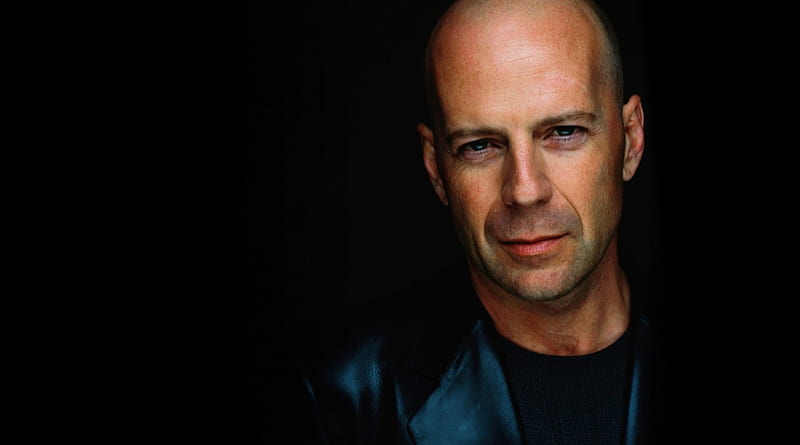
Bruce Willis’s cultural impact on fashion, screen masculinity, and stardom is profound. In an era dominated by polished, clean-cut Hollywood leading men, Willis embraced a rugged, authentic aesthetic. His signature look in the late 1980s and 1990s—dirty white tank tops, leather jackets, smirking charisma, and eventually a proudly shaven head—redefined action star masculinity. He was one of the first major Hollywood stars to embrace male pattern baldness openly, turning a shaven head into a symbol of rugged, unpretentious coolness.
Unlike contemporary stars who maintain active digital presence on platforms like Instagram, X (Twitter), or TikTok, Bruce Willis has famously never maintained personal, verified public social media accounts. He maintained a classic, private boundary between his public work and personal life. However, his cultural footprint thrives digitally across fan networks, clip archives, and through the active social media channels of his family members. His wife Emma Heming Willis and ex-wife Demi Moore frequently share updates on his health, family gatherings, and milestone celebrations, using their platforms to raise vital public awareness for frontotemporal dementia research and support resources.
Walter Bruce Willis Retires from Acting: Preserving the Cinematic Legacy
Following his official retirement from acting in March 2022 due to his frontotemporal dementia diagnosis, Bruce Willis is no longer accepting film roles or making public performance appearances. His final screen performances were released across 2022 and 2023 in independent feature films that had wrapped production prior to his formal announcement.
Today, Willis resides quietly in California surrounded by his devoted wife Emma, his five daughters, his grandchildren, and his close friends. His family continues to focus on providing him with a peaceful, loving environment while using his global platform to champion awareness for brain health and dementia advocacy. Willis’s extensive library of work—comprising over 100 feature films, iconic television series, and classic soundtrack recordings—ensures that his artistic legacy remains permanently etched into the tapestry of cinematic history.
Walter Bruce Willis FAQs: Key Questions Answered
How old is Bruce Willis?
Bruce Willis was born on March 19, 1955.
Who is Bruce Willis married to?
Bruce Willis has been married to model and entrepreneur Emma Heming Willis since March 2009. He was previously married to actress Demi Moore from 1987 to 2000.
Why did Bruce Willis retire from acting?
Bruce Willis retired from acting in March 2022 after being diagnosed with aphasia, a cognitive condition that impairs speech and communication. In February 2023, his family revealed his condition had progressed to frontotemporal dementia (FTD).
What is Bruce Willis’s most famous movie role?
Bruce Willis is best known for starring as NYPD officer John McClane in the blockbuster Die Hard film franchise (1988–2013). His other notable lead roles include Pulp Fiction, The Sixth Sense, Armageddon, 12 Monkeys, and Unbreakable.
How many children does Bruce Willis have?
Bruce Willis has five daughters: Rumer, Scout, and Tallulah from his marriage to Demi Moore, and Mabel and Evelyn from his marriage to Emma Heming Willis.