
: “
Benjamin Abraham Horowitz: Berkeley Roots, David Horowitz Lineage & Columbia CS Degree
Benjamin Abraham Horowitz was born in London, England, on January 13, 1966, before moving to Berkeley, California, where he spent his formative childhood years. Raised in an environment of intense intellectual debate and political friction, he is the son of Elissa Krauthamer and the prominent conservative author, policy advocate, and former New Left activist David Horowitz. Growing up in Berkeley during a turbulent era of social activism, young Ben was exposed early on to conflicting ideological worldviews. This unique upbringing cultivated a profound level of emotional resilience, open-mindedness, and an exceptional ability to evaluate complex situations without succumbing to ideological dogma.
Horowitz attended Berkeley High School, where he distinguished himself academically while immersing himself in diverse social environments. He stood out as one of the few white players on the school’s varsity football team—an experience he later credited with teaching him crucial lessons in teamwork, leadership across cultural divides, and earning respect through sheer performance and grit rather than privilege. This grounding in competitive athletics and street-smart camaraderie laid the foundation for his pragmatic, no-nonsense approach to business and management.
Demonstrating an early aptitude for mathematics and logical reasoning, Horowitz pursued higher education at Columbia University in New York City, graduating with a Bachelor of Arts in Computer Science in 1988. Eager to deepen his technical mastery during the dawn of the personal computing boom, he continued his academic journey at the University of California, Los Angeles (UCLA), earning a Master of Science in Computer Science in 1990. His rigorous academic background in software architecture and systems engineering positioned him perfectly at the intersection of emerging technology and industrial commercialization as Silicon Valley began its exponential rise.

Benjamin Abraham Horowitz at SGI, Lotus & Netscape: Marc Andreessen Partnership Begins
Upon completing his master’s degree in 1990, Horowitz launched his professional career as a software engineer at Silicon Graphics (SGI), a pioneering workstation company that defined high-performance computing and 3D graphics in the early 1990s. At SGI, Horowitz honed his engineering capability, learning the intricacies of system architecture, hardware-software integration, and corporate execution within a fast-scaling tech giant. However, his ambition quickly expanded beyond writing code; he sought to drive product strategy and corporate direction.
Following a successful tenure at SGI, Horowitz spent a brief period at Lotus Development Corporation in product marketing, where he gained crucial exposure to enterprise software sales, distribution channels, and marketing dynamics. In July 1995, as the commercial Internet was reaching a tipping point, Horowitz made a career-defining move by joining Netscape Communications as a product manager. Netscape, co-founded by Marc Andreessen and Jim Clark, was the crown jewel of the early web boom. Horowitz was tasked with overseeing key server products and eventually rose to become Vice President and General Manager of Netscape’s Directory and Security product line.
Working at Netscape proved to be an intense trial by fire. Horowitz experienced firsthand the ferocious “Browser Wars” against Microsoft, navigating relentless competitive pressure, rapid hypergrowth, and complex enterprise software deployments. Crucially, his tenure at Netscape established his deep professional partnership and lifelong friendship with Marc Andreessen. When America Online (AOL) acquired Netscape in November 1998 for $4.2 billion, Horowitz transitioned to AOL, serving as Vice President of the eCommerce Division. At AOL, he managed high-volume online shopping platforms and monetization engines, but the corporate bureaucratization of a post-merger conglomerate soon fueled his desire to build an independent company from the ground up.
Benjamin Abraham Horowitz Authors The Hard Thing About Hard Things & What You Do Is Who You Are
Benjamin Abraham Horowitz Defines the Peacetime CEO vs. Wartime CEO Leadership Framework
In September 1999, at the absolute height of the dot-com bubble, Ben Horowitz teamed up with Marc Andreessen, Tim Howes, and In Sik Rhee to co-found Loudcloud. Serving as Chief Executive Officer, Horowitz set out to build a groundbreaking business: providing infrastructure-as-a-service and automated cloud hosting for high-traffic enterprise websites. Long before Amazon Web Services popularized modern cloud computing, Loudcloud pioneered the architecture of utility computing, managed data centers, and infrastructure automation software known as Opsware.
Loudcloud experienced explosive early adoption, landing marquee enterprise accounts including Nike, Ford Motor Company, News Corporation, Gannett, and the United States Army. The company raised over $200 million in venture capital and rapidly expanded its infrastructure footprint. However, just as Loudcloud was scaling, the dot-com bubble burst in early 2000. Capital markets froze overnight, hundreds of dot-com startups collapsed, and Loudcloud’s customer base began evaporating. Facing impending insolvency, Horowitz executed a daring financial move: taking Loudcloud public on the NASDAQ in March 2001 under the ticker LDCL.
The initial public offering was a high-wire act conducted during one of the most hostile market environments in Wall Street history. Dubbed the “IPO from Hell” by financial commentators, the offering was repeatedly delayed and forced to downsize, but Horowitz managed to raise $150 million in vital capital. Despite securing public liquidity, the collapse of the telecom and web hosting sectors meant Loudcloud’s managed hosting services continued to bleed cash, pushing the enterprise to the brink of bankruptcy.

Benjamin Abraham Horowitz Advocates the Good Product Manager / Bad Product Manager Doctrine
Recognizing that Loudcloud’s traditional hosting services were unsustainable, Horowitz conceived and executed one of the most audacious corporate turnarounds in Silicon Valley history. He realized that while the managed hosting business had thin margins and immense capital expenses, the internal software Loudcloud had built to automate data center management—dubbed Opsware—was extraordinarily valuable to enterprise IT departments.
In June 2002, Horowitz made the radical decision to sell Loudcloud’s entire hosting business and client base to Electronic Data Systems (EDS) for $63.5 million in cash. The transaction transferred 100 percent of Loudcloud’s current revenue to EDS, transforming a public hosting company overnight into a enterprise software pure-play named Opsware. The pivot was met with intense skepticism from Wall Street, causing Opsware’s stock price to crash to an all-time low of $0.35 per share, wiping out standard market capitalization and earning the company a threat of NASDAQ delisting.
Refusing to capitulate, Horowitz led Opsware through years of rigorous product development, restructuring, and strategic enterprise sales. He built Opsware into a leader in data center automation, enabling corporate clients to manage thousands of servers, networks, and software applications seamlessly. Horowitz expanded Opsware’s footprint through targeted acquisitions, including the strategic purchases of Tangram Enterprise Solutions, CreekPath, and Rendition Networks. Over five years of relentless operational execution, Horowitz grew Opsware to over $100 million in annual revenue, 550 employees, and a market valuation exceeding a billion dollars. In July 2007, Hewlett-Packard acquired Opsware for $1.6 billion in cash ($14.25 per share)—a monumental victory that cemented Horowitz’s status as a legendary “wartime CEO.” Following the transaction, Horowitz spent a year as Vice President and General Manager at HP Software, managing 3,000 employees and a $2.8 billion annual budget.

Benjamin Abraham Horowitz Shapes Silicon Valley Venture Strategy & Enterprise Management Canon
With the successful sale of Opsware and extensive executive experience under his belt, Horowitz reteamed with Marc Andreessen to transform the venture capital industry. On July 6, 2009, they launched Andreessen Horowitz (commonly known as “a16z”) with an initial fund of $300 million. Their core premise was revolutionary: standard venture capital firms were dominated by financiers who gave advice without operational empathy. In contrast, a16z was built by technical founders for technical founders, pairing capital with an extensive agency-style services platform across talent recruitment, corporate business development, marketing, regulatory strategy, and technical architecture.
Under Horowitz’s leadership as General Partner, a16z disrupted traditional Sand Hill Road venture firms. Within three years of its founding, the firm managed $2.7 billion across multiple fund vehicles. The firm scored early, historic investments in category-defining technology giants including Skype, Facebook, Twitter, GroupMe, Foursquare, Airbnb, GitHub, Pinterest, and Lyft. Horowitz personally championed critical investments in enterprise software, cybersecurity, infrastructure, and artificial intelligence.
Over the following decade, a16z expanded its asset management footprint into specialized megafunds spanning Growth, Crypto/Web3, Bio/Healthcare, Fintech, Gaming, and American Dynamism (defense and industrial tech). By the mid-2020s, Andreessen Horowitz’s total assets under management (AUM) surged past $42 billion. Horowitz played a central role in guiding portfolio companies through complex scaling challenges, executive hires, board room battles, and public market debuts, establishing a16z as one of the most dominant institutional asset managers in global technology.
Benjamin Abraham Horowitz: Marriage to Felicia Wiley Horowitz & Philanthropic Alliances
Ben Horowitz’s personal net worth is estimated at approximately $3.5 billion. His wealth accumulation is rooted in early entrepreneurial liquidity events, extensive LP and GP stakes in a16z funds, direct equity holdings in pre-IPO tech companies, real estate assets, and personal venture investments. Unlike pure corporate executives whose wealth is concentrated in a single public ticker, Horowitz’s financial portfolio is highly diversified across elite private technology equity, crypto assets, liquid securities, and real estate holdings.
The foundational bedrock of Horowitz’s capital base originated from the $1.6 billion cash acquisition of Opsware by Hewlett-Packard in 2007, where his significant CEO equity ownership yielded a massive liquidity payout. That capital was immediately reinvested as anchor general partner commitment into the initial funds of Andreessen Horowitz. Because general partners earn both management fees (typically 2% of committed capital) and performance carry (typically 20% to 25% of net profits), a16z’s extraordinary string of blockbuster exits—including Coinbase, GitHub, Slack, Databricks, Okta, and DigitalOcean—generated billions in carried interest distributions for Horowitz and Andreessen.
In addition to his institutional venture returns, Horowitz maintains substantial public equity holdings resulting from portfolio distributions and personal investments. Regulatory filings show historical holdings and strategic trades across public companies including DigitalOcean (DOCN), Okta (OKTA), and NAVN, alongside legacy positions in enterprise infrastructure platforms. Furthermore, through a16z’s dedicated $4.5+ billion crypto funds, Horowitz was an early institutional accumulator of Bitcoin and Ethereum, amplifying his net worth during global digital asset expansion cycles.
Horowitz’s physical asset portfolio includes prime luxury real estate in Silicon Valley, Malibu, and Las Vegas. Known for his appreciation of architecture and high-end privacy, his residential holdings serve as both personal sanctuaries and venues for high-level business summits with technology founders, global world leaders, and cultural icons.
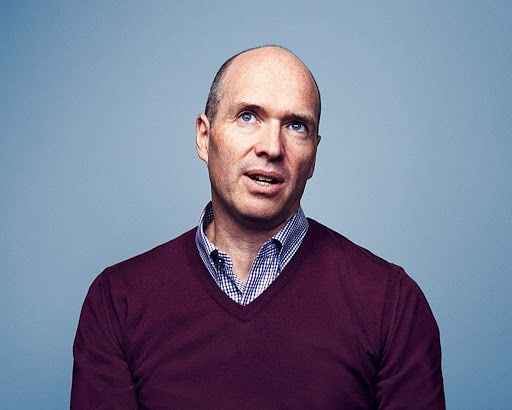
Benjamin Abraham Horowitz Battles the Dot-Com Crash: Navigating the Loudcloud Pivot
Ben Horowitz is widely considered one of modern business’s most influential management theorists. His leadership framework, detailed in his bestselling 2014 book The Hard Thing About Hard Things: Building a Business When There Are No Easy Answers, rejected conventional management platitudes in favor of raw, candid operational realities. Horowitz popularized the distinction between “Peacetime CEOs” and “Wartime CEOs.” A Peacetime CEO focuses on expanding market share, nurturing culture, and optimizing operational efficiency when a company has a clear competitive moat. Conversely, a Wartime CEO operates when an enterprise faces imminent existential threats—competing against ruthless corporate rivals, pivoting under dying business models, or battling liquidity crises. In wartime, command-and-control, rapid decision-making, and absolute operational clarity are paramount.
Horowitz’s management philosophy centers on brutal honesty, psychological courage, and radical accountability. He famously advocates for “managing human capital by telling the truth,” arguing that executive leaders often destroy company culture by attempting to appease everyone or hiding harsh financial realities from employees. His motto—”The hard thing isn’t setting a big goal; the hard thing is laying people off when you miss the goal”—underscores his belief that executive leadership is fundamentally defined by how a founder handles crisis, failure, and high-stakes moral tradeoffs.
In his 2019 book What You Do Is Who You Are: How to Create Your Business Culture, Horowitz expanded his operational philosophy to corporate culture, drawing inspiration from historical leaders as diverse as Toussaint Louverture, the Samurai of feudal Japan, Genghis Khan, and former prison gang leader Shaka Senghor. Horowitz contends that corporate culture is not defined by corporate slogans, mission statements, or office perks, but by the daily behavior, decision-making protocols, and operational standards enforced when no one is watching.
5. High-Stakes Geopolitical Conflicts & Historical Tribulations
Benjamin Abraham Horowitz Engineers the $1.6B Opsware Sale to Hewlett-Packard
The most intense operational crisis of Ben Horowitz’s career occurred between 2000 and 2002 during the collapse of Loudcloud. Following the company’s tumultuous March 2001 IPO, Loudcloud’s core customer base of dot-com startups experienced mass liquidations, leaving Loudcloud with massive server data center leases, escalating debt, and plummeting contract revenues. Analysts and financial journalists openly speculated on Loudcloud’s impending bankruptcy, causing institutional investors to dump the stock.
Navigating this crisis required brutal measures. Horowitz was forced to conduct multiple rounds of painful layoffs, slashing hundreds of jobs and restructuring operations under intense public scrutiny. When he executed the divestiture of Loudcloud’s hosting business to EDS in 2002, market confusion caused the stock to plummet to $0.35, triggering class-action shareholder lawsuits alleging misleading financial disclosures regarding customer retention and revenue transitions. Horowitz managed the litigation through detailed legal discovery while executing the pivot to Opsware, ultimately settling claims and rebuilding market confidence through profitable enterprise software sales.
Benjamin Abraham Horowitz Steers Andreessen Horowitz: Crypto Fund Debates & Political Action
As Andreessen Horowitz grew into an institutional powerhouse, Horowitz and the firm faced significant industry debates and regulatory scrutiny, particularly surrounding their aggressive investments in cryptocurrency and decentralized finance (DeFi). Through a16z Crypto, the firm backed major protocol tokens and crypto exchanges, including Coinbase and Uniswap. As the SEC and CFTC escalated regulatory enforcement actions against crypto platforms in the 2020s, critics argued that venture firms had dumped unregistered token securities onto retail markets while extracting massive liquidity through early backroom token sales.
Horowitz aggressively countered regulatory overreach, authoring policy manifestos and lobbying Washington D.C. lawmakers for clear regulatory frameworks rather than enforcement-based crackdowns. Furthermore, Horowitz and Andreessen ignited intense political debates within Silicon Valley during election cycles by taking active stances on technology regulation, AI stifling policies, and tax legislation. Their public commentary and political action committee (PAC) funding aimed at supporting pro-innovation candidates sparked heated discussions regarding the political influence of mega-VCs in shaping national economic and technological policy.

Benjamin Abraham Horowitz Co-Founds a16z: Building a $42B+ Venture Capital Powerhouse
Ben Horowitz and his wife, Felicia Wiley Horowitz, are active philanthropists, focusing their charitable contributions on criminal justice reform, economic empowerment, education, and equal opportunity. Deeply influenced by his upbringing and personal experiences, Horowitz has consistently supported initiatives that address systemic racial inequality and provide second-chance opportunities for formerly incarcerated individuals.
Horowitz sits on the board of directors of several non-profit organizations and has donated millions of dollars to organizations such as the Anti-Recidivism Coalition (ARC), the American Civil Liberties Union (ACLU), and local Bay Area community funds. He has also been a vocal proponent of promoting diversity within the venture capital ecosystem, establishing mentorship programs and investing in underrepresented founders across the technology sector.
Looking to the future, Horowitz remains focused on backing frontier technologies that redefine human capability. Through a16z, he is spearheading massive capital deployments into artificial intelligence, autonomous infrastructure, advanced bio-engineering, space technology, and decentralized networks. Horowitz views AI not merely as an incremental software upgrade, but as a foundational industrial revolution capable of solving complex global challenges in medicine, scientific discovery, and global productivity.
4. Alliances, Family Heritage & Inner Circle Dynamics
Ben Horowitz has been married to Felicia Wiley Horowitz since 1988. The couple met while Horowitz was completing his undergraduate studies at Columbia University, and their enduring marriage of nearly four decades is widely admired across Silicon Valley. Felicia is an accomplished philanthropist, author, and renowned hostess whose social gatherings frequently bring together leaders from technology, politics, hip-hop culture, and civil rights activism.
Together, Ben and Felicia have three children, including journalist Julia Horowitz. The family maintains a private personal life despite their prominent public profile. Horowitz is an avid fan of hip-hop music, frequently referencing legendary rap lyrics in his management essays and books to illustrate complex business lessons regarding authenticity, struggle, and executive decision-making. His deep appreciation for hip-hop culture has forged close personal friendships with prominent artists and cultural figures, further bridging the gap between Silicon Valley venture capital and mainstream global culture.
Benjamin Abraham Horowitz FAQs: Key Questions Answered
What is Ben Horowitz’s estimated net worth in 2026?
Ben Horowitz’s estimated net worth is approximately $3.5 billion. His wealth is derived from his founding equity in Opsware (acquired by HP for $1.6 billion), carried interest and management equity as co-founder of Andreessen Horowitz (a16z), extensive tech equity portfolios, real estate holdings, and early digital asset investments.
What companies did Ben Horowitz found or lead?
Ben Horowitz co-founded Loudcloud in 1999, serving as CEO through its IPO and its historic transformation into enterprise software leader Opsware, which sold to Hewlett-Packard in 2007 for $1.6 billion. In 2009, he co-founded premier venture capital firm Andreessen Horowitz (a16z) alongside Marc Andreessen.
What books has Ben Horowitz written?
Ben Horowitz is the author of two bestselling business management books: “The Hard Thing About Hard Things: Building a Business When There Are No Easy Answers” (2014) and “What You Do Is Who You Are: How to Create Your Business Culture” (2019).
Where did Ben Horowitz go to university?
Horowitz earned a Bachelor of Arts (BA) in Computer Science from Columbia University in 1988 and a Master of Science (MS) in Computer Science from the University of California, Los Angeles (UCLA) in 1990.


