: “
Sir Alexander Fleming’s Scottish Roots: From Lochfield Farm to Kilmarnock Academy
Sir Alexander Fleming was born on August 6, 1881, at Lochfield Farm, a rugged and remote 800-acre hill farm located near Darvel in Ayrshire, Scotland. He was the third of four children born to Hugh Fleming and his second wife, Grace Stirling Morton. Hugh Fleming also had four surviving children from his previous marriage, creating a bustling, tightly knit household deeply tied to the demanding rhythms of rural Scottish agriculture. Tragic circumstances struck early when Alexander was just seven years old; his father passed away, leaving Grace to manage both the expansive farm and eight children under challenging economic conditions.
This rustic, demanding upbringing proved instrumental in shaping Fleming’s signature traits: extraordinary patience, relentless self-reliance, and keen powers of observation. Exploring the streams, moors, and fields of the Ayrshire countryside fostered a deep, intuitive curiosity about nature. His early formal education began in a tiny one-room cottage school with fifteen other students at Loudoun Moor. He quickly proved academically gifted, moving to the Darvel School and subsequently winning a competitive scholarship to Kilmarnock Academy in 1894. At Kilmarnock, the progressive curriculum required students to study theoretical sciences, sparking his lifelong passion for empirical inquiry.
In 1895, at the age of thirteen, Fleming relocated to London to live with his elder brother Thomas, an established ophthalmic surgeon. In the metropolis, he completed his preliminary studies at the Regent Street Polytechnic. However, severe economic realities precluded an immediate leap into higher education. For four long years, young Fleming worked as an administrative clerk for a commercial shipping firm. While the office routine was dry, it honed his meticulous attention to record-keeping. The pivotal turning point occurred in 1901 when he inherited a modest sum from his uncle John. Encouraged by his brother Thomas, Fleming decided to invest this capital into medical school. He sat for the national entrance examination and placed first across the entire United Kingdom. With his pick of prestigious medical institutions, he enrolled at St Mary’s Hospital Medical School in Paddington—a decision that bound him to the institution for the next fifty-four years.

Sir Alexander Fleming Joins St Mary's Bacteriology Lab via the Medical School Rifle Club
Fleming qualified with top honors, earning his Bachelor of Medicine and Bachelor of Surgery degrees in 1906. Interestingly, his path into laboratory research was set by an improbable coincidence rather than an initial ambition to become a bacteriologist. While at St Mary’s, Fleming was an expert marksman and a valued member of the medical school’s rifle club. To prevent Fleming from leaving the hospital after graduation to pursue a surgical career, the rifle club captain persuaded Sir Almroth Wright—a legendary pioneer in vaccine therapy and head of the Inoculation Department—to recruit Fleming into his research team.
Under Wright’s eccentric yet brilliant mentorship, Fleming immersed himself in immunology and bacteriology. He distinguished himself quickly as a master of experimental technique, earning the Gold Medal of London University in 1908. Between 1909 and 1914, Fleming established a lucrative private practice as a specialist in venereology, becoming one of the very first physicians in the United Kingdom to successfully administer Salvarsan (arsphenamine), the revolutionary anti-syphilis compound synthesized by Paul Ehrlich.
The outbreak of World War I fundamentally altered the trajectory of Fleming’s research. Serving as a Captain in the Royal Army Medical Corps, he was dispatched to a makeshift military research laboratory operating in a casino in Boulogne, France. Surrounded by horrific battlefield trauma, Fleming observed that vast numbers of soldiers were dying not from initial ballistic injuries, but from uncontrollable gas gangrene and secondary bacterial infections. Crucially, his rigorous experiments demonstrated that the heavy chemical antiseptics in standard military use—such as carbolic acid—were doing far more harm than good. These harsh chemicals destroyed the body’s natural immunological defenses, specifically white blood cells, far faster than they killed the anaerobic bacteria burrowed deep within tissue wounds. Although his wartime papers advocating for physiological wound cleaning were initially dismissed by conservative military surgeons, the experience ignited a lifelong mission: to discover a non-toxic antibacterial agent that could exterminate pathogens without harming human tissue.
Sir Alexander Fleming Discovers Lysozyme and Penicillin Notatum
Sir Alexander Fleming’s 1929 British Journal of Experimental Pathology Paper on Penicillin
Returning to St Mary’s Hospital after demobilization, Fleming continued his search for natural antibacterial substances. His first monumental discovery occurred in November 1921 through a combination of serendipity and sharp scientific instinct. Sufferer of a heavy head cold, Fleming allowed a drop of his own nasal mucus to fall onto a Petri dish cultured with bacterial colonies. Rather than discarding the contaminated dish, his chaotic yet observational lab habits led him to examine it days later. He noticed a clear, distinct ring around the mucus where bacterial growth had been completely dissolved.
Isolating the active agent, Fleming named it lysozyme. He went on to identify lysozyme in tears, saliva, blood serum, skin, and even egg whites. While lysozyme proved hugely significant in demonstrating that animal tissues possessed internal chemical defenses against microbes, it had a major practical limitation: it was primarily effective only against harmless, non-pathogenic bacteria. Nevertheless, the discovery of lysozyme served as the crucial conceptual stepping stone for Fleming’s ultimate breakthrough seven years later.
In September 1928, after returning to his famously cluttered laboratory following a month-long summer holiday with his family, Fleming noticed an unusual culture plate of Staphylococcus aureus that had been left exposed on a bench. A stray spore of mold had landed on the plate and germinated. Surrounding the bluish-green mold cluster was a transparent zone where the staphylococcal colonies had been dissolved and destroyed. Fleming famously remarked, “That’s funny,” before embarking on meticulous tests. He identified the organism as a rare strain of Penicillium notary (later classified as Penicillium chrysogenum) and dubbed the potent broth it produced “mould juice,” before officially naming it penicillin in early 1929.

Sir Alexander Fleming Receives the 1945 Nobel Prize in Physiology or Medicine
Fleming discovered that penicillin possessed unprecedented bactericidal properties. Even when diluted 800 times, the substance completely inhibited the growth of deadly pathogens responsible for scarlet fever, pneumonia, meningitis, diphtheria, and gonorrhea. Most importantly, unlike chemical antiseptics, penicillin was completely non-toxic to white blood cells and human tissue. He published his groundbreaking findings in the British Journal of Experimental Pathology in June 1929.
Despite his brilliant initial observation, Fleming faced immense biochemical hurdles. Penicillin was notoriously unstable, exceptionally difficult to purify, and produced in minuscule quantities by the mold. Without an advanced team of organic chemists, Fleming struggled to isolate the active compound in stable, concentrated forms for systemic human injection. For over a decade, penicillin remained largely an obscure laboratory tool used to isolate penicillin-resistant bacteria in culture dishes.
The global rescue of penicillin began in 1939 at Oxford University, where Australian pathologist Howard Florey and German-born biochemist Ernst Boris Chain assembled a dedicated scientific team to re-examine natural antibacterial substances. Building directly upon Fleming’s 1929 paper, the Oxford team successfully developed innovative freeze-drying and purification techniques that transformed raw mold juice into a stable, concentrated therapeutic powder. Following successful human clinical trials in 1941, and propelled by the catastrophic casualty counts of World War II, American pharmaceutical giants engineered mass-production deep-fermentation methods. By D-Day in June 1944, millions of doses of penicillin accompanied Allied troops, slashing military amputation rates, conquering wound infections, and curing ancient medical scourges.
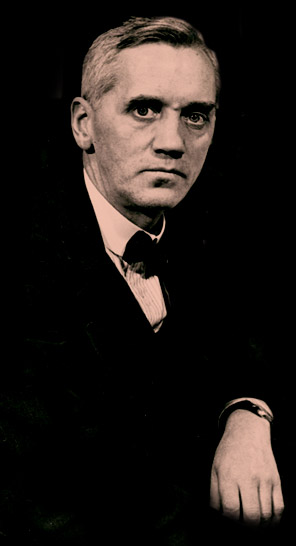
Sir Alexander Fleming’s Academic Legacy and Published Antiseptic Research
The sudden recognition of penicillin as a miraculous life-saving drug launched Fleming into unprecedented worldwide fame. In 1943, he was elected a Fellow of the Royal Society (FRS). In 1944, King George VI conferred a knighthood upon him, officially making him Sir Alexander Fleming.
The pinnacle of international academic recognition arrived in December 1945, when Alexander Fleming, Howard Florey, and Ernst Boris Chain were jointly awarded the Nobel Prize in Physiology or Medicine “for the discovery of penicillin and its curative effect in various infectious diseases”. Honors poured in from every corner of the globe: he was granted the US Medal for Merit, the Grand Cross of the French Legion of Honor, honorary doctorates from dozens of global universities, and elected Rector of the University of Edinburgh in 1951. In a unique testament to his impact, matadors across Spain raised funds to erect a majestic bronze statue of Fleming outside the main bullring in Madrid (Plaza de Toros de Las Ventas), honoring the drug that drastically cut fatal infections from bull-goring wounds.
4. Behind the Codex: Family Ties, Companions & Private World
Despite reaching towering heights of international celebrity, Fleming remained an inherently modest, taciturn, and private individual. In 1915, while serving during World War I, Fleming married Sarah Marion McElroy, an affectionate Irish nurse from Killala, County Mayo, known affectionately to friends and family as “Sareen”. Sareen ran a successful nursing home in London and provided a warm, stable counterweight to Fleming’s intensely focused, quiet laboratory life.
In 1924, the couple welcomed their only child, a son named Robert Fleming. Robert inherited his father’s scientific curiosity and passion for medicine, eventually becoming a respected general practitioner. The family spent peaceful weekends at their country home in Suffolk, where Fleming indulged in his favorite private hobbies: gardening, croquet, fishing, and painting. Interestingly, Fleming was an active member of the Chelsea Arts Club, where he gained fame among peers for creating whimsical “germ paintings”—tinting Petri dish cultures with naturally pigmented bacteria to form detailed landscapes and figures as the microbes grew.
Tragedy struck Fleming’s private world in 1949 when Sareen passed away after thirty-four years of deeply devoted marriage. The loss left Fleming visibly heartbroken and lonely. However, companionship returned to his later years through his scientific work. In March 1953, he married Dr. Amalia Koutsouri-Voureka, a brilliant Greek microbiologist and former Greek resistance fighter who had joined his laboratory at St Mary’s on a scholarship in 1946. Their union brought Fleming immense joy during his final years as they traveled together attending international scientific symposia. On March 11, 1955, Fleming suffered a sudden, fatal heart attack at his London home at the age of 73. National mourning ensued, and his ashes were solemnly interred in the crypt of St Paul’s Cathedral alongside Britain’s greatest historical heroes.

Sir Alexander Fleming Navigates Scientific Rivalries and Antibiotic Production Hurdles
Sir Alexander Fleming, Howard Florey, and Ernst Chain: Dividing Credit for Penicillin Mass Production
Behind the glittering public narrative of penicillin’s discovery lay an intense, bitter controversy regarding who truly deserved credit for the antibiotic revolution. As penicillin transformed battlefield medicine during World War II, the British government and international press sought a charismatic focal point for this historic triumph. Fleming’s romantic story—a humble, solitary scientist making an accidental discovery in a cluttered London lab—captivated journalists worldwide.
This media obsession created severe friction between Fleming and the Oxford team led by Howard Florey and Ernst Boris Chain. Florey and Chain argued vehemently that while Fleming had observed the mold in 1928, he had abandoned its therapeutic development after failing to purify it, leaving it as little more than an academic curiosity for over a decade. They contended that the true chemical and clinical invention of penicillin as a usable, life-saving drug was performed entirely at Oxford through their arduous biochemical work.
The media, however, largely sidelined Florey (who shunned interviews) and Chain, portraying Fleming as the sole genius creator. This disparity created immense personal resentment. Chain felt deeply bitter, suspecting anti-Semitic bias and administrative snubbing, while Florey privately voiced frustration that St Mary’s Hospital’s public relations machine was monopolizing global acclaim. Though the Nobel Committee attempted to heal this breach in 1945 by splitting the Prize equally three ways, private letters and historical memoirs reveal that tension and coldness persisted among the co-laureates for years. Fleming, to his credit, frequently acknowledged Florey and Chain’s vital contributions in formal lectures, publicly stating: “I created penicillin, but Florey and Chain turned it into a drug.”

Sir Alexander Fleming’s 1945 Nobel Lecture: Warning the World Against Drug-Resistant Microbes
In the decades following Fleming’s death, scientific historians began critically re-examining the exact circumstances surrounding the 1928 discovery, sparking what scholars call “The Penicillin Myth” debate. Historical investigations revealed discrepancies in Fleming’s initial narrative. For instance, Fleming frequently told reporters that a stray spore blew through an open window into his bench top culture plate. However, hospital architectural records showed that the windows in his basement-adjacent laboratory were notoriously jammed tight and rarely, if ever, opened. Modern consensus suggests the spore likely drifted up from another lab in the building where mold research was actively being conducted. Furthermore, critics noted that earlier scientists—including French medical student Ernest Duchesne in 1897—had documented the antibacterial properties of Penicillium molds decades before Fleming, though their work had been overlooked.
In addition to historical debates, Fleming was embroiled in public disputes regarding the misuse of his discovery. Long before the medical establishment recognized the danger, Fleming emerged as a prophetic voice warning against the over-prescription and improper use of antibiotics. During his 1945 Nobel Prize acceptance address, Fleming issued a chilling warning to the global public:
“The time may come when penicillin can be bought by anyone in the shops. Then there is the danger that the ignorant man may easily underdose himself and by exposing his microbes to non-lethal quantities of the drug make them resistant.”
Fleming fought relentlessly against commercial pharmaceutical attempts to dilute or improperly market over-the-counter penicillin. His prescient warnings regarding drug-resistant superbugs were initially dismissed by eager commercial pharmaceutical entities, but today, his prophetic foresight stands as one of his greatest gifts to modern public health and epidemiology.
Sir Alexander Fleming’s Penicillin Breakthrough Transforms Modern Antibiotic Therapy
Alexander Fleming represented the classic archetype of the modest, empirically driven British natural philosopher. He eschewed grandiose theories in favor of direct, hands-on experimentation. His laboratory style was legendary for its apparent disarray; where other researchers insisted on sterile, pristine order, Fleming’s bench was packed with culture plates, allowing serendipitous natural interactions to occur that rigid protocols would have prevented.
His broader cultural footprint is monumental. In 1999, TIME Magazine named Fleming one of the 100 Most Important People of the 20th Century, noting that penicillin transformed human demographics by doubling average life expectancies and eradicating fatal secondary infections. In 2002, he was voted among the top 100 Greatest Britons in a nationwide BBC poll, and STV ranked him as the third greatest Scot in history, behind only Robert Burns and William Wallace. His image has graced Scottish £5 currency banknotes, and countless squares, avenues, research institutes, and schools across Europe bear his name.
Sir Alexander Fleming’s Lasting Influence on Global Public Health and Microbiology
Although Sir Alexander Fleming passed away in 1955, his legacy remains intensely vibrant and urgent in 21st-century science. Modern medical research centers continue to draw inspiration from his holistic, observational approach to natural compounds. As the world confronts the rising global threat of antimicrobial resistance (AMR) and multi-drug resistant superbugs, Fleming’s early research notes on lysozyme and microbial competition are being revisited by modern geneticists searching for novel peptide-based antibiotics.
The Alexander Fleming Laboratory Museum at St. Mary’s Hospital in Paddington stands as an International Historic Chemical Landmark, preserved exactly as it was during his fateful 1928 discovery. His life continues to serve as an enduring testament to how acute observational genius, combined with an open, curious mind, can transform a simple chance event into a global revolution that reshapes human civilization.
Sir Alexander Fleming FAQs: Key Questions Answered
How old was Alexander Fleming when he died?
Sir Alexander Fleming was 73 years old when he passed away from a sudden heart attack at his home in London on March 11, 1955.
Who was Alexander Fleming married to?
Fleming was married twice. He married Irish nurse Sarah Marion McElroy (“Sareen”) in 1915; she passed away in 1949. In 1953, he married Greek microbiologist and physician Dr. Amalia Koutsouri-Voureka.
What is Alexander Fleming’s most famous scientific discovery?
Fleming is world-famous for discovering penicillin in September 1928, the world’s first effective natural antibiotic. He also discovered the important natural antibacterial enzyme lysozyme in 1921.
What major awards did Alexander Fleming win?
Fleming shared the 1945 Nobel Prize in Physiology or Medicine with Howard Florey and Ernst Boris Chain. He was knighted by King George VI in 1944 and received the US Medal for Merit and the French Grand Cross of the Legion of Honor.


