
: “
1. Formative Years, Intellectual Curiosity & Academic Beginnings
Albert Einstein was born on March 14, 1879, in the picturesque city of Ulm, situated in the Kingdom of Württemberg within the newly consolidated German Empire. His father, Hermann Einstein, was an optimistic featherbed salesman who later transitioned into running an electrochemical manufacturing enterprise, while his mother, Pauline Koch, was an accomplished pianist from a wealthy bourgeois family. Within a year of Albert’s birth, the family relocated to Munich, where his father and uncle Jakob founded Elektrotechnische Fabrik J. Einstein & Cie, a company that produced electrical equipment such as dynamos and arc lighting.
Contrary to the myth that Einstein was a poor student who struggled with basic academics, young Albert demonstrated early intellectual independence, albeit alongside a strong aversion to strict authoritarian teaching methods. He spoke hesitantly during his earliest years, leading his parents to worry about his cognitive development, but he soon manifested a profound inner curiosity. At age five, his father showed him a pocket compass, a moment Einstein later cited as a major turning point in his life; the fact that an unseen force moved the needle filled him with a deep sense that something hidden lay behind physical phenomena.
Encouraged by his mother, Einstein began learning the violin at age six. Though initially frustrated by rigid exercises, his passion ignited when he discovered the sonatas of Wolfgang Amadeus Mozart at age thirteen. Music became a lifelong sanctuary for him, providing emotional release and intellectual stimulation throughout his most challenging scientific endeavors. Simultaneously, a family friend and medical student, Max Talmud, introduced the pre-teen Einstein to popular science texts, Kantian philosophy, and advanced mathematics. By age twelve, Einstein had independently taught himself Euclidean geometry and calculus, marveling at the clarity and absolute certainty of mathematical truth.
When his father’s business collapsed in 1894 due to shifting industry standards, the family moved to Milan, Italy, leaving fifteen-year-old Albert behind in Munich to finish his high school education at the Luitpold Gymnasium. Unhappy with the rigid military-style discipline and autocratic pedagogy of the school, Einstein clashed with administrators. Recognizing that his rebellious attitude was alienating teachers, he obtained a physician’s note citing a nervous breakdown and left the school to join his family in Italy. In doing so, he forfeited his German citizenship in 1896 to avoid compulsory military service, remaining temporarily stateless.
Determined to enter the prestigious Federal Polytechnic School (ETH Zurich) in Switzerland, Einstein took the entrance examination in 1895 at the age of sixteen. Although he scored exceptionally high marks in physics and mathematics, he failed the general arts and humanities sections. Taking the advice of the ETH director, he completed his secondary education at the Argovian Cantonal School in Aarau, Switzerland. There, under the progressive teaching methods of Jost Winteler, Einstein flourished, gaining his high school diploma in 1896 and securing his admission to ETH Zurich to study for a teaching diploma in mathematics and physics.

2. The Intellectual Awakening: Landmark Breakthroughs & Public Emergence
Einstein’s years at ETH Zurich (1896–1900) established both his formidable intellectual prowess and his penchant for non-conformity. He regularly skipped laboratory sessions and traditional lectures to study advanced theoretical physics independently, relying on the meticulous lecture notes of his close friend and brilliant mathematician, Marcel Grossmann, to pass his exams. During this period, he also met Mileva Marić, a brilliant Serbian physics student who was the only woman in his academic cohort. Their shared intellectual passion rapidly blossomed into an intense, co-dependent romantic relationship.
Upon graduating from ETH Zurich in the summer of 1900, Einstein found himself in a precarious position. While his classmates secured university assistantships, Einstein’s rebellious demeanor and habit of challenging authority had alienated senior faculty members, particularly Professor Heinrich Weber, who refused to offer him an academic post. For nearly two years, Einstein scrambled to make ends meet, working as a temporary substitute teacher and private tutor in Winterthur and Schaffhausen while desperately applying for academic positions across Europe to no avail.
His salvation came through Marcel Grossmann, whose father recommended Einstein to the director of the Swiss Patent Office in Bern. In June 1902, Einstein secured a steady position as a Class III Technical Examiner at the Federal Office for Intellectual Property. His primary duty was evaluating patent applications for electromagnetic inventions. Far from being a mind-numbing compromise, the patent office served as a crucial incubator for his genius. The work required him to rapidly analyze practical mechanical designs, distill complex technical descriptions into core physical principles, and evaluate synchronization systems for electrical devices.
Working eight hours a day, Einstein mastered the art of executing his assigned patent evaluations in half the time. He utilized his remaining working hours and evening downtime to conduct radical theoretical physics research. Without access to a university library, supercomputers, or laboratory apparatus, he relied entirely on “Gedankenexperimente” (thought experiments)—visualizing physical scenarios in his mind’s eye to test fundamental physical laws. Joined by his friends Maurice Solovine and Conrad Habicht, Einstein founded the informal “Olympia Academy” in Bern, gathering in his apartment to read, debate, and tear apart foundational texts in physics, literature, and philosophy, laying the groundwork for a revolutionary scientific explosion.
3. The Golden Era: Magnum Opus & Revolutionary Contributions
3.1. Landmark Publications & Methodological Shifts
The year 1905 stands as one of the most remarkable single years in intellectual history, often referred to as Einstein’s Annus Mirabilis (Miracle Year). Working in relative obscurity as a twenty-six-year-old patent examiner, Einstein published four groundbreaking papers in the prestigious physics journal Annalen der Physik, each fundamentally reshaping a distinct pillar of modern physical science.
In March 1905, Einstein completed his paper on the Photoelectric Effect. Challenging the accepted classical wave theory of light, he proposed that light travels not only as waves, but as discrete quanta of energy (later named photons). This paper provided a brilliant physical explanation for how light knocking against a metal surface ejects electrons, laying the experimental and theoretical cornerstone for quantum mechanics. It was specifically for this paper that he would later be awarded the Nobel Prize in Physics.
In May 1905, Einstein tackled Brownian Motion—the random, erratic motion of microscopic particles suspended in a fluid. By formulating precise statistical equations describing this movement, Einstein provided definitive theoretical proof of the physical existence of atoms and molecules, which had previously been viewed by many leading scientists as merely useful mathematical abstractions.
In June 1905, Einstein delivered his revolutionary paper on Special Relativity, titled “On the Electrodynamics of Moving Bodies.” Dismantling Isaac Newton‘s absolute concepts of time and space, Einstein postulated two simple axioms: the laws of physics are identical in all inertial reference frames, and the speed of light in a vacuum is constant for all observers, regardless of their motion. This led to the mind-bending conclusion that space and time are inextricably woven into a four-dimensional continuum known as spacetime, where time dilates and lengths contract relative to an observer’s velocity.
Finally, in September 1905, Einstein published a brief three-page addendum to his relativity paper, deriving the most famous mathematical formula in history: E = mc². This equation established that mass and energy are interchangeable manifestations of the same entity, demonstrating that a minuscule amount of mass can be converted into a massive payload of energy—a revelation that would ultimately unlock atomic power and nuclear weapons.

3.2. Peak Intellectual Era & Continental Reception
Following the stunning achievements of 1905, the academic establishment could no longer ignore Einstein. In 1908, he was appointed lecturer at the University of Bern, followed rapidly by full professorships at the University of Zurich in 1909, the Charles University in Prague in 1911, and ETH Zurich in 1912. In 1914, he reached the pinnacle of European academia when he was recruited to Berlin as the Director of the Kaiser Wilhelm Institute for Physics and a professor at the Humboldt University of Berlin, a prestigious arrangement that freed him from teaching duties so he could concentrate entirely on research.
For a full decade following his special relativity breakthrough, Einstein struggled to incorporate acceleration and gravity into his theories. Special relativity worked seamlessly for constant speeds, but it could not account for gravitational forces. Through intense mathematical collaboration with Marcel Grossmann and an epic intellectual race against mathematician David Hilbert, Einstein formulated his masterpiece: the General Theory of Relativity, completed in November 1915.
General Relativity replaced Newton’s force-based gravity with a revolutionary geometric framework. Einstein proposed that massive objects like stars and planets do not exert an invisible pulling force across space; rather, their mass warps and bends the very fabric of spacetime surrounding them. What we experience as gravity is simply objects following the natural curves of this warped geometry. He predicted that light passing near a massive celestial body would visibly bend due to this spacetime curvature.
Confirmation came on May 29, 1919, during a total solar eclipse. British astronomer Sir Arthur Eddington led expeditions to the island of Príncipe off West Africa and Sobral in northern Brazil to photograph starlight passing near the edge of the sun. When the photographic plates were analyzed, the positions of the stars had shifted by the precise degree predicted by Einstein’s field equations. On November 6, 1919, the Royal Society of London formally announced the verification of General Relativity.
Overnight, Einstein was catapulted from an elite academic figure into a global pop-culture phenomenon. The London Times banner declared: “Revolution in Science – New Theory of the Universe – Newtonian Ideas Overthrown.” The New York Times followed with breathless coverage. Einstein became an international icon, his wild hair, modest demeanor, and gentle wit capturing the public imagination. He embarked on world lecture tours across Europe, North America, Japan, Palestine, and South America, greeted by roaring crowds, heads of state, and media circuses unprecedented for a scientist.

3.3. Historical Standing Among Global Thinkers
In November 1922, Einstein received official notification that he had been awarded the 1921 Nobel Prize in Physics. Owing to anti-Semitic politics and conservative pushback within the Nobel Committee regarding the abstract and counterintuitive nature of relativity, the committee cited his “services to Theoretical Physics, and especially for his discovery of the law of the photoelectric effect,” deliberately side-stepping General Relativity. Unable to attend the formal ceremony in Stockholm because he was on a lecture tour of Japan, Einstein delivered his official Nobel lecture in July 1923 in Gothenburg, addressing General Relativity before a massive international audience.
As the 1920s progressed into the 1930s, Einstein found himself increasingly at odds with the mainstream direction of theoretical physics. The burgeoning field of Quantum Mechanics, championed by figures like Niels Bohr, Werner Heisenberg, and Max Born, proposed a probabilistic universe governed by uncertainty, wave-particle duality, and random subatomic behavior. Einstein, who had helped pioneer quantum theory with his photoelectric effect work, rejected the notion that nature at its deepest level was governed by chance, famously declaring: “God does not play dice with the universe.”
This ideological divide culminated in the legendary Bohr-Einstein Debates at the Fifth and Sixth Solvay Conferences in 1927 and 1930. Einstein constructed brilliant thought experiments designed to expose flaws in Heisenberg’s Uncertainty Principle and the Copenhagen interpretation of quantum mechanics, only for Bohr to painstakingly refute them. In 1935, alongside Boris Podolsky and Nathan Rosen, he published the famous EPR Paradox paper, highlighting what he called “spooky action at a distance” (quantum entanglement) to argue that quantum mechanics was an incomplete description of reality. Although mainstream physics eventually embraced quantum mechanics, Einstein’s rigorous skepticism forced quantum theorists to refine and strengthen their arguments immeasurably.
During his final decades at the Institute for Advanced Study in Princeton, New Jersey—where he joined the faculty in 1933 after fleeing Nazi Germany—Einstein dedicated his career to pursuing a Unified Field Theory. He sought a single mathematical framework that would reconcile electromagnetism and gravity into one elegant model. Isolated from the emerging discoveries of nuclear forces and quantum field theory, Einstein worked tirelessly on this monumental effort until his final hours, leaving behind unfinished calculations on his deathbed.
4. Private Life, Intellectual Circles & Personal Confidants
Behind the public persona of the benevolent, eccentric genius lay a intensely complex, turbulent personal life characterized by passionate romance, emotional detachment, and family tragedy. In 1897, while studying at ETH Zurich, Einstein fell deeply in love with Mileva Marić, his fellow student. Marić was a gifted mathematician and physicist whose intellectual companionship profoundly shaped Einstein’s early thinking. Their correspondence reveals a passionate relationship infused with intense discussions of thermodynamics, electrodynamics, and shared domestic dreams.
In early 1902, before they were married, Marić gave birth to a daughter named Lieserl in Serbia while Einstein was in Switzerland trying to secure employment. The existence of Lieserl was kept a strict secret from the public and family members; she disappears completely from historical records after 1903, believed to have either died of scarlet fever in infancy or been placed for adoption in Serbia. Einstein and Marić married in Bern in January 1903. The couple went on to have two sons: Hans Albert Einstein, born in 1904, who became a distinguished professor of hydraulic engineering at the University of California, Berkeley, and Eduard “Tete” Einstein, born in 1910, a sensitive and artistically talented child who developed severe schizophrenia in early adulthood.
As Einstein’s scientific stature grew, his marriage to Marić deteriorated rapidly. His intense obsession with his work, coupled with frequent travel and long hours, alienated Marić, who felt increasingly sidelined in her own intellectual ambitions. By 1912, Einstein began a secret romantic affair with his first cousin, Elsa Löwenthal (née Einstein). When Einstein moved to Berlin in 1914, Marić brought the boys back to Zurich, marking a permanent marital separation.
In a desperate attempt to maintain the marriage for the sake of their sons, Einstein drafted an extraordinarily cold list of marital conditions for Marić in 1914, requiring her to serve his meals, clean his clothes, maintain his office, and forgo all personal intimacy or conversation unless explicitly requested. Unsurprisingly, Marić rejected the agreement and remained in Zurich. The couple finally divorced in February 1919. As part of the divorce settlement, Einstein pledged that if he won the Nobel Prize, he would surrender the entire monetary award to Marić to support her and purchase real estate for their sons’ care—a promise he honored upon receiving the prize in 1922.
In June 1919, Einstein married Elsa Löwenthal, who provided him with a nurturing, structured domestic environment where he could focus on physics. Elsa acted as his business manager, gatekeeper, and protector against the relentless intrusions of press and fans. However, Einstein maintained a highly non-traditional view of fidelity. Throughout his marriage to Elsa, he engaged in several openly acknowledged extramarital affairs with younger women, including personal secretaries and socialites. Elsa tolerated these relationships despite emotional strain, remaining his devoted companion until her death in Princeton in 1936.
Einstein’s relationship with his sons was mixed. While he maintained a loving correspondence with Hans Albert, father and son frequently clashed over career choices and marital decisions. His second son, Eduard, suffered a mental collapse in 1930 and was institutionalized at the Burghölzli psychiatric hospital in Zurich. Einstein paid for his son’s medical care but never saw Eduard again after emigrating to the United States in 1933, a source of profound personal heartbreak.

5. Institutional Opposition, Controversies & Resilience Under Fire
5.1. The "Deutsche Physik" Backlash, Nazi Bounties, and Albert Einstein's 1933 Renunciation of German Nationality
As a prominent Jewish intellectual, vocal pacifist, and internationally celebrated genius living in Berlin during the Weimar Republic, Einstein became a prime target for rising far-right political extremism and anti-Semitic vitriol in the post-World War I era. In 1920, far-right agitator Paul Weyland organized the “Anti-Relativity Company,” holding public rallies at the Berlin Philharmonic to denounce relativity as a fraudulent “Jewish conspiracy” that undermined traditional scientific values.
This political campaign was joined by Nobel laureate physicists Philipp Lenard and Johannes Stark, who spearheaded the “Deutsche Physik” (German Physics) movement. They argued that theoretical physics, particularly relativity and quantum theory, was an abstract, degenerate “Jewish invention,” contrasting it with experimental, empirical “Aryan Physics.” Einstein responded vigorously in the press, writing a fiery article in the Berliner Tageblatt condemning Lenard and his allies, which drew criticism from academic peers who felt he was degrading scientific debate by engaging in political public squabbles.
When Adolf Hitler seized power in January 1933, the persecution escalated from character assassination to state-sponsored terror. The Nazi regime raided Einstein’s summer house in Caputh, confiscated his bank accounts, burned his publications, and put a 5,000-dollar bounty on his head. Recognizing the immediate danger while traveling abroad in the United States, Einstein officially renounced his German citizenship in March 1933 and resigned from the Prussian Academy of Sciences. He permanently settled in Princeton, New Jersey, taking up a lifelong appointment at the newly created Institute for Advanced Study, where he helped secure visas, funding, and university placements for hundreds of endangered Jewish scientists fleeing fascist Europe.
5.2. The 1939 Einstein-Szilárd Letter, Manhattan Project Detachment, and J. Edgar Hoover's FBI Files
Einstein’s lifelong adherence to pacifism faced a profound moral trial in the late 1930s. In August 1939, alerted by Hungarian physicists Leo Szilard and Eugene Wigner that German scientists had successfully achieved nuclear fission and might construct an atomic weapon, Einstein signed a crucial letter to U.S. President Franklin D. Roosevelt. The letter warned of the potential for ultra-powerful bombs and urged the American government to initiate atomic research—a pivotal impetus that birthed the Manhattan Project.
Despite catalyzing the nuclear age through his E = mc² equation and his letter to Roosevelt, Einstein was strictly excluded from direct participation in the Manhattan Project. The United States government and FBI Director J. Edgar Hoover viewed Einstein as a severe security risk due to his radical political views, civil rights advocacy, and long-standing involvement with leftist, anti-war, and internationalist organizations. Hoover compiled a massive, 1,427-page FBI dossier on Einstein, conducting secret wiretaps, intercepting his mail, and investigating unsubstantiated claims that he was running a Soviet spy network out of his Princeton office.
When the United States dropped atomic bombs on Hiroshima and Nagasaki in August 1945, Einstein was deeply devastated. He openly regretted signing the 1939 letter, famously declaring: “Had I known that the Germans would not succeed in producing an atomic bomb, I would never have lifted a finger.” For the remainder of his life, Einstein waged a passionate crusade against nuclear proliferation. He founded the Emergency Committee of Atomic Scientists in 1946, tirelessly campaigning for global nuclear disarmament and advocating for a unified world government to render national warfare obsolete.
During the height of McCarthyism and the Red Scare in the 1950s, Einstein faced intense political backlash from conservative politicians and media commentators. He publicly advised intellectuals summoned before the House Un-American Activities Committee (HUAC) to refuse to testify, invoking the First Amendment. Just days before his death in April 1955, Einstein collaborated with philosopher Bertrand Russell to draft the famous Russell-Einstein Manifesto, alerting world leaders to the catastrophic threat posed by thermonuclear weapons and calling on humanity to abolish war.
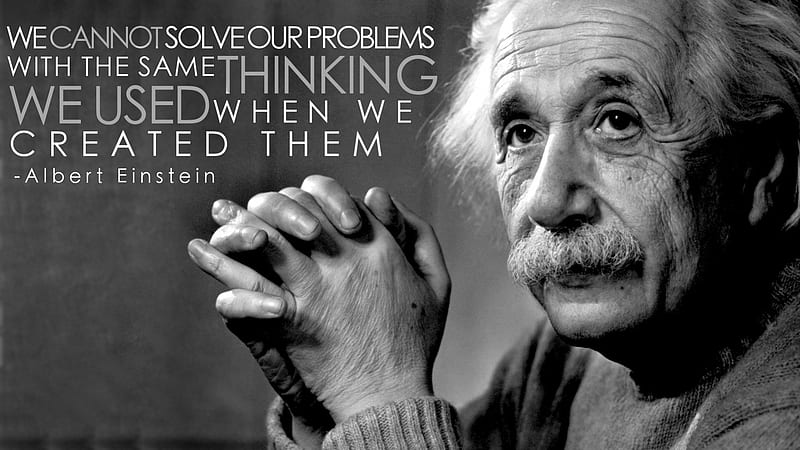
6. Intellectual Paradigm, Cultural Resonance & Historic Influence
Albert Einstein achieved an immortal, archetypal stature in popular culture that completely transcends his technical achievements. His distinctive visual aesthetic—wild, uncombed white hair, bushy mustache, relaxed sweaters, and a notorious refusal to wear socks—transformed him into the quintessential image of the absent-minded professor. His iconic image, captured in 1951 by photographer Arthur Sasse showing Einstein sticking his tongue out at persistent reporters on his 72nd birthday, cemented his reputation as an irreverent, playful counter-cultural figure.
Though he lived long before the digital age, Einstein commands an extraordinary presence across modern social media and digital platforms. Millions of followers engage with content maintained by the Albert Einstein Estate (managed by Hebrew University of Jerusalem, to which Einstein bequeathed his personal archives and intellectual property rights). His inspiring quotes, humorous anecdotes, and accessible philosophical thoughts are regularly shared across Instagram, X, Facebook, and TikTok, introducing new generations to his intellect and humanitarian spirit.
Einstein’s cultural impact permeates every corner of modern society. His name has become a universally recognized synonym for exceptional genius. He has been depicted in countless films, television series, theatrical plays, and books, ranging from historic dramas like Christopher Nolan’s Oscar-winning Oppenheimer (2023) to comic sci-fi pop culture. His theories provided the foundational physics for technologies that power modern life, including global positioning systems (GPS), fiber optic telecommunications, solar power cells, laser physics, and medical imaging systems like PET scans.
7. Preservation of Manuscripts, Scholarly Revival & Immortality
While Albert Einstein passed away on April 18, 1955, at Princeton Hospital at the age of seventy-six due to a ruptured abdominal aortic aneurysm, his intellectual legacy continues to drive the cutting edge of contemporary scientific research. Scientists around the world actively test and expand upon the predictions formulated in his field equations over a century ago.
A major validation of his work occurred in September 2015, when the Laser Interferometer Gravitational-Wave Observatory (LIGO) detected gravitational waves—ripples in the fabric of spacetime caused by colliding black holes—a phenomenon predicted by Einstein in 1916 that scientists thought might never be directly measured. Furthermore, in 2019, the Event Horizon Telescope collaboration captured the world’s first photograph of a black hole’s event horizon in the galaxy M87, providing stunning visual confirmation of General Relativity’s extreme gravitational predictions.
Today, the ultimate goal of fundamental theoretical physics remains the resolution of the deep conflict between General Relativity and Quantum Mechanics. Theoretical physicists working on string theory, loop quantum gravity, and quantum field theory strive to achieve Einstein’s unfinished dream: a unified “Theory of Everything.” Concurrently, the ongoing digitizing and publishing of the Collected Papers of Albert Einstein by the Einstein Papers Project at the California Institute of Technology (Caltech) ensures that his voluminous correspondence, unpublished notebooks, and scientific manuscripts remain globally accessible to fuel new generations of scientific discovery.
Albert Einstein FAQs: Key Questions Answered
How old is Albert Einstein?
Albert Einstein passed away on April 18, 1955, at the age of 76. He was born on March 14, 1879.
Who is Albert Einstein dating or married to?
Albert Einstein was married twice during his lifetime. He was first married to Serbian physicist Mileva Marić from 1903 until their divorce in 1919. He then married his cousin Elsa Löwenthal in June 1919, staying married until her death in 1936.
What is Albert Einstein’s most famous work?
Albert Einstein’s most famous work includes his Special Theory of Relativity (1905), the mass-energy equivalence formula E = mc², and his General Theory of Relativity (1915), which redefined gravity as the curvature of spacetime.
What awards has Albert Einstein won?
Albert Einstein was awarded the Nobel Prize in Physics in 1921 for his theoretical work on the photoelectric effect. He also received numerous prestigious awards, including the Copley Medal of the Royal Society (1925), the Max Planck Medal (1929), and the Franklin Medal (1935).


