
1. Origins, Early Vocal Training & The Making of a Musician
Aaron Kwok Fu-shing was born on October 26, 1965, in British Hong Kong, into a modest working-class family rooted in Dongguan, Guangdong. Growing up in a dense residential district, Kwok was the youngest of five siblings—having two older brothers and two older sisters. His father operated a small, traditional gold retail shop, and the expectation was clear: Aaron was destined to join the family business and eventually manage the store. Following his graduation from St. John’s Co-education College, Kwok took his first steps toward this prescribed future by working as a junior clerk at King Fook Gold & Jewellery Co. Ltd. However, his heart was far removed from ledger books and precious metals; he was consumed by a visceral passion for rhythmic movement and street dance.
In 1984, an unexpected turn of events altered the trajectory of his life. While attempting an ambitious split during a social gathering, Kwok severely injured his leg muscles. Extended sick leave and prolonged absenteeism led to his immediate dismissal from the jewelry company. Unfazed by the setback, Kwok seized the opportunity to audition for TVB’s prestigious Dance Training Course. Among thousands of applicants, his natural elasticity, instinctive rhythm, and magnetic stage presence instantly stood out. Admitted at age nineteen, Kwok underwent rigorous training in jazz, modern dance, and stage choreography, quickly securing placements as a backup dancer for major Cantopop icons of the 1980s, including Anita Mui and Leslie Cheung.
Though his father initially resisted his entry into the entertainment industry, another brother stepped up to take over the family gold retail business, granting Aaron the freedom to pursue performance full-time. Tragedy, however, struck the Kwok family deeply in 1991 when his older brother, Kwok Fu-kun, was shot and killed outside the Sunbeam Theatre in North Point while attempting to pursue armed robbers raiding his jewelry shop. The sudden loss devastated Aaron and instilled in him a relentless work ethic and a profound sense of duty to honor his family’s sacrifices through unmatched professional discipline.
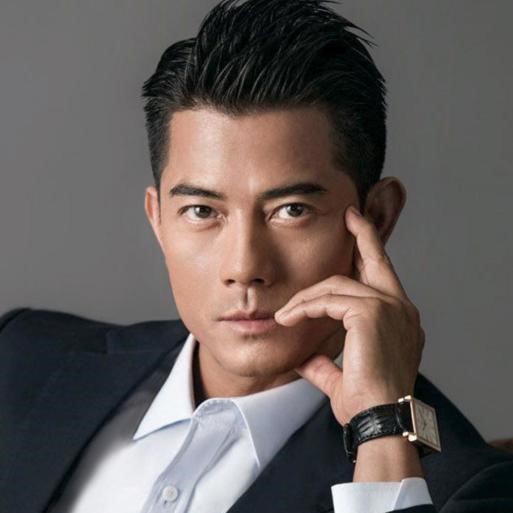
2. The Sonic Breakthrough: First Chart Debuts & Global Recognition
While Kwok was recognized internally at TVB for his dancing skills, his transition into acting and singing was a gradual climb. Spotted during a pageant performance in 1985, TVB transferred him to their actor training program. He appeared in minor television dramas such as Genghis Khan (1987) and Twilight of a Nation (1988), but widespread mainstream stardom remained elusive in Hong Kong’s saturated TV market. His true explosion into the pan-Asian media landscape came unexpectedly from across the Taiwan Strait in 1990.
Kwok was cast in a high-profile Taiwanese television commercial for the SYM 333 motorcycle. Playing a handsome, rain-soaked heartthrob whose wet, feathered haircut and soulful gaze mesmerized audiences, the commercial became an instant cultural phenomenon throughout Taiwan. Almost overnight, thousands of fans flooded television stations demanding to know the identity of the mysterious young actor. Capitalizing on this sudden groundswell of popularity, Taiwan’s UFO Record signed Kwok to a recording contract.
In September 1990, Aaron Kwok released his debut Mandarin album, Loving You Forever (對你愛不完). Driven by its title track’s instantly recognizable dance routine—featuring a distinct arm-thrusting gesture and smooth mechanical footwork—the album sold over one million copies across Asia. The ‘Aaron Kwok hair cut’—a center-parted, voluminous feathered style—became the defining fashion trend for young men across East Asia throughout the early 1990s. His debut established him not merely as a singer, but as an energetic pop idol who brought westernized dance choreography and music-video visual aesthetics to the forefront of Chinese pop culture.
3. Chart-Topping Catalog, World Tours & Industry Accolades
3.1. Defining Radio Anthems & Record Sales Milestones
Returning to Hong Kong as a proven regional superstar, Kwok signed with Warner Music Group in 1993, triggering a string of record-breaking music releases and blockbuster cinema roles. Media outlets quickly grouped him alongside Jacky Cheung, Andy Lau, and Leon Lai, officially crowning them the ‘Four Heavenly Kings’ (四大天王) of Cantopop. Together, this formidable quartet dominated Asian record sales, award ceremonies, and media headlines for over a decade.
Kwok differentiated himself from his peers by embracing the mantle of Asia’s premier song-and-dance performer, earning the lasting moniker ‘The Stage King’ (舞王). Hits like ‘Wild City’ (狂野之城, 1993), ‘Generous Love’ (愛的呼喚, 1997), and ‘Generation Next’ (唱這歌, 1997) dominated chart positions. ‘Wild City’ marked a dramatic stylistic shift, departing from wholesome bubblegum pop in favor of edgy R&B, dance-pop, and provocative visual styling. His music videos set new benchmarks for production value, incorporating high-octane choreography inspired by Michael Jackson, hip-hop, and contemporary electronic music.
Simultaneously, Kwok’s cinematic portfolio expanded rapidly. After earning a Best Supporting Actor nomination at the Hong Kong Film Awards for his role as Silver Fox in Saviour of the Soul (1991), he scored a massive box-office victory starring as Striding Cloud in Andrew Lau’s martial arts fantasy epic The Storm Riders (1998). Becoming the highest-grossing Hong Kong film of the year, The Storm Riders proved Kwok could anchor massive commercial cinematic franchises.

3.2. Stadium Eras & Global Audience Resonance
At the turn of the millennium, Kwok pushed the boundaries of live concert production in Asia. His ‘Aaron Kwok Live in Concert’ series became legendary for its theatrical ambition, complex acrobatics, and ground-breaking engineering. During his 2008 De Code Series Concert, Kwok unveiled a revolutionary 450-degree rotating stage measuring 10 meters by 9.5 meters. The engineering feat earned him an official Guinness World Record for the world’s largest indoor rotating stage, cementing his reputation as an irreplaceable live performer.
His musical footprint extended far beyond concert halls. Kwok became a top global brand ambassador, notably fronting international campaigns for Pepsi alongside Western music icons. He performed sell-out arena tours across North America, Europe, Australia, and East Asia, routinely selling out venues such as the Hong Kong Coliseum for consecutive multi-night engagements.
Parallel to his music career, Kwok underwent a radical artistic transition in cinema. Eager to break away from heartthrob stereotypes, he sought out complex, gritty, and dark dramatic roles. In 2005, Kwok starred as a emotionally tortured, disheveled police detective searching for his missing wife in Benny Chan’s thriller Divergence. His raw, heartbreaking performance shocked critics and earned him the Best Leading Actor award at Taiwan’s 42nd Golden Horse Awards, beating out heavy industry favorites.
Proving this dramatic breakthrough was no fluke, Kwok repeated the feat the following year. In Patrick Tam’s critically acclaimed drama After This Our Exile (2006), Kwok portrayed an abusive, gambling-addicted father in a performance devoid of movie-star vanity. His powerful depiction earned him his second consecutive Golden Horse Award for Best Leading Actor. Kwok became only the second actor in history—following Jackie Chan—to win back-to-back Golden Horse Best Actor titles, permanently cementing his stature as a serious cinematic force.

3.3. Sonic Reinvention, Grammy Triumphs & Songwriting Mastery
Throughout the 2010s and 2020s, Kwok continued to dominate Asian box offices with critically lauded performances. He starred as Sean Lau, the disciplined Deputy Commissioner of Police, in the high-stakes political thriller Cold War (2012) and its 2016 sequel, Cold War 2, both of which shattered Hong Kong box office records. In 2015, Kwok achieved a major career milestone by winning the prestigious Hong Kong Film Award for Best Actor for his haunting performance as Detective Chong in Philip Yung’s crime drama Port of Call.
He further demonstrated his versatility by taking on iconic literary figures, portraying the Bull Demon King in The Monkey King (2014) and later stepping into the legendary role of Sun Wukong the Monkey King in The Monkey King 2 (2016). In 2018, he co-starred alongside Chow Yun-fat in the crime blockbuster Project Gutenberg, earning yet another Best Actor nomination at the Hong Kong Film Awards.
Across his multi-decadal career, Kwok has collected over a hundred major music accolades, including multiple Top Ten Chinese Gold Songs Awards, Ultimate Song Chart Awards, and international honors such as the Mnet Asian Music Award (MAMA) for Best Asian Artist. His commitment to artistic innovation and endurance on stage has drawn frequent comparisons to global icons like Michael Jackson and Janet Jackson.
4. Romance, Confidants & Life Behind the Microphone
As one of East Asia’s most eligible bachelors for over two decades, Aaron Kwok’s private life was subject to relentless tabloid fascination. Early in his career, he was linked with several prominent entertainment figures, including Taiwanese actress Amanda Lee, Hong Kong singer Phyllis Quek, and Japanese actress Norika Fujiwara, with whom he co-starred in the action film China Strike Force (2000).
His most publicized long-term relationship began in 2006 with top fashion model Lynn Hung. The high-profile romance was a staple of Hong Kong media coverage for seven years. Despite intense public anticipation of a lavish celebrity wedding, the couple officially separated in 2013, citing personal differences and divergent future priorities under the unrelenting glare of public paparazzi scrutiny.
In December 2015, Kwok surprised the media and his fanbase by publicly confirming his relationship with Moka Fang (Fang Yuan), a Chinese model and fashion influencer who is 22 years his junior. The couple married in an intimate, elegant ceremony at the Peninsula Hotel in Hong Kong on April 18, 2017.
The couple welcomed their first daughter, Chantelle Kwok, in September 2017, followed by their second daughter, Charlotte Kwok, in April 2019. Kwok frequently speaks of fatherhood as a deeply grounding force that transformed his outlook on life. Despite his demanding career schedules, he prioritizes family time, often spotted taking his young daughters and wife on quiet holidays.
Beyond performance, Kwok is an avid sports car enthusiast and professional amateur racing driver. Over the years, he has built an impressive personal collection of rare hypercars, including limited-edition Ferraris, Lamborghinis, and Pagani Zondas. He has actively competed in various Asian motorsport series, including the Renault Clio Cup, Ferrari Challenge Asia-Pacific, and the Macau Grand Prix, demonstrating genuine skill on competitive racing circuits. Kwok is also deeply involved in equine sports as a licensed racehorse owner with the Hong Kong Jockey Club, successfully racing horses such as ‘Calling With Love’ and ‘Dancing Code’.

5. Tabloid Storms, Copyright Disputes & Creative Comebacks
5.1. The 1999 Sydney Hotel Incident: How Aaron Kwok Fu-shing (郭富城) Weathered Scandal
Despite maintaining an exceptionally professional image, Aaron Kwok faced the most severe public crisis of his career in late 1999. While touring in Australia, Kwok met a young Chinese-Australian woman named Christine To. Unbeknownst to Kwok, the encounter was a calculated setup orchestrated by a male acquaintance associated with To. A hidden camera was secretly installed inside Kwok’s hotel room, recording private interactions and conversations between Kwok and To.
In early 2000, the perpetrators attempted to blackmail Kwok and his management team, demanding millions of dollars in exchange for destroying the videotape. When Kwok’s long-time manager, Siu May (First Strong Workshop), refused to give in to extortion, the perpetrators attempted to sell the footage to tabloid news outlets and release it commercially across Asia. The incident sparked a massive media frenzy, dominating front pages across Hong Kong, Taiwan, and mainland China.
Facing immense embarrassment and intense public scrutiny, Kwok and his management took decisive legal action rather than surrendering to criminal blackmail. Kwok held a televised press conference in Hong Kong, bravely admitting he was the victim of a malicious trap while issuing an injunction through the Australian courts. The Australian Supreme Court granted a global restraining order prohibiting the distribution, sale, or broadcast of the illicitly obtained footage. Australian authorities subsequently investigated the perpetrators involved in the extortion scheme. Kwok’s open handling of the incident transformed public perception from tabloid mockery to widespread sympathy for a victim of privacy invasion and blackmail.
5.2. Silencing Critics: Aaron Kwok Fu-shing (郭富城) Rebuilding Career Momentum Post-1999
Throughout his career, Kwok has also navigated persistent media debates regarding his intense loyalty to his manager Siu May, who has guided his career since 1993. Tabloid rumors frequently speculated on their professional closeness, though both have consistently maintained a strictly professional, sibling-like bond built on absolute trust. When fraudulent cryptocurrency schemes and impersonator accounts illegally used Kwok’s image and faked interviews in the late 2010s and early 2020s, Siu May and Kwok aggressively issued public legal disclaimers to protect fans from financial scams.
When Kwok announced his marriage to Moka Fang in 2017, intense online discussion erupted regarding their 22-year age gap. Cynical media commentary questioned the longevity of the union, but Kwok ignored internet noise, maintaining a dignified private life focused on raising his children. Through four decades of media storms, commercial pressures, and industry shifts, Kwok’s unwavering commitment to artistic excellence and self-discipline allowed him to maintain his standing as a respected figure in Asian entertainment.

6. Stage Presence, Fashion Iconography & Pop Culture Influence
Aaron Kwok’s fashion choices have consistently driven pop culture trends across Asia. From his iconic 1990s mushroom haircut to his flamboyant concert costumes designed by top international stylists, Kwok has embraced fashion as an essential extension of his artistic persona. Known for maintaining an enviable athletic physique through intense daily cardio, strength training, and disciplined dieting, Kwok remains a timeless fashion icon capable of pulling off high-fashion streetwear and tailored suits with equal charisma.
While Kwok rose to fame in the pre-digital era, he has adapted to modern digital platforms. He maintains an active, verified presence on major social media networks, including Instagram (@aaronkwokxx) with over half a million followers, Facebook, and Sina Weibo. He utilizes these platforms primarily to share professional project announcements, concert highlights, charity initiatives, and occasional family moments.
His philanthropic legacy is equally impactful. In 2000, he established the Aaron Kwok International Charity Foundation to support underprivileged children, elderly care, and disaster relief efforts. During the COVID-19 pandemic in May 2020, Kwok organized and performed a free online live stream charity concert titled ‘Cheer Up & Dance’. Accompanied by 100 backup dancers, the concert raised millions of Hong Kong dollars to support unemployed dance artists and film crew workers struggling during industry shutdowns, demonstrating his dedication to the performing arts community.
7. Creative Evolution, Future Collaborations & Musical Roadmap
Entering his sixties, Aaron Kwok shows zero signs of slowing down. He continues to maintain a rigorous tour schedule across Asia, mainland China, and international markets with his latest multi-city concert production, delivering high-energy dance routines that defy his age. His dedication to physical fitness enables him to execute complex choreography live on stage for hours.
On the cinematic front, Kwok remains one of Asian cinema’s most sought-after dramatic leads. He continues to take on complex, non-traditional roles in high-concept action thrillers, historical dramas, and comedy-dramas. With upcoming film projects like IOU in active production, Kwok continues to challenge himself artisticly. As a performer who successfully bridged the gap between 20th-century pop idol culture and 21st-century dramatic mastery, Aaron Kwok’s legacy as ‘The Stage King’ remains securely etched in global pop culture history.
8. Aaron Kwok Fu-shing (郭富城) FAQs: Key Questions Answered
How old is Aaron Kwok?
Aaron Kwok was born on October 26, 1965, making him 60 years old.
Who is Aaron Kwok dating or married to?
Aaron Kwok is married to Chinese model and fashion influencer Moka Fang (Fang Yuan). The couple married in April 2017 and have two daughters, Chantelle and Charlotte.
What is Aaron Kwok’s most famous work?
In music, Aaron Kwok is famous for his breakthrough 1990 hit ‘Loving You Forever’ (對你愛不完) and hits like ‘Wild City’. In cinema, his most famous roles include Striding Cloud in The Storm Riders (1998), Sean Lau in Cold War (2012), and his award-winning dramatic performances in Divergence (2005), After This Our Exile (2006), and Port of Call (2015).
What awards has Aaron Kwok won?
Aaron Kwok has won two consecutive Golden Horse Awards for Best Leading Actor (2005 for Divergence and 2006 for After This Our Exile) and the Hong Kong Film Award for Best Actor in 2016 for Port of Call. In music, he has won over a hundred accolades, including multiple Top Ten Chinese Gold Songs Awards and the Mnet Asian Music Award for Best Asian Artist.


