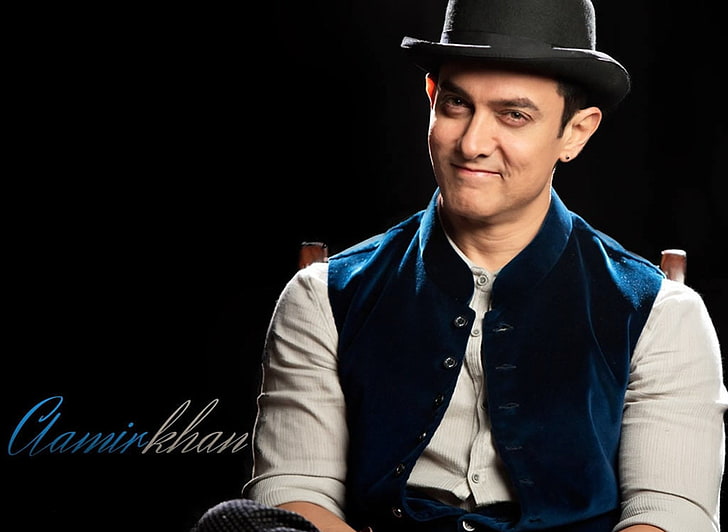
: “
1. Upbringing, Drama School & First Stage Passions
Mohammed Aamir Hussain Khan was born on March 14, 1965, in Mumbai, Maharashtra, into a prominent film dynasty that was simultaneously steeped in creative glory and financial insecurity. His father, Tahir Hussain, was a dedicated film producer, while his uncle, Nasir Hussain, was one of the most celebrated directors and producers of commercial Hindi cinema, famous for shaping the musical romance genre. Despite belonging to a prominent film family, Aamir’s childhood was far from idyllically wealthy. Tahir Hussain’s production ventures were often fraught with severe financial troubles, debt collectors visiting their home, and prolonged delays in project completions. This volatile economic reality gave the young Aamir an early, unvarnished look at the precarious nature of the entertainment industry.
Raised alongside three siblings—brother Faisal Khan and sisters Farhat and Nikhat Khan—Aamir developed a multifaceted personality early on. Educationally, he attended JB Petit School for his elementary years, later moving to St. Anne’s High School, Bandra, and completing his ninth and tenth grades at Bombay Scottish School. During his school years, Aamir was not merely drawn to the performing arts; he was a fiercely competitive state-level tennis champion in Maharashtra. His prowess on the tennis court instilled in him a rigorous sense of discipline, acute spatial focus, and an intense competitive drive that would later define his methodology in acting and filmmaking.
His initiation into acting occurred at the tender age of eight, when he appeared in a brief minor role in his uncle Nasir Hussain’s hit musical drama Yaadon Ki Baaraat (1973). A year later, he appeared in his father’s production Madhosh (1974). However, his parents, well aware of the harsh uncertainties of Bollywood, actively discouraged him from pursuing a full-time acting career, steering him instead toward stable professions like engineering or medicine. Driven by an innate theatrical passion, Aamir resisted parental expectations. Upon finishing high school, he enrolled at Narsee Monjee College of Commerce and Economics but effectively abandoned formal university academics to immerse himself in avant-garde theatre. He joined the Mumbai-based theatre group Avantar, working backstage, managing props, and taking on minor stage roles before co-writing and acting in a 40-minute silent experimental short film titled Paranoia (1983), directed by Aditya Bhattacharya. To master the technical mechanics of the craft, he subsequently worked as an assistant director to Nasir Hussain on Manzil Manzil (1984) and Zabardast (1985). This behind-the-camera apprenticeship laid the groundwork for his legendary technical eye and meticulous directorial sensibilities.

2. The Cinematic Arrival: Star-Making Turns & Industry Recognition
Aamir Khan made his adult acting debut in Ketan Mehta’s experimental, low-budget art-house drama Holi (1984), an ensemble film exploring student unrest and institutional decay. While Holi was critically noticed within festival circuits, it did not provide commercial visibility. His epochal moment came four years later, in April 1988, with the release of the romantic tragedy Qayamat Se Qayamat Tak (QSQT), directed by his cousin Mansoor Khan and produced by Nasir Hussain. Starring alongside newcomer Juhi Chawla, Aamir portrayed Raj, a clean-cut, deeply devoted young man trapped in a lethal feud between rival families.
Qayamat Se Qayamat Tak emerged as an overwhelming cultural phenomenon across South Asia. It revolutionized Hindi cinema by revitalizing the wholesome, music-heavy romantic genre, effectively dismantling the dominant era of violent action movies that had ruled the 1970s and early 1980s. Aamir Khan’s boyish charm, expressive eyes, and naturalistic acting style catapulted him overnight to nationwide stardom, earning him the National Film Award – Special Mention and the Filmfare Award for Best Male Debut.
However, the sudden rush of fame brought immediate professional traps. Eager to capitalize on his sensation, producers rushed to sign him, leading Aamir to sign over a dozen scripts simultaneously out of enthusiasm and obligation. Many of these hasty follow-up releases—such as Love Love Love (1989), Tum Mere Ho (1990), and Jawani Zindabad (1990)—were narrative failures and box-office flops. Critical press quickly dismissed him as a “one-hit wonder.” Realizing the grave danger of overexposure and poor script selection, Aamir made a historic strategic decision that would forever alter his career trajectory: he canceled multiple contracts, paid back advances, and vowed never again to work on multiple projects concurrently, pioneering a selective, single-film-at-a-time methodology that was virtually unheard of in Bollywood at the time.
3. Masterful Performances, Directorial Milestones & Critical Triumphs
3.1. Landmark Film Roles & Critical Masterpieces
The turning point in consolidating his stardom arrived in 1990 with Indra Kumar’s romantic drama Dil, opposite Madhuri Dixit. The film became the highest-grossing Bollywood film of that year, proving that his stardom was durable. He followed this success with Mahesh Bhatt’s romantic comedy Dil Hai Ke Manta Nahin (1991), an adaptation of It Happened One Night, showcasing his razor-sharp comedic timing alongside Pooja Bhatt.
In 1992, Aamir reteamed with director Mansoor Khan for the seminal sports coming-of-age drama Jo Jeeta Wohi Sikandar. Playing Sanju, a carefree, irresponsible teenager who transforms into a dedicated cyclist to restore his family’s pride, Aamir delivered a performance of extraordinary emotional depth. The film became a timeless classic, redefining youth-centric storytelling in Indian cinema. He continued to showcase his versatile comic brilliance in Rajkumar Santoshi’s cult slapstick comedy Andaz Apna Apna (1994), pairing with Salman Khan. Though initially a modest box-office performer, Andaz Apna Apna eventually evolved into one of the most quoted and beloved comedy films in South Asian pop culture history.
By the mid-1990s, Aamir was solidifying his status as a critical and box-office juggernaut. In 1995, he starred in Ram Gopal Varma’s street-smart drama Rangeela, portraying Munna, a crude, colorful street hustler in love with an aspiring actress. His transformation into the character was absolute, earning unanimous acclaim. In 1996, he headlined Dharmesh Darshan’s blockbuster romance Raja Hindustani. The film shattered box-office records, becoming the biggest hit of the decade and securing Aamir his first Filmfare Award for Best Actor after seven consecutive nominations. He rounded out the decade with hard-hitting thrillers like Sarfarosh (1999), where he played a tough police officer tackling cross-border terrorism, and Deepa Mehta’s critically revered art-house period drama Earth (1998), playing the complex, morally ambiguous Ice-Dil-Navi during the 1947 Partition of India.
3.2. Global Cinema Impact & Renowned Collaborations
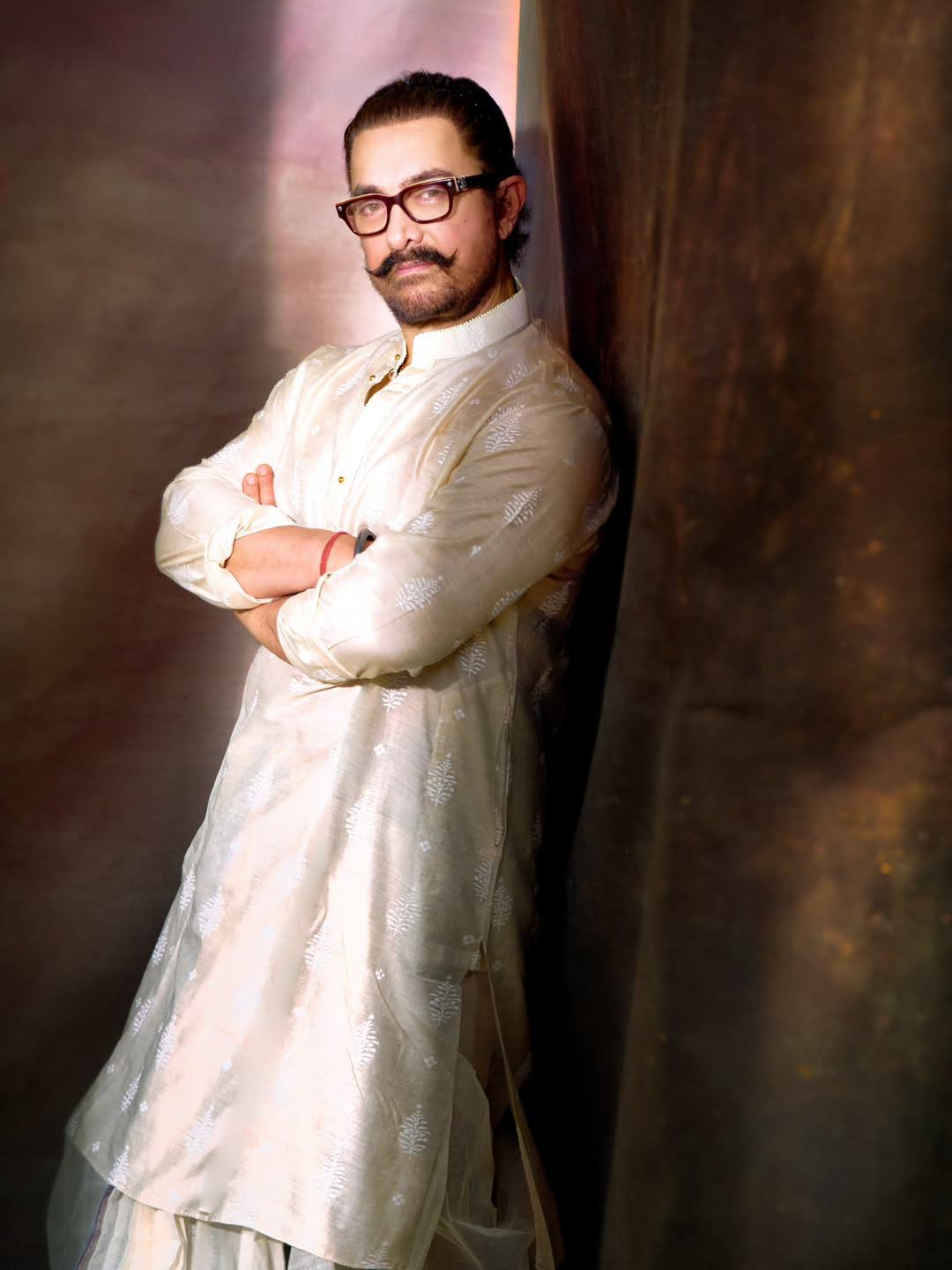
The turn of the millennium marked Aamir Khan’s ascension from a domestic superstar to a global cinematic visionary. In 1999, frustrated by the lack of structural discipline in Indian production pipelines, he founded his own production house, Aamir Khan Productions. Its inaugural venture was the epic period sports drama Lagaan: Once Upon a Time in India (2001), directed by Ashutosh Gowariker. Set in 1893 during British colonial rule, the story revolved around a small village of impoverished farmers who challenge British officers to a game of cricket to evade burdensome taxes.
Despite enormous industry skepticism surrounding its 3.5-hour runtime, rustic rural setting, and historic cricket premise, Lagaan emerged as a landmark masterpiece. It won the National Film Award for Best Popular Film Providing Wholesome Entertainment and became only the third Indian film in history to be nominated for the Academy Award for Best Foreign Language Film at the 74th Oscar Awards. Aamir personally mounted a relentless promotional campaign in Los Angeles, introducing global audiences to the cinematic grandeur of Indian narrative art.
Later that same year, Aamir starred in Farhan Akhtar’s directorial debut Dil Chahta Hai (2001). Playing Akash, an urban, skeptical, modern-day young man, Aamir helped usher in a contemporary aesthetic revolution in Hindi cinema. The film captured urban youth culture, friendship dynamics, and modern relationships with unprecedented realism. Following a four-year sabbatical, he returned with Mangal Pandey: The Rising (2005), followed by Rakeysh Omprakash Mehra’s cultural storm Rang De Basanti (2006). The latter seamlessly blended historical patriotism with modern-day political awakening, sparking youth activism across India and earning a nomination at the BAFTA Awards.
In 2007, Aamir made his directorial debut with Taare Zameen Par (Like Stars on Earth), a tender, deeply humane exploration of dyslexia and the emotional struggles of a misunderstood child. Originally produced by him, Aamir took over directorial duties to salvage the project. The film was a critical and commercial triumph, reshaping societal attitudes toward neurodiversity and special education across South Asia while winning the National Film Award for Best Film on Family Welfare.

3.3. Artistic Accolades, Peer Respect & Screen Legacy
Between 2008 and 2016, Aamir Khan executed an unprecedented streak of box-office dominance that defined the modern economics of Indian cinema. In 2008, his action-thriller Ghajini became the first Indian film to cross the ₹100 crore ($12+ million) domestic box-office mark, pioneering the modern Indian “blockbuster club.” A year later, Rajkumar Hirani’s 3 Idiots (2009), a sharp satire on the crushing pressures of the Indian education system, shattered all prior records by crossing ₹200 crore. 3 Idiots became an unprecedented cultural phenomenon across East Asia, achieving legendary status and massive theatrical runs in China, East Asia, and South Korea.
He expanded his artistic horizons with the action thriller Dhoom 3 (2013) and Rajkumar Hirani’s satirical sci-fi comedy PK (2014), which hilariously critiqued religious dogma and superstition, becoming the first film to cross ₹300 crore domestically. However, his artistic and commercial zenith was realized in Nitesh Tiwari’s biographical sports drama Dangal (2016).
In Dangal, Aamir played Mahavir Singh Phogat, an aging wrestler who trains his daughters Geeta and Babita to become world-class gold-medalist wrestlers. Aamir underwent an astonishing physical transformation, gaining over 28 kilograms to play the elderly, overweight father, before shedding the weight to shoot the younger athletic sequences. Dangal accumulated over $300 million worldwide, becoming the highest-grossing non-English foreign film in Chinese cinematic history and establishing Aamir Khan as the most influential foreign movie star in mainland China.
His subsequent production, Secret Superstar (2017), in which he played an eccentric music producer, replicated this colossal success in East Asian markets. For his immense contributions to art and culture, the Government of India honored him with the Padma Shri in 2003 and the prestigious Padma Bhushan in 2010. Internationally, he was honored with an Honorary Doctorate by the Maulana Azad National Urdu University and recognized on Time magazine’s list of the 100 Most Influential People in the World in 2013.
4. Celebrity Circles, Dating Milestones & Life Outside the Set
Aamir Khan’s personal life has frequently captured intense public attention, characterized by deeply romantic, highly unconventional choices and an enduring commitment to maintaining family harmony despite public transitions. In December 1986, long before he achieved national fame with Qayamat Se Qayamat Tak, a 21-year-old Aamir secretly married his neighbor, Reena Dutta. Because both came from different religious backgrounds—Aamir being Muslim and Reena Hindu—and because his career was at a delicate, launching stage, the couple kept their marriage hidden from the public and their respective families for nearly two years. Reena Dutta even made a brief appearance in the famous romantic music video “Papa Kehte Hain” from QSQT.
Together, Aamir and Reena have two children: a son named Junaid Khan (born 1993), who has stepped into acting and filmmaking, and a daughter named Ira Khan (born 1997), who has worked as a theatre director and mental health advocate. After 16 years of marriage, Aamir and Reena filed for a mutual-consent divorce in December 2002. Despite the dissolution of their marriage, the separation remained remarkably amicable. They maintained joint parental responsibilities, and Reena continued to serve in executive capacities within Aamir Khan Productions and their shared social initiatives.
While working as an assistant director on the sets of Lagaan in 2000, Aamir met Kiran Rao, a talented filmmaker, writer, and scholar from an aristocratic South Indian family. The two reconnected years after his divorce and married in a quiet ceremony in December 2005. In December 2011, Aamir and Kiran welcomed their son, Azad Rao Khan, born via gestational surrogacy. Together, Aamir and Kiran formed a powerful creative partnership, co-producing groundbreaking independent films like Dhobi Ghat (2010), Peepli Live (2010), and Laapataa Ladies (2024). In July 2021, after 15 years of marriage, Aamir and Kiran announced their joint decision to divorce. In a joint public statement, they reaffirmed their commitment to raising their son Azad as co-parents and continuing their collaborative efforts as creative business partners and co-founders of the Paani Foundation.
Beyond cinema, Aamir Khan is a dedicated philanthropist. In 2016, alongside Kiran Rao, he founded the Paani Foundation, a non-profit organization dedicated to fighting drought and water scarcity across rural Maharashtra. Through its flagship initiative, the “Satyamev Jayate Water Cup,” the foundation has mobilized tens of thousands of villages to practice watershed management and conservation, transforming barren landscapes into self-sustaining agricultural zones. Privately, Aamir is an avid reader, an expert chess enthusiast who has played exhibition matches against grandmasters like Viswanathan Anand, and a passionate follower of global sports.

5. Industry Tensions, Tabloid Scrutiny & Navigating Studio Setbacks
5.1. Public Friction & Media Debates Surrounding Political Statements
In November 2015, Aamir Khan found himself at the epicenter of one of the most explosive political and media storms in modern Indian history. Speaking at an journalism awards ceremony in New Delhi, Aamir engaged in an open conversation regarding growing sociopolitical polarization, violence, and public discourse in India. During his address, he shared a private conversation he had with his then-wife Kiran Rao, stating that she had expressed fear for their child’s future due to a growing sense of insecurity, even wondering aloud if they should consider moving out of the country.
The comment sparked an immediate, massive political and public uproar across national media networks, social platforms, and political arenas. Critics and political figures accused Khan of being unpatriotic, ungrateful to the nation that made him a superstar, and spreading alarmism. Protestors burned effigies of the actor, mobs gathered outside his residence in Mumbai, and calls to boycott his upcoming movies trended for months. High-profile corporate sponsors buckled under political pressure: e-commerce giant Snapdeal faced a massive consumer boycott where hundreds of thousands of users uninstalled its mobile app, leading Snapdeal to terminate its multi-million-dollar endorsement contract with Khan. Furthermore, the Indian Ministry of Tourism quietly dropped him as the brand ambassador of its flagship “Incredible India” campaign.
In response to the nationwide tempest, Aamir issued a formal clarification statement, asserting that his comments had been taken out of context and twisted for outrage. He firmly clarified: “Neither I, nor my wife Kiran, have any intention of leaving India. We never have, and we never will. I am proud to be an Indian, and I do not need anyone’s permission or certificate to prove that.” He argued that pointing out flaws in one’s society was an act of love and patriotism, not betrayal. Though the scandal caused severe short-term commercial damage, Aamir chose to let his humanitarian work with the Paani Foundation and his artistic output speak for itself. When Dangal released a year later in December 2016, its historic patriotic narrative and unprecedented box-office record effectively extinguished the public boycott and restored his national stature.
5.2. Television Reformism via *Satyamev Jayate* & *Laal Singh Chaddha* Box Office Storms
Aamir Khan’s artistic ambition has repeatedly drawn him into high-stakes ideological and social battles. In 2012, he launched the groundbreaking television talk show Satyamev Jayate. The show boldly tackled deep-seated, taboos in Indian society, including female foeticide, child sexual abuse, honor killings, caste discrimination, medical malpractice, and toxic dowry systems. While the show won international acclaim and resulted in actual legislative discussions and local policy changes, it also alienated powerful interest groups, medical lobbies, and conservative organizations who accused him of defaming Indian culture and institutions for television ratings.
Simultaneously, his 2014 blockbuster PK, which used an alien protagonist to satirize blind religious faith, dogmatic godmen, and commercialized ritualism, provoked intense protests from conservative religious groups. Demonstrators vandalized theaters showing the film and filed multiple legal petitions seeking a ban, alleging that the film insulted religious sentiments. Aamir and director Rajkumar Hirani stood firm, defending the film as a message of universal love, true spirituality, and critical inquiry. The Supreme Court of India ultimately dismissed the petitions against the film, asserting that artistic freedom must be protected.
The ghost of political controversies resurfaced severely in 2022 with the release of Laal Singh Chaddha, the official Hindi adaptation of Forrest Gump. Resurfaced video clips of his 2015 “intolerance” remarks and past statements were aggressively circulated across social media algorithms, driving a massive, sustained #BoycottLaalSinghChaddha campaign. Coupled with mixed critical reviews and post-pandemic theatrical friction, the film underperformed dramatically at the Indian box office. Accepting the commercial failure with humility, Aamir publicly took full responsibility for the film’s shortcomings and announced a temporary sabbatical from acting to reflect, recalibrate his creative instincts, and spend quality time with his family.
6. Screen Charisma, Method Acting & Pop Culture Legacy
Aamir Khan’s approach to public image, fashion, and media presence is radically distinct from his contemporaries in global entertainment. While most modern superstars maintain aggressive digital profiles, multi-platform social media teams, and constant lifestyle branding, Aamir has chosen a path of deliberate artistic isolation. On March 15, 2021—a day after his 56th birthday—Aamir stunned fans by officially shutting down all his personal social media handles, including his Instagram, Twitter, and Facebook accounts. In his final post, he casually explained that he was dropping the “pretence” of being active on social media, announcing that all future official communications regarding his films and projects would occur exclusively through his production house handle, Aamir Khan Productions (@akppl_official).
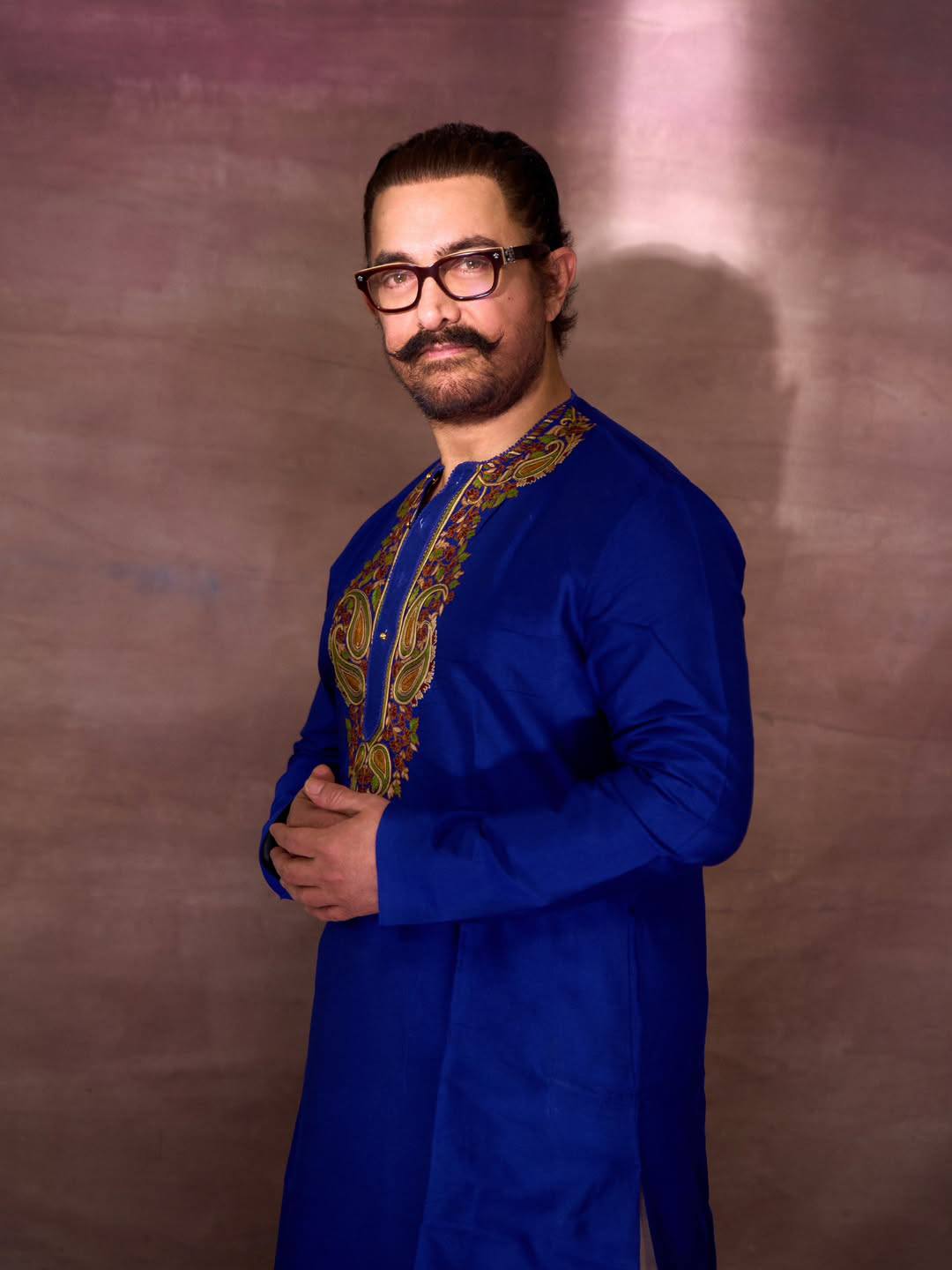
His stylistic identity is defined entirely by method immersive metamorphosis rather than red-carpet glamour. Unlike traditional stars who maintain a consistent visual brand, Aamir completely alters his physical appearance for every role he undertakes. Whether growing a massive handlebar mustache and long locks for Mangal Pandey, gaining muscle and carving eight-pack abs for Ghajini, adopting a crew cut and nose ring for Dil Chahta Hai, or transforming into a massive, 97-kilogram elderly father with graying hair for Dangal, his physical body serves as a dynamic canvas for his characters.
Culturally, his legacy as “Mr. Perfectionist”—a title he initially resisted but eventually came to define his public image—has permanently elevated the standards of script selection, character preparation, marketing strategy, and technical production quality across South Asian cinema. He broke the paradigm of actors working in dozens of simultaneous films, establishing the modern standard where top-tier actors focus on one dedicated project at a time. Furthermore, his unmatched box-office influence in international markets, particularly in China and East Asia, proved that culturally specific Indian stories possess universal global appeal.
7. Upcoming Film Premieres, Directorial Ventures & Future Projects
Following his post-2022 sabbatical, Aamir Khan has recalibrated his artistic journey with a renewed focus on high-concept storytelling, character-driven narrative cinema, and mentoring young talent through Aamir Khan Productions. He returned to active production work with the critically acclaimed social comedy Laapataa Ladies (2024), directed by Kiran Rao, which won widespread praise at international film festivals and showcased his ongoing commitment to backing meaningful, low-budget indie cinema.
Looking toward his acting slate, Aamir is preparing for his grand cinematic return with Sitaare Zameen Par. Positioned as a thematic, spiritual successor to his 2007 masterpiece Taare Zameen Par, the film explores the lives and challenges of neurodivergent individuals and individuals with special needs, framed through a warm, deeply comedic, and uplifting narrative. In addition to Sitaare Zameen Par, Aamir is actively developing several ambitious historical and mythological cinematic projects, including his long-cherished dream adaptation of the Indian epic Mahabharata, envisioned as a multi-part international cinematic event. Through his acting, producing, and environmental activism with the Paani Foundation, Aamir Khan continues to redefine the boundaries of global cinematic art.
Mohammed Aamir Hussain Khan FAQs: Key Questions Answered
How old is Aamir Khan?
Aamir Khan was born on March 14, 1965. He is 61 years old.
Who is Aamir Khan married to or dating?
Aamir Khan is currently unmarried. He was previously married to producer Reena Dutta from 1986 until their divorce in 2002, and later married filmmaker Kiran Rao in 2005, with whom he announced a mutual divorce in July 2021. He maintains close personal and professional friendships with both former spouses.
What is Aamir Khan’s most famous movie?
Aamir Khan has headlined several historic films. His most famous global releases include the Oscar-nominated period sports epic Lagaan (2001), the record-breaking coming-of-age comedy 3 Idiots (2009), and the international biographical sports drama Dangal (2016), which is the highest-grossing Indian film in history.
Why did Aamir Khan quit social media?
Aamir Khan officially quit all personal social media platforms (Instagram, Twitter, and Facebook) in March 2021. He stated that given his naturally infrequent posts, he wanted to drop the “pretence” of social media activity and streamline all official updates through his company’s official account, Aamir Khan Productions (@akppl_official).