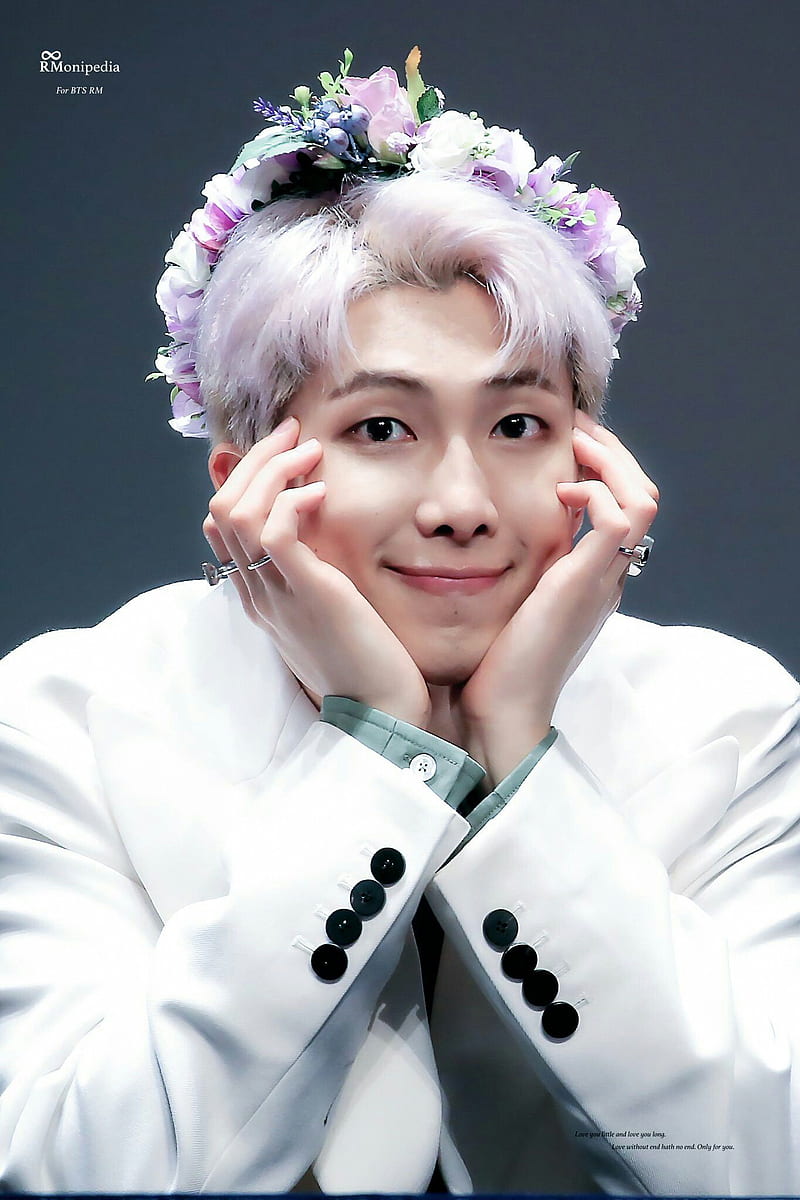
1. Childhood Melodies, Family Influences & First Instruments
Kim Nam-joon was born on September 12, 1994, in the Dongjak District of Seoul, South Korea. When he was four years old, his family relocated to the Ilsan District of Goyang, Gyeonggi Province, where he spent his formative years. Raised alongside a younger sister in a modest household—his mother worked in real estate and his father was an employee at SK Telecom—Nam-joon demonstrated extraordinary intellectual curiosity and creative talent from an early age. Blessed with an IQ score of 148, he achieved academic distinction in the top 1% of the nation in high school university entrance examinations for language, mathematics, foreign language, and social studies. He notably taught himself fluent English as a child by repeatedly watching the American television sitcom Friends with his mother, a skill that would later prove pivotal during BTS’s international rise.
Before his transition to hip-hop, Nam-joon possessed a deep affinity for literature and poetry. As an elementary student, he wrote awards-winning poems and actively submitted creative prose to online literary forums for over a year. While he initially envisioned a career as a author or poet, his trajectory dramatically shifted in the fifth grade at age 11 when he heard Epik High’s iconic track “Fly.” The emotional resonance of Korean hip-hop provided him instant solace, prompting him to dig deeper into the genre. Later introduced to the lyrical dexterity of American hip-hop icon Eminem by a school teacher, Nam-joon began crafting his own rap lyrics, filling notebooks with complex rhyme schemes, metaphors, and social commentary.
By 2007, as a young middle school student, Nam-joon entered the underground Korean hip-hop scene under the alias Runch Randa. He began collaborating with fellow underground artists, recording original tracks in home studios, and releasing music on underground hip-hop forums. Participating in underground crews such as Daenamhyup, he quickly gained a formidable reputation among underground hip-hop purists for his articulate flow and mature songwriting, setting the stage for his entry into mainstream entertainment.

2. Rising Frequency: Early Gigs, Underground Buzz & Mainstream Emergence
In 2009, Nam-joon took a major step toward a professional music career by auditioning for Big Deal Records. Although he passed the first round alongside future hip-hop artist Samuel Seo, he failed the second round after forgetting his lyrics on stage due to intense nerves. However, his raw talent caught the attention of rapper Sleepy, who was judging the event. Recognizing Nam-joon’s potential, Sleepy passed his contact information to Big Hit Entertainment’s head producer, Pdogg. In 2010, Sleepy reached out to Nam-joon, encouraging him to audition for Big Hit Entertainment CEO Bang Si-hyuk.
At just 16 years old, Nam-joon auditioned before Bang Si-hyuk, who was so profoundly impressed by his lyricism and rap delivery that he immediately offered him a spot on the label’s roster. Bang Si-hyuk made the decisive choice to form a hip-hop-centric group anchored around Nam-joon’s lyrical mind. This marked the founding moment of BTS (Bangtan Sonyeondan). Adopting the stage name Rap Monster—derived from a line in a song he penned inspired by San E’s “Rap Genius”—he trained rigorously for three years alongside fellow underground rapper Min Yoongi (Suga) and street dancer Jung Hoseok (J-Hope).
During his trainee period, Nam-joon demonstrated his versatility by contributing heavily behind the scenes. He cowrote tracks for labelmates, including the groundbreaking pro-LGBTQ+ single “Party (XXO)” for the girl group Glam in 2012. On June 13, 2013, Rap Monster made his official debut as the leader, main rapper, and spokesperson of BTS with the single album 2 Cool 4 Skool and its hard-hitting lead track “No More Dream.” Embodying youth rebellion, social critiques of the education system, and fierce hip-hop identity, RM’s commanding presence and distinct baritone voice immediately anchored the group’s signature sound.
3. Defining Studio Albums, Billboard Dominance & Creative Mastery
3.1. Landmark Singles & Multi-Platinum Album Era
As the foundational member and primary songwriter of BTS, RM drove the group’s gradual evolution from gritty hip-hop idols to mainstream superstars. BTS’s initial break came with their 2015 extended play The Most Beautiful Moment in Life, Pt. 1 and its chart-topping single “I Need U,” followed by the explosive success of “RUN” and “DOPE.” RM served as a chief lyricist across these releases, grounding the group’s narrative in the anxieties, beauty, and turbulence of youth.
Concurrently, RM established his identity as an independent solo artist. In March 2015, he dropped his self-titled debut solo mixtape, RM, via SoundCloud. Free from commercial constraints, the mixtape delivered raw, aggressive hip-hop tracks like “Awakening” and “Do You,” directly addressing his internal conflict between underground hip-hop authenticity and mainstream idol status. The release earned critical acclaim from international music outlets, including Spin Magazine, which listed it among the top hip-hop albums of the year.
By November 2017, seeking a name that better represented his broader artistic vision and evolving identity, he officially changed his stage name from Rap Monster to RM, stating that the new name stood for “Real Me” and offered a wider, more mature framework for his artistic endeavors.

3.2. Headline Festival Appearances & International Renown
Between 2017 and 2021, BTS achieved unprecedented global success, shattering historical records for Asian artists in western markets. RM’s leadership and fluent English were central to this global expansion. He steered the group through historic moments, including winning Top Social Artist at the 2017 Billboard Music Awards, breaking into the top tier of the Billboard Hot 100 with “Fake Love” and “Boy With Luv,” and delivering landmark stadium tours that sold out Wembley Stadium and Rose Bowl Stadium.
In September 2018, RM delivered a historic, universally praised speech at the United Nations General Assembly in New York City for the launch of UNICEF’s “Generation Unlimited” initiative. His passionate speech, centered around the theme of “Love Yourself, Speak Yourself,” resonated worldwide and solidified his reputation as a global thought leader for youth culture. That same year, the South Korean government awarded RM and his bandmates the prestigious Hwagwan Order of Cultural Merit, making them the youngest recipients in history.
Artistically, RM achieved another solo landmark in October 2018 with his second mixtape, Mono. Characterized by introspective indie-pop and ambient hip-hop soundscapes, Mono showcased a reflective side of the artist. The playlist peaked at Number 26 on the US Billboard 200, making it the highest-charting album by a Korean solo artist in Billboard history at the time.
The global peak of BTS reached new heights with the release of their first English-language single “Dynamite” in 2020, followed by “Butter” and “Permission to Dance” in 2021. All three tracks topped the Billboard Hot 100 chart, while the album BE (2020), heavily executive-produced by the members with RM overseeing key thematic songwriting, debuted at Number 1 on the Billboard 200. Furthermore, RM earned multiple Grammy Award nominations for his songwriting contributions to BTS’s work, cementing his place in music history.

3.3. Artistic Evolution & Critical Industry Stature
In June 2022, BTS announced a planned pause in group activities to allow members to pursue mandatory South Korean military service and individual solo projects. RM launched his official debut solo studio album, Indigo, in December 2022. Described by RM as an archive of his late twenties, the album featured eclectic collaborations with global and Korean icons including Erykah Badu, Anderson .Paak, Epik High’s Tablo, and Youjeen. Indigo was praised by critics for its mature exploration of fame, art, identity, and adulthood, debuting at Number 3 on the Billboard 200 and establishing RM as an album-oriented solo auteur.
In December 2023, RM officially enlisted in the Republic of Korea Armed Forces to fulfill his mandatory military service, serving in the active-duty military band. Demonstrating remarkable artistic foresight, RM recorded and prepared a massive second solo studio album prior to his enlistment. Released in May 2024 while he was actively serving, Right Place, Wrong Person showcased an experimental alternative hip-hop sound, exploring themes of alienation, belonging, and emotional complexity. Supported by critically acclaimed music videos for singles like “LOST!” and “Come back to me,” the project earned glowing reviews from Pitchfork, Rolling Stone, and NME, confirming RM’s standing as one of the most innovative lyricists and creative directors of his generation.
4. Heartstrings: Dating History, Close Friends & Family Support
Despite living under the intense global spotlight for over a decade, RM has maintained an exceptionally private personal life. He remains close to his family—his parents and younger sister, Kim Geong-min—frequently crediting his mother for instilling his love of books and language. While public interest in his romantic life remains high, RM has never officially confirmed any high-profile public relationships, keeping his dating life entirely separate from his public persona.
Beyond his musical career, RM is recognized globally as an avid art collector, connoisseur, and philanthropist. His passion for visual art blossomed during global tours around 2018, when visiting art museums became his retreat from the sensory overload of stadium performances. Over the years, RM has amassed a private collection of modern and contemporary Korean art, featuring works by master artists such as Whanki Kim, Yun Hyong-keun, Lee Ufan, and Chang Ucchin.
RM’s influence in the fine art world is substantial. Curators speak of the “RM Effect,” where museums and private galleries experience record-breaking attendance after RM shares photos of specific exhibitions on his popular Instagram account (@rkive). Furthermore, he is a dedicated art patron; he has repeatedly donated hundreds of millions of Korean Won to national art museums, cultural heritage restoration projects, and art publication grants to ensure young artists and the public have access to Korean cultural history.

5. Industry Clashes, Masters Disputes & Navigating Public Scrutiny
5.1. Addressing Lyrical Criticism: Kim Nam-joon's 2014–2016 Songwriting Consultations
During the initial stages of BTS’s career, when the group operated under a traditional hip-hop idol concept, RM faced intense public criticism regarding specific lyrics written during his late teens and early twenties. In 2014, lyrics from tracks such as “War of Hormone” and his pre-debut/mixtape compositions came under scrutiny from K-pop listeners, feminist groups, and cultural critics for alleged misogynistic tropes, objectification, and insensitive phrasing.
Rather than dismissing the backlash or issuing defensive corporate apologies, RM took personal responsibility for his intellectual and artistic development. In 2016, RM and Big Hit Entertainment released an official statement acknowledging the flaws in early lyrics. RM proactively sought out gender studies professors, sociology scholars, and literary critics to review his song lyrics before release. He publicly discussed his past ignorance, expressing sincere remorse and demonstrating a commitment to growth. This transparent approach to self-reflection transformed a career crisis into a defining moment of maturity, earning respect from critics and fans alike.
5.2. Cross-Cultural Friction: How Kim Nam-joon Navigates Western Media Pressure
As BTS transitioned onto the Western stage, RM frequently found himself managing complex cultural misunderstandings. As the primary translator and spokesperson during high-stakes Western media interviews, RM bore the brunt of intense press questioning, microaggressions, and political interrogation regarding Asian identity, South Korean military service debates, and fandom culture.
In 2020, during an acceptance speech for the General James A. Van Fleet Award recognizing contributions to US-Korea relations, RM mentioned the shared history of pain between South Korea and the United States during the Korean War. The speech sparked a sudden, intense media storm in mainland China, where some internet users and state-affiliated commentators claimed his remarks ignored Chinese casualties during the conflict. Major commercial brands briefly pulled BTS advertisements in China due to public pressure. RM maintained a dignified silence, allowing official diplomatic bodies to clarify the neutral, historical nature of the speech. Through steady, dignified leadership, RM navigated the political landmines of international stardom, shielding his bandmates and preserving the group’s global standing.

6. Music Videos, Social Media Footprint & Cultural Resonance
RM’s individual style has evolved into an iconic blend of high-concept minimalism, vintage workwear, and Japanese Americana. Departing from the flashy fashion choices of early K-pop eras, RM favours organic textures, oversized silhouettes, and earthy tones, frequently wearing brands like Visvim, Bode, Fear of God, and Bottega Veneta (for which he was named a global brand ambassador in 2023). His aesthetic reflects his philosophical approach to life: grounded, intellectual, and deeply connected to nature and art.
His Instagram handle, @rkive, serves as a digital curated museum of his life. Rather than typical celebrity self-promotion, RM’s feed features quiet landscape photography, rare book volumes, museum visits, bicycle rides along the Han River (an activity fans affectionately term “Namjooning”), and behind-the-scenes studio sessions. With tens of millions of followers, his platform promotes museum patronage, literary exploration, and mindful living among younger generations around the globe.
7. Upcoming Studio Albums, World Tours & Future Eras
Following his enlistment in late 2023, RM dedicated himself to completing his active-duty military service within the Republic of Korea Armed Forces. Despite his physical absence from the public promotional circuit, his creative presence remained active throughout 2024 and 2025 due to the carefully planned rollout of his solo album Right Place, Wrong Person and associated documentary films detailing his artistic process.
Looking ahead, RM is preparing for his highly anticipated military discharge in mid-2025, alongside his bandmates. With all seven members completing their mandatory service commitments, RM will resume his role as leader of BTS for a scheduled full-group reunion, global stadium tour, and new chapter of group music. Concurrently, RM’s standing as an international fine art patron and solo auteur guarantees that his future horizons will span both global stadium stages and international art biennials.
Kim Nam-joon FAQs: Key Questions Answered
How old is RM?
RM was born on September 12, 1994, making him 31 years old.
Who is RM dating or married to?
RM is currently single and has never been married. He maintains a private personal life and has not publicly confirmed any romantic relationships.
What is RM’s real name and why did he change his stage name?
RM’s legal name is Kim Nam-joon. Originally debuting under the stage name ‘Rap Monster’, he officially changed his name to ‘RM’ in November 2017 to represent ‘Real Me’ and to align with a broader, more versatile artistic direction.
What awards and accolades has RM achieved?
As leader of BTS, RM has won numerous Billboard Music Awards, American Music Awards, MTV Europe Music Awards, and multiple Grammy Award nominations. In 2018, he was awarded the Hwagwan Order of Cultural Merit by the South Korean government. As a songwriter, he has over 200 registered compositions with the Korea Music Copyright Association (KOMCA).