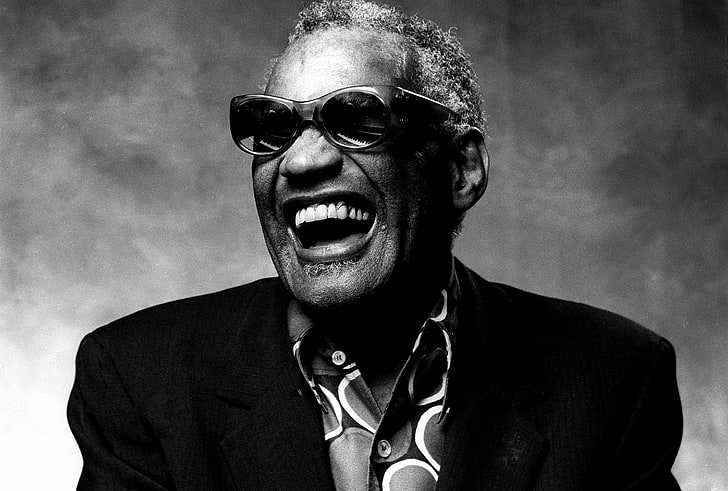
Ray Charles Robinson’s Formative Years: Blindness, Greenville Poverty, and Braille Mastery at St. Augustine


Ray Charles Robinson was born on September 23, 1930, in Albany, Georgia, during the brutal depths of the Great Depression and the oppressive era of Jim Crow segregation. His mother, Aretha Williams, was a teenage laundress who had been taken in as a foster child by Bailey Robinson, a railroad worker and handyman. When Aretha became pregnant with Ray, family dynamics fractured, and Bailey effectively abandoned the family shortly after Ray’s birth. Seeking a fresh start and better conditions, Aretha moved with infant Ray to her hometown of Greenville, Florida, where they lived in extreme poverty. The family shared a modest wooden house without electricity or indoor plumbing, surviving on Aretha’s meager earnings from washing clothes for wealthy local families.
Tragedy struck Ray’s early childhood in quick, devastating succession. When Ray was just four years old, his younger brother, George, accidentally fell into his mother’s laundry tub filled with boiling water and lye. Despite Ray’s frantic attempts to pull his brother out, George drowned. The psychological trauma of witnessing his brother’s death haunted Charles for the rest of his life. Shortly after this catastrophe, at age five, Ray began losing his sight. Medical historians believe the cause was juvenile glaucoma, though untreated trachoma or severe eye infections were also contributing factors. By age seven, Charles was completely, permanently blind.
Despite these staggering burdens, Aretha Williams refused to allow her son to succumb to self-pity or helplessness. She instilled in him an uncompromising sense of independence, teaching him to navigate his physical environment without a guide dog or cane, memorize routes, perform domestic chores, and rely acutely on his sense of hearing, touch, and spatial orientation. His musical awakening had already begun at age three when Pitman Red, a local cafe owner in Greenville who played a battered upright piano, allowed young Ray to sit beside him on the piano bench and press the keys. Red taught Ray basic blues phrases, nurturing a prodigy’s ear for tone and rhythm.
Recognizing that her blind son required formal specialized education, Aretha enrolled Ray at the Florida School for the Deaf and the Blind in St. Augustine, Florida, in 1937. For eight years, Charles received rigorous, comprehensive musical instruction. He learned to read and write music in Braille, mastered classical piano compositions by Johann Sebastian Bach, Frédéric Chopin, and Wolfgang Amadeus Mozart, and expanded his multi-instrumental abilities by learning the alto saxophone, clarinet, trumpet, and organ. The school’s classical training provided Ray with an incredible foundation in harmonic theory, counterpoint, and formal arrangement that would later set him apart from his self-taught peers in popular music. However, when Charles was 14 years old, tragedy struck again: his beloved mother died suddenly at age 31, followed shortly after by the death of his father. Orphaned and utterly blind, Ray left the St. Augustine school permanently in 1945 to forge a path as a professional musician in the cutthroat world of Southern club circuits.

From Seattle’s McSon Trio to Atlantic Records: Ray Charles Robinson’s Rhythm & Blues Breakthrough
After leaving school, fifteen-year-old Ray Charles moved to Jacksonville, Florida, living in near-total destitute conditions while taking every gig available. He performed in local Black venues along the ‘Chitlin’ Circuit’, playing piano for bands like The Florida Playboys and backing visiting blues acts. To avoid being confused with famous middleweight boxer Sugar Ray Robinson, he dropped his surname and officially adopted the stage name Ray Charles. Determined to escape the racial violence and economic stagnation of the deep South, Charles asked a friend to help him locate the furthest point from Florida on a map of the continental United States. The answer was Seattle, Washington. In March 1948, eighteen-year-old Ray saved $600 from his performances and boarded a five-day bus journey alone across the country.
Arriving in Seattle, Charles quickly established himself in the thriving Jackson Street jazz scene. He formed the McSon Trio (also known as the Maxim Trio) alongside guitarist Gossie McKee and bassist Milton Garred. At this early stage of his career, Charles deliberately styled his vocal delivery and piano technique after his primary idols, Nat King Cole and Charles Brown. His suave, velvety jazz-crooner persona immediately resonated in local clubs, leading to recordings for Swing Time Records, an Los Angeles-based independent R&B label. In 1949, the McSon Trio recorded ‘Baby, Let Me Hold Your Hand’, which became Charles’s first national R&B hit, reaching Number 5 on the Billboard R&B charts in early 1951. Follow-up tracks like ‘Kiss-Me Baby’ further consolidated his reputation as a skilled R&B pianist and arranger.
However, Charles grew increasingly dissatisfied with mimicking Nat King Cole. He sought an authentic, visceral vocal style that could express his deep-seated emotional pain and gospel roots. The seismic shift occurred in September 1952 when Atlantic Records founders Ahmet Ertegun and Herb Abramson purchased Charles’s recording contract from Swing Time for $2,500. Joining Atlantic Records placed Charles in the hands of visionary producers who granted him the freedom to experiment. His initial Atlantic sessions featured solid blues and boogie-woogie numbers, such as ‘Mess Around’ (1953), written by Ertegun, and ‘It Should’ve Been Me’ (1954). Yet, it was Charles’s radical decision to synthesize the sacred fire of African American gospel music with the secular, sensual lyricism of rhythm and blues that altered the course of modern music history.
Ray Charles Robinson’s Masterworks: Fusion of Gospel, Jazz, and Billboard-Topping Country Classics


The Definitive Anthems: 'I've Got a Woman', 'What'd I Say', and 'Georgia on My Mind'
In late 1954, while on tour in Atlanta, Georgia, Ray Charles penned a composition that birthed an entirely new musical genre: Soul Music. Taking the melody and emotional intensity of the traditional gospel hymn ‘It Must Be Jesus’ by The Southern Tones, Charles rewrote the lyric into a passionate, secular tribute to romantic desire titled ‘I’ve Got a Woman’. Recorded at the WGST radio station studios in Atlanta in November 1954 and released in December, the single skyrocketed to Number 1 on the Billboard R&B chart in early 1955. ‘I’ve Got a Woman’ featured Charles’s impassioned, raspy vocals, gospel-style call-and-response horn arrangements, and driving rhythm, shocking traditional religious listeners while electrifying the youth culture.
Over the next four years at Atlantic Records, Charles unleashed a historic barrage of genre-defining hits. Classics like ‘A Fool for You’ (1955), ‘This Little Girl of Mine’ (1955), ‘Drown in My Own Tears’ (1956), and ‘Hallelujah I Love Her So’ (1956) dominated the R&B charts. Charles recruited a female vocal backing group, The Cookies, and rebranded them as The Raelettes. Lead singer Margie Hendrix and her bandmates provided a soaring, church-inflected vocal foil to Charles’s gravelly leads, establishing a dynamic that became his signature sound. By 1958, Charles was filling major venues nationwide, including iconic jazz festivals like the Newport Jazz Festival, where his live recordings captured his supreme mastery as a big-band leader, jazz improviser, and blues belter.
The ultimate peak of his Atlantic era arrived in December 1958 during a late-night show in Milwaukee. Having run through his planned setlist with twelve minutes of performance time remaining, Charles instructed his band and The Raelettes to follow his lead and improvise. He launched into a pulsing, Latin-tinged electric piano groove, shouting spontaneous vocal riffs and inviting the audience to chant back. The explosive response convinced Charles to refine the jam into a formal studio recording. Released in June 1959, ‘What’d I Say’ became a massive crossover triumph. Despite facing radio bans across several markets due to its overtly sexual vocal groans and suggestive lyrics, the track sold over one million copies, reached Number 6 on the Billboard Hot 100 pop chart, and became Charles’s first gold record.

Ray Charles Robinson on the Global Stage: Concert Tours and International Arena Performances
By late 1959, Ray Charles had become one of the most commercially successful and critically revered artists in America. Recognizing his tremendous leverage, major record labels entered a fierce bidding war for his signature. In November 1959, Charles made a historic deal with ABC-Paramount Records. The contract offered unprecedented terms for a Black artist in the 1950s: a $50,000 annual advance, an exceptionally high royalty rate, complete artistic control over his recordings, and—most crucially—the ultimate ownership of his master tapes after a five-year period. This deal established a benchmark for artist empowerment across the music industry.
Under ABC-Paramount, Charles immediately expanded his sonic palette. In 1960, he released the sweeping, orchestrated album The Genius Hits the Road, featuring concept songs dedicated to American states and cities. Among these tracks was ‘Georgia on My Mind’, originally written in 1930 by Hoagy Carmichael and Stuart Gorrell. Charles’s deeply soulful, mournful delivery, paired with Ralph Burns’s lush string arrangement, turned the song into a national phenomenon. It earned Charles his first Billboard Hot 100 Number 1 pop hit in November 1960 and won four Grammy Awards at the 3rd Annual Grammy Awards ceremonies, including Best Vocal Performance Single Record or Track (Male) and Best Performance by a Pop Single Artist.
In 1961, Charles scored another monumental Billboard Hot 100 Number 1 hit with ‘Hit the Road Jack’, written by Percy Mayfield. The song featured a dramatic, comedic vocal duel between Charles and Raelette lead singer Margie Hendrix, backed by a driving walking bassline. The track held the top spot on the pop chart for two weeks and won the Grammy Award for Best Rhythm & Blues Recording. Charles followed this with a string of Top 10 pop smashes, including ‘Unchain My Heart’ (1961) and ‘Hide Nor Hair’ (1962), solidifying his title as ‘The Genius’—a moniker popularized by Frank Sinatra, who publicly declared Charles to be ‘the only true genius in our business’.
In 1962, at the absolute height of his pop popularity, Charles executed the most radical artistic risk of his career. Against the frantic advice of ABC-Paramount executives who feared he would destroy his fanbase, Charles chose to record an album of classic country and western songs. Released in April 1962, Modern Sounds in Country and Western Music reimagined songs by Hank Williams, Eddy Arnold, and Don Gibson through soul arrangements, big-band horn charts, and lush choral backings. The album became a cultural earthquake. It spent 14 consecutive weeks at Number 1 on the Billboard 200 album chart, sold over three million copies, and produced the immortal single ‘I Can’t Stop Loving You’, which spent five weeks at Number 1 on the Billboard Hot 100. By bringing Black soul aesthetics to traditional white country music during the height of the American Civil Rights Movement, Charles dismantled racial barriers, bridged deep cultural divides, and proved that music transcended racial lines.

Crossing Genre Boundaries: Ray Charles Robinson's Duets with Country and Soul Legends
Following the historic success of Modern Sounds in Country and Western Music, Charles immediately released Modern Sounds in Country and Western Music Vol. 2 in late 1962, which scored top hits like ‘You Are My Sunshine’ and ‘Your Cheatin’ Heart’. Throughout the mid-1960s, Charles established his own record label imprint, Tangerine Records (later rebranded as Crossover Records), releasing his own material alongside recordings by artists he championed, such as Jimmy Scott, Percy Mayfield, and Louis Jordan. He also established his own state-of-the-art recording studio and corporate headquarters on Washington Boulevard in Los Angeles, securing absolute financial and creative independence.
Despite shifting popular tastes during the late 1960s and 1970s with the rise of rock and funk, Charles remained an inescapable force in global live performance and broadcasting. He adapted contemporary rock classics into soul masterpieces, earning acclaim for his covers of The Beatles’ ‘Yesterday’ (1967) and ‘Eleanor Rigby’ (1968), as well as Stevie Wonder‘s ‘Living for the City’ (1975), which won Charles his tenth Grammy Award. In 1976, his iconic, patriotic rendering of ‘America the Beautiful’—performed with gospel fervor and emotional weight—became a definitive anthem during the U.S. Bicentennial and remains one of his most revered recordings.
Over his multi-decade career, Charles accumulated staggering industry honors. He was inducted into the inaugural class of the Rock and Roll Hall of Fame in 1986 alongside Elvis Presley, Chuck Berry, and Buddy Holly. He received the Grammy Lifetime Achievement Award in 1987, the Kennedy Center Honors in 1986, the National Medal of Arts in 1993, and the Polar Music Prize in 1998. In total, Charles won 17 Grammy Awards across his lifetime, with posthumous sweeps adding to his legacy. His final studio project, Genius Loves Company (2004), a collection of duets with artists like B.B. King, Norah Jones, Elton John, and Willie Nelson, was released shortly after his death. It sold over 3 million copies, won 8 Grammy Awards including Album of the Year, and served as a triumphant final bow for one of history’s greatest musical titans.
Ray Charles Robinson’s Marriages, Children, and Inner Circle Beyond the Stage
Ray Charles’s personal life was as complex, turbulent, and expansive as his musical career. He was married twice and fathered twelve children with nine different women, maintaining a sprawling network of romantic and familial relationships throughout his seven decades. His first marriage was to Eileen Williams in March 1951; however, the marriage suffered under the strain of Charles’s constant touring schedule and was officially dissolved in 1952. In March 1955, Charles married Della Beatrice Howard Robinson, a gospel singer known affectionately as ‘Bea’. Their marriage lasted 22 years until their divorce in 1977 and produced three sons: Ray Charles Robinson Jr., David Robinson, and Robert Robinson.
Parallel to his marriage with Della, Charles engaged in intense, prolonged extra-marital affairs, often involving women associated with his musical ensemble. His most explosive public affair was with Margie Hendrix, the charismatic lead singer of The Raelettes. Their tempestuous romantic and professional partnership yielded a son, Charles Wayne Hendrix, born in 1959. Hendrix’s passionate vocal style fueled some of Charles’s greatest recordings, but their relationship was consumed by violent arguments, heavy substance abuse, and intense jealousy. In 1964, after a severe dispute, Charles dismissed Hendrix from The Raelettes; her life subsequently spiraled downward, ending in her tragic death in 1973. Charles also had romantic relationships with Raelette singer Mae Mosely Lyles, dancer Arlette Kotchounian (with whom he had son Reene in 1968), and several other women across the 1960s, 1970s, and 1980s.

Fathering twelve children across multiple relationships presented unique financial and emotional dynamics. Charles acknowledged all of his children, provided financial support throughout their upbringing, and set up significant trust funds for them later in life. In December 2002, Charles held a formal family gathering in Los Angeles with his 12 children, where he explained his estate plans, allocating $500,000 to each child while directing the vast majority of his remaining wealth, music publishing rights, and intellectual property to the Ray Charles Foundation, a charitable organization dedicated to supporting individuals with hearing impairments and promoting educational arts programs.
In his private life away from performance stages, Charles possessed a remarkably sharp, analytical mind. He refused to let his lack of sight limit his pursuits, becoming an avid, highly competitive chess player who used a specially modified wooden board with raised squares and pegged pieces. He was deeply passionate about technology, audio engineering, and acoustic architecture, personally overseeing the technical specs of his Los Angeles recording studio. In his later years, he enjoyed quiet domestic life at his Los Angeles home, maintaining a long-term companionship with Norma Pinella until his passing in June 2004.
Ray Charles Robinson’s High-Stakes Battles: ABC-Paramount Master Rights and Legal Ownership
Ray Charles Robinson’s 1965 Arrest, Narcotics Rehabilitation, and Federal Legal Settlements
Beneath the glittering surface of Ray Charles’s commercial triumphs lay a grueling, high-stakes battle with severe narcotics addiction. Charles began experimenting with illicit drugs during his mid-teens while navigating the adult club scene in Florida. By age 16, he was addicted to heroin, a powerful dependency that ruled his private life for nearly two decades. Throughout his explosive rise in the 1950s and early 1960s, Charles maintained a functional addiction, performing hundreds of shows a year and managing complex business deals while regularly shooting up heroin. However, his drug use repeatedly brought him into direct collision with law enforcement authorities.
His first major legal arrest occurred in 1958 at a hotel in Philadelphia, Pennsylvania, where police raided his room and discovered heroin, marijuana, and hypodermic needles. Though the charges were dismissed due to an illegal search and seizure without a warrant, the incident alerted law enforcement agencies nationwide to his habit. A second high-profile arrest occurred in October 1961 at a hotel in Indianapolis, Indiana. Narcotics detectives seized heroin, marijuana, and drug paraphernalia from Charles’s room. Charles was charged with illegal possession of narcotics, facing severe felony charges that threatened to end his career. He defended himself by arguing that the search was unlawful and entered a complex legal process while continuing to tour and record.
The ultimate crisis erupted on November 14, 1964, at the Logan International Airport in Boston, Massachusetts. Customs officials searched Charles upon his arrival from a Canadian tour and discovered heroin and marijuana concealed in his coat pocket. Facing federal drug charges, a potential multi-year prison sentence, and the complete destruction of his global career, Charles reached a critical turning point. Realizing that his addiction was about to destroy everything he had built, Charles entered the St. Francis Hospital in Lawton, Oklahoma, in 1965 to undergo intensive medical detoxification. He spent 96 days in treatment, enduring agonizing withdrawal symptoms without substitute narcotics. After successfully achieving sobriety, Charles received a suspended five-year prison sentence and four years of probation from federal judge Francis Ford in 1966. Charles remained clean from heroin for the remainder of his life, transforming a potentially fatal personal crisis into a testament to personal resilience.
The Augusta Boycott and Sun City Controversy: Ray Charles Robinson’s Civil Rights Record
Throughout his career, Ray Charles stood at the center of intense political controversies and civil rights debates. On March 15, 1961, Charles was scheduled to perform a major concert at the Bell Auditorium in Augusta, Georgia. Upon learning that the dance floor was restricted strictly to white patrons while Black attendees were relegated to the balcony, Charles took a principled stance and refused to perform unless the seating was fully integrated. The promoter sued Charles for breach of contract, and Charles was fined in court; legend held that he was banned from performing in Georgia for life, though this was largely a media exaggeration. Nevertheless, his courageous refusal to compromise his dignity inspired civil rights activists nationwide. On April 24, 1979, the State of Georgia officially apologized to Charles and adopted his recording of ‘Georgia on My Mind’ as the official state song.

However, Charles faced severe public backlash and political criticism two decades later during the international anti-apartheid movement. In October 1981, despite an official United Nations cultural boycott against the apartheid regime of South Africa, Charles accepted lucrative performance offers to play a series of concerts at the Sun City resort in the Bantustan of Bophuthatswana. Anti-apartheid activists, political organizations, and fellow artists fiercely condemned Charles for breaking the international boycott, accusing him of prioritizing financial gain over human rights. Charles defended his decision by arguing that he played for integrated audiences and that music should be used to build bridges rather than enforce political isolation. Despite his defense, the United Nations Centre Against Apartheid placed Charles on its official blacklist of artists, causing significant damage to his progressive legacy among Civil Rights advocacy groups until the eventual fall of apartheid.
Additionally, Charles’s uncompromising approach to business created intense disputes with former band members, managers, and record companies. In the late 1960s, several former musicians sued Charles over unpaid royalties and harsh band management policies. His ironclad control over master recordings led to extended legal battles with ABC Records when he migrated his catalog to his Crossover Records label. In his later years, conflicts erupted between some of his children and the management of the Ray Charles Foundation over the administration of his intellectual property, licensing rights, and posthumous archival releases, illustrating the high stakes surrounding his colossal cultural and financial legacy.
Ray Charles Robinson’s Television Appearances, Archival Films, and Enduring Cultural Footprint
Ray Charles’s stylistic influence on global popular culture is immeasurable. Musically, he constructed the blueprint for soul music by taking the expressive vocal techniques, ecstatic intensity, and chord progressions of the Black church—gospel shouts, falsetto cries, melisma, and call-and-response dynamics—and marrying them to blues lyrics and jazz swing. Visually, Charles developed an instantly recognizable iconic image: dark sunglasses (worn to conceal his blind eyes), impeccably tailored tuxedo suits, and his characteristic sway behind the piano, rocking his body in rhythmic ecstasy. His signature vocal timbre—a gravelly, emotionally transparent instrument capable of shifting seamlessly from tenderness to throat-shredding rasp—influenced generations of vocalists across genres, including Stevie Wonder, Joe Cocker, Steve Winwood, Van Morrison, Billy Joel, and Aretha Franklin.
Though Ray Charles passed away in 2004 before the modern era of social media platforms, his estate and management team at the Ray Charles Foundation maintain an active, highly engaging digital footprint to preserve his legacy for younger generations. Across platforms, millions of global fans engage with curated archival footage, rare studio sessions, historical photos, and educational content celebrating his achievements:
- Official Facebook: Millions of followers access daily historical posts, iconic quotes, and anniversary celebrations of landmark album releases at
[https://www.facebook.com/RayCharles](https://www.facebook.com/RayCharles). - Official Instagram: Engaging digital audiences at
[https://www.instagram.com/official.raycharles](https://www.instagram.com/official.raycharles)with high-resolution photography, live performance clips, and behind-the-scenes insights into his musical genius. - Official YouTube Channel: Broadcasting remasterings of iconic concert performances, music videos, and historical mini-documentaries to over 730,000 subscribers at
[https://www.youtube.com/@raycharlestv](https://www.youtube.com/@raycharlestv).
Posthumous Discography and The Ray Charles Foundation’s Musical Preservation
While Ray Charles’s physical journey concluded on June 10, 2004, when he passed away from acute liver disease at his home in Beverly Hills at age 73, his estate, record labels, and foundation continue to expand his cultural footprint worldwide. Tangerine Records and the Ray Charles Foundation regularly oversee extensive archival reissues, high-resolution audio remasters, and box set releases of his legendary catalog. Initiatives include the vinyl restoration of his iconic 1960s ABC-Paramount albums, streaming releases of rare live concerts from European tours, and the box set True Genius, which highlights the full spectrum of his multi-genre career.
Furthermore, the educational and philanthropic mission of Ray Charles continues unabated through the Ray Charles Foundation. The foundation provides multi-million dollar grants to institutions such as Morehouse College, the Georgia Academy for the Blind, and hearing-health research programs at Cedars-Sinai Medical Center. The Oscar-winning 2004 biographical film Ray, starring Jamie Foxx in a performance that won the Academy Award for Best Actor, continues to introduce new generations to Charles’s life story. Through ongoing digital preservation, academic scholarships, and musical tributes, the immortal art of ‘The Genius’ remains a foundational pillar of American cultural heritage.
Ray Charles Robinson FAQs: Key Questions Answered
How old was Ray Charles when he passed away, and what was the cause of death?
Ray Charles passed away on June 10, 2004, at the age of 73. His official cause of death was acute liver disease (liver failure) surrounded by family and loved ones at his home in Beverly Hills, California.
How did Ray Charles lose his sight as a child?
Ray Charles began losing his sight around age five and became completely blind by age seven. Medical experts believe his blindness was caused by juvenile glaucoma, though severe untreated eye infections or trachoma during his impoverished childhood in Florida were also contributing factors.
What is Ray Charles’s most famous song?
Ray Charles recorded dozens of iconic hits, but his most famous signature songs include ‘Georgia on My Mind’ (which became the official state song of Georgia), ‘What’d I Say’, ‘I Can’t Stop Loving You’, ‘Hit the Road Jack’, and ‘I’ve Got a Woman’.
How many Grammy Awards did Ray Charles win?
Ray Charles won 17 Grammy Awards throughout his lifetime and posthumously. He was also awarded the prestigious Grammy Lifetime Achievement Award in 1987 and had several of his recordings inducted into the Grammy Hall of Fame.
Was Ray Charles ever married, and how many children did he have?
Ray Charles was married twice: to Eileen Williams (1951–1952) and to Della Beatrice Howard Robinson (1955–1977). Over his lifetime, Charles fathered twelve children with nine different women.