
1. Childhood Melodies, Family Influences & First Instruments
Dwayne Michael Carter Jr. was born on September 27, 1982, in the impoverished, high-crime Hollygrove neighborhood of New Orleans, Louisiana. His mother, Jacinda ‘Cida’ Carter, was just nineteen years old when she gave birth, and his biological father, Dwayne Michael Turner, abandoned the family shortly thereafter. Recognizing his father’s total absence from his life, the young artist intentionally dropped the ‘D’ from his name, choosing to be known as Wayne to distance himself from Turner. Raised in a precarious environment by his hardworking mother, Wayne found stability and a true father figure in Reginald ‘Rabbit’ McDonald, his stepfather who encouraged his budding creative instincts before tragically being murdered in 1997.
Wayne’s astonishing gift for words surfaced remarkably early. At age eight, he wrote his first rap song, displaying a uncanny knack for cadences, metaphors, and rhythm that far exceeded his years. He attended Lafayette Elementary School and later the gifted program at Eleanor McMain Secondary School, where he excelled academically while honing his performing arts skills in drama productions. However, music consumed his ambition. Determined to gain the attention of Bryan ‘Birdman’ Williams—co-founder of Cash Money Records—the eleven-year-old prodigy repeatedly left freestyle raps on Williams’ office answering machine. Impressed by the boy’s relentless audacity and raw talent, Birdman took Wayne under his wing, serving as a mentor and father figure.
Tragedy nearly cut Wayne’s life short at age twelve when he suffered a near-fatal gunshot wound to the chest from a 9mm pistol in his mother’s home. Though initially reported as an accidental shooting while playing with a gun, Wayne later revealed in his adult years that the incident was a suicide attempt stemming from mental health struggles after his mother forbade him from rapping. Off-duty New Orleans police officer Robert ‘Uncle Bob’ Hoobler found the bleeding youngster and rushed him to the hospital in a patrol car, saving his life. Following his recovery, Wayne dropped out of Marion Abramson High School at age fourteen to pursue music full-time with his mother’s blessing, setting the stage for one of the most remarkable careers in modern music history.

2. Rising Frequency: Early Gigs, Underground Buzz & Mainstream Emergence
Wayne’s professional record recording journey began in 1995 when Cash Money Records paired him with fellow juvenile prodigy Lil’ Doogie (later known as B.G.) to form the duo The B.G.’s. They released the local collaborative album True Story, showcasing Wayne’s precocious mic presence. The true explosive breakthrough occurred in 1997 when Birdman assembled the Southern hip-hop supergroup Hot Boys, alongside B.G., Juvenile, and Turk. The group’s debut album, Get It How U Live!, became an underground sensation across the South, selling over 400,000 copies independently. Their 1999 follow-up, Guerrilla Warfare, catapulted the group to national prominence, reaching No. 5 on the Billboard 200 and achieving Platinum status on the back of regional anthems like ‘We On Fire’ and ‘Bling Bling’.
Although Wayne was the youngest member of the Hot Boys, his memorable chorus contribution to ‘Bling Bling’ popularized the slang phrase to such a degree that it was eventually inducted into the Oxford English Dictionary. Capitalizing on this momentum, the seventeen-year-old released his debut solo studio album, The Block Is Hot, in November 1999. Debuting at No. 3 on the Billboard 200 and quickly certified Platinum by the RIAA, the project proved that Wayne possessed the charisma, vocal command, and commercial appeal to stand on his own feet, establishing him as Cash Money’s undisputed marquee star for the new millennium.
3. Defining Studio Albums, Billboard Dominance & Creative Mastery
3.1. Signature Hits & Chart-Topping Breakthroughs
Following his successful solo debut, Wayne experienced a transitional phase during the early 2000s. Albums like Lights Out (2000) and 500 Degreez (2002) achieved Gold certifications but struggled to replicate the overwhelming cultural impact of his debut. Recognizing that the traditional southern bounce formula was evolving, Wayne made a conscious decision to reinvent his technique, adopting an aggressive mixtape strategy that would forever alter how hip-hop music was distributed and consumed.
In June 2004, Wayne released Tha Carter, an album that marked a dramatic stylistic evolution. Showcasing a deeper, raspy delivery and sophisticated lyricism, the album spawned the massive hit ‘Go DJ’ and peaked at No. 5 on the Billboard 200. Wayne followed this success with Tha Carter II in December 2005, which debuted at No. 2, sold over 240,000 copies in its first week, and earned critical acclaim for tracks like ‘Fireman’ and ‘Best Rapper Alive’. Concurrent with his album releases, Wayne embarked on an unprecedented mixtape run—releasing legendary projects such as The Dedication, Dedication 2, and Da Drought 3. By hijacking popular industry beats and out-rapping their original artists, he built an unassailable reputation, boldly declaring himself the greatest living rapper.

3.2. Stadium Eras & Global Audience Resonance
The culmination of Wayne’s artistic evolution arrived in June 2008 with the release of his masterpiece, Tha Carter III. In an era of rampant digital piracy and declining CD sales, the album accomplished the unthinkable by selling over 1 million copies in its first week in the United States alone. Powered by chart-topping global smashes like ‘Lollipop’ (featuring Static Major), ‘A Milli’, ‘Got Money’, and ‘Mrs. Officer’, Tha Carter III dominated pop radio, garnered universal critical praise, and won four Grammy Awards at the 51st Annual Ceremony, including Best Rap Album.
During this peak era, Wayne transformed into hip-hop’s ultimate kingmaker. Through his imprint, Young Money Entertainment, he identified, signed, and developed two unknown artists who would become global megastars: Drake and Nicki Minaj. The label’s 2009 compilation album, We Are Young Money, launched hits like ‘Every Girl’ and ‘BedRock’, asserting Wayne’s unmatched eye for generational talent. In 2012, Wayne achieved another milestone by surpassing Elvis Presley for the most entries on the Billboard Hot 100 chart by a solo artist, accumulating over 109 charted tracks.

3.3. Sonic Reinvention, Grammy Triumphs & Songwriting Mastery
Refusing to stay confined to hip-hop, Wayne explored experimental terrain with his 2010 rap-rock crossover project Rebirth, which earned Gold certification despite polarized critical reviews. He quickly re-established his rap supremacy with I Am Not a Human Being (2010)—released while serving a prison sentence on New York’s Rikers Island—making him the first artist since 2Pac to score a Billboard No. 1 album while incarcerated. His ninth studio album, Tha Carter IV (2011), moved 964,000 copies in its opening week, producing anthems like ‘6 Foot 7 Foot’, ‘How to Love’, and ‘She Will’.
Across his legendary career, Wayne has accumulated five Grammy Awards, eleven BET Awards, four Billboard Music Awards, and the prestigious I Am Hip Hop Icon Award. His inventive use of auto-tune, dense wordplay, punchline-heavy stream-of-consciousness delivery, and endless mixtape drops pioneered the operational template for 2010s and 2020s streaming culture, influencing an entire generation of artists ranging from Young Thug and Future to Kendrick Lamar and Lil Uzi Vert.
4. Heartstrings: Dating History, Close Friends & Family Support
Lil Wayne’s private life has been vibrant, complex, and frequently scrutinized by public media. Wayne is the father of four children born to four different women. He had his first child, daughter Reginae Carter, on November 29, 1998, with his high school sweetheart Antonia ‘Toya’ Johnson. Wayne was sixteen and Toya was fifteen at the time. The couple married in February 2004 but divorced amicably in 2006, maintaining a supportive co-parenting partnership ever since.
His second child, Dwayne Michael Carter III, was born on October 22, 2008, to radio personality Sarah Vivan. His third child, Kameron Carter, was born on September 9, 2009, to acclaimed actress Lauren London. Just two months later, on November 30, 2009, his fourth child, Neal Carter, was born to R&B singer Nivea. Wayne has also dated high-profile figures over the years, including rapper Trina, singer Christina Milian, and model Denise Bidot. Despite the complicated logistics of his blended family, Wayne is widely celebrated by his children and their mothers as an extraordinarily present, loving, and supportive father who prioritizes family above all else.
Outside of recording studios, Wayne is an avid skateboarder—a passion he picked up later in life that led him to build custom skate parks, launch the TRUKFIT apparel brand, and regularly travel with a personal skate team. He is also a passionate sports fanatic, frequently appearing as a guest analyst on sports television shows like FS1’s Undisputed and releasing custom tracks for professional sports teams.

5. Industry Clashes, Masters Disputes & Navigating Public Scrutiny
5.1. Rikers Island Incarceration, Federal Firearms Case & 2021 Executive Pardon
Throughout his adulthood, Wayne faced significant legal hurdles. In July 2007, he was arrested outside Manhattan’s Beacon Theatre after police discovered a loaded .40-caliber handgun on his tour bus. Following prolonged legal proceedings, Wayne pleaded guilty in October 2009 to attempted criminal possession of a weapon. In March 2010, he began serving an eight-month prison sentence at the Eric M. Taylor Center on Rikers Island. During his incarceration, Wayne maintained strict discipline, kept a detailed journal later published as a memoir titled Gone ‘Til November, and was released in November 2010 to massive fanfare.
A decade later, Wayne faced another life-altering legal crisis. In December 2019, federal agents searched his private jet upon arrival at Miami-Opa Locka Executive Airport and discovered a gold-plated .45-caliber handgun along with ammunition and personal drugs. Because Wayne was a convicted felon, federal prosecutors charged him with possession of a firearm by a convicted felon, a offense carrying up to 10 years in federal prison. In December 2020, Wayne pleaded guilty to the charge. However, on January 19, 2021—on his final full day in office—President Donald Trump granted Lil Wayne a full presidential pardon, sparing the iconic rapper from serving additional prison time.
5.2. The $51 Million Cash Money Lawsuit & The Delayed Release of Tha Carter V
In 2014, a bitter fallout erupted between Wayne and Cash Money Records executive Bryan ‘Birdman’ Williams, his longtime father figure. Wayne publicly voiced his extreme frustration on social media, revealing that Cash Money was refusing to release his long-awaited album Tha Carter V due to financial and administrative disputes. The rift escalated into a massive $51 million lawsuit filed by Wayne against Cash Money in January 2015, alleging breach of contract, unpaid royalties, and deliberate withholding of master recordings.
The legal stalemate locked Wayne’s catalog in limbo for years, prompting him to release the Free Weezy Album independently via Tidal in 2015 despite pushback from Cash Money. The emotional and financial toll of the feud was immense, fracturing his relationship with Birdman and causing outrage among fans who demanded his artistic freedom. Finally, in June 2018, Wayne’s attorney announced that he had reached an undisclosed multi-million dollar settlement with Universal Music Group and Cash Money, granting Wayne complete ownership of his masters and officially severing his legal ties to Cash Money. Tha Carter V was released in September 2018, debuting at No. 1 on the Billboard 200 with 480,000 units sold, representing a triumphant emotional victory.
5.3. Dwayne Michael Carter Jr.'s Epilepsy Diagnosis & Seizure-Related Hospitalizations
Wayne has faced severe, life-threatening medical emergencies that sparked international concern. In March 2013, he was rushed to Cedars-Sinai Medical Center in Los Angeles after suffering multiple violent seizures in quick succession, spending several days in the intensive care unit. Media outlets initially reported alarming rumors that he was on his deathbed due to excessive consumption of ‘lean’ (promethazine/codeine syrup mixture).
Shortly after his discharge, Wayne publicly clarified the situation, revealing for the first time that he suffers from neurological epilepsy and a chronic seizure disorder. He suffered additional severe seizure episodes in 2016 and 2017 while aboard private aircraft, forcing emergency landings. By publicly addressing his neurological condition, adopting healthier lifestyle changes, and prioritizing medical care, Wayne demystified his health issues and inspired fans living with similar conditions.
6. Music Videos, Social Media Footprint & Cultural Resonance
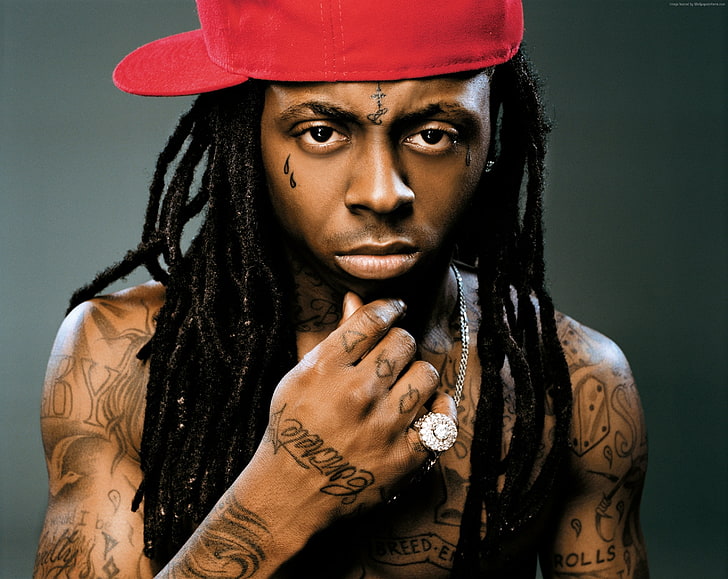
Lil Wayne’s aesthetic identity is one of the most recognizable figures in popular culture. Covered head-to-toe in intricate body tattoos—including iconic facial tattoos, teardrops, and slogans—he helped usher in the mainstream acceptance of extensive face tattoos among hip-hop artists. His signature dreadlocks, oversized designer streetwear, diamond grillz, and skater-inspired attire blurred the boundaries between urban fashion, punk rock aesthetics, and skate culture.
On social media, Wayne maintains a massive, dedicated digital empire, commanding over 18 million followers on Instagram (@liltunechi), millions on Twitter/X (@LilTunechi), and over 14 million subscribers on YouTube. Rather than posting daily personal vlogs, he utilizes his platforms primarily to champion Young Money artists, share skateboarding footage, showcase live concert highlights, and announce new releases. His legacy is etched into hip-hop history as the ultimate bridge between traditional cassette/CD eras and the modern digital era.
7. Upcoming Studio Albums, World Tours & Future Eras
Decades into his illustrious career, Lil Wayne shows zero signs of slowing down. He continues to tour relentlessly, perform at major worldwide festivals, and contribute guest verses to contemporary hits across rap, pop, and R&B. Following his successful project releases like Funeral (2020) and collaborative mixtapes like Trust Fund Babies with Rich the Kid, Wayne’s core focus centers on the release of his heavily anticipated studio album, Tha Carter VI.
Beyond his personal recordings, Wayne remains deeply invested in expanding the Young Money brand into sports management through Young Money APAA Sports, representing professional NFL, NBA, and combat sports athletes. His enduring creative energy, unmatched vault of unreleased music, and standing as a revered elder statesman ensure that his cultural influence will resonate for generations to come.
Dwayne Michael Carter Jr. FAQs: Key Questions Answered
How old is Lil Wayne?
Lil Wayne was born on September 27, 1982.
Who is Lil Wayne dating or married to?
Lil Wayne is currently unmarried. He was previously married to Antonia ‘Toya’ Johnson from 2004 to 2006. Over the years, he has had high-profile relationships with Lauren London, Nivea, Christina Milian, and Denise Bidot.
What is Lil Wayne’s most famous work?
Lil Wayne’s most acclaimed and commercially successful work is his 2008 album Tha Carter III, which sold over one million copies in its first week and included legendary hits like ‘Lollipop’ and ‘A Milli’. His iconic mixtape series (such as Da Drought 3 and Dedication 2) are also celebrated as hip-hop classics.
What awards has Lil Wayne won?
Lil Wayne has won five Grammy Awards (including Best Rap Album for Tha Carter III), 11 BET Awards, four Billboard Music Awards, and the BET Hip Hop I Am Hip Hop Icon Award, alongside dozens of Gold and Platinum certifications.


