
1. Upbringing, Early Canvases & Intellectual Roots
Kamala Devi Harris was born on October 20, 1964, in Oakland, California, into an intellectually rigorous and activist household. Her mother, Shyamala Gopalan, was a renowned biomedical scientist from Chennai, India, who made significant contributions to breast cancer research after immigrating to the United States. Her father, Donald J. Harris, was an Jamaican-born economist who later became an emeritus professor at Stanford University. Raised in an environment saturated with civil rights discourse, young Kamala accompanied her parents to demonstrations in stroller-bound protests across Berkeley and Oakland during the late 1960s.
Following her parents’ divorce when she was seven, Harris was primarily raised by her mother alongside her younger sister, Maya. Shyamala instilled in both daughters a profound sense of cultural dual identity, ensuring they embraced their Indian heritage while raising them as proud Black women in America. During her formative adolescent years, the family relocated to Montreal, Quebec, Canada, where her mother took a research position at Jewish General Hospital and taught at McGill University. Harris attended Westmount High School in Quebec, graduating in 1981 before returning to the United States to pursue higher education.
Driven by a desire to study at a historical institution for Black intellectualism, Harris enrolled at Howard University in Washington, D.C. At Howard, she majored in political science and economics, honed her debate skills on the university debate team, and was inducted into the prestigious Alpha Kappa Alpha sorority. Her time at Howard solidified her political consciousness and commitment to public service. She earned her Bachelor of Arts degree in 1986 and subsequently attended the University of California, Hastings College of the Law (now UC Law San Francisco), receiving her Juris Doctor in 1989. She passed the California bar exam in 1990, paving the way for her entrance into the legal machinery of the state.

2. Early Creative Ascendance: Landmark Solo Shows & Critical Buzz
Harris began her professional career in 1990 as a deputy district attorney in Alameda County, California. Specializing in prosecuting child sexual assault, homicide, and robbery cases, she earned a reputation as a meticulous, firm, and uncompromising trial lawyer. Unlike many of her peers in progressive political circles who viewed the criminal justice system purely from an activist lens, Harris chose to operate inside the room where decisions were made, framing prosecution as a vehicle to safeguard vulnerable communities.
In 1998, San Francisco District Attorney Terence Hallinan recruited Harris to head the Career Criminal Unit in the San Francisco DA’s Office. Two years later, she transitioned to the San Francisco City Attorney’s Office under Louise Renne, where she directed the Division on Families and Children. In this role, Harris spearheaded aggressive legal actions against child abuse and neglect cases, demonstrating a keen talent for navigating bureaucracy while staying connected to municipal legal priorities.
Her definitive political breakthrough occurred in 2003 when she launched a primary challenge against her former boss, Terence Hallinan, for San Francisco District Attorney. Campaigning on a platform of criminal justice modernization and professional efficiency, she promised to improve the city’s dismal conviction rates while implementing progressive diversion programs. Despite being an underdog initially, Harris mounted a disciplined, grass-roots campaign. She won the runoff election in December 2003 with 56% of the vote, making history as the first person of color elected District Attorney of San Francisco.
3. Major Bibliography, Global Retrospectives & Artistic Feats
3.1. Landmark Masterworks & Global Acclaim
As San Francisco DA from 2004 to 2011, Harris carved out a distinctive enforcement profile that she would later describe as being ‘smart on crime.’ She created the Back on Track initiative, an innovative re-entry program aimed at first-time, non-violent drug offenders that provided job training and support services to reduce recidivism. Under her stewardship, overall felony conviction rates rose significantly, and her office tackled chronic truancy by framing public school attendance as a vital public safety issue.
In 2010, Harris launched her campaign for Attorney General of California, seeking to manage the nation’s largest state justice department. Facing Republican Steve Cooley, the Los Angeles County District Attorney, in a tight statewide race, Harris campaigned heavily on environmental justice, anti-recidivism policies, and modernizing law enforcement technology. The election night was a cliffhanger, but when all ballots were counted, Harris prevailed by less than one percentage point. Sworn in on January 3, 2011, she became the first woman, the first African American, and the first South Asian American to hold the office of California Attorney General. She was re-elected in 2014 by a commanding margin.
Her tenure as Attorney General was defined by high-stakes institutional battles. During the aftermath of the 2008 subprime mortgage crisis, Harris made national headlines by walking away from a proposed multi-state settlement with major lending institutions, deeming the initial $2.8 billion payout insufficient for California homeowners. Her high-stakes gamble paid off when she secured a $20 billion settlement for California residents. Additionally, she championed privacy regulations against tech conglomerates in Silicon Valley, created the eCrime Unit to combat cyber-exploitation, and defended California’s landmark climate change legislation against corporate legal challenges.
3.2. Global Resonance & Multilingual Adaptations
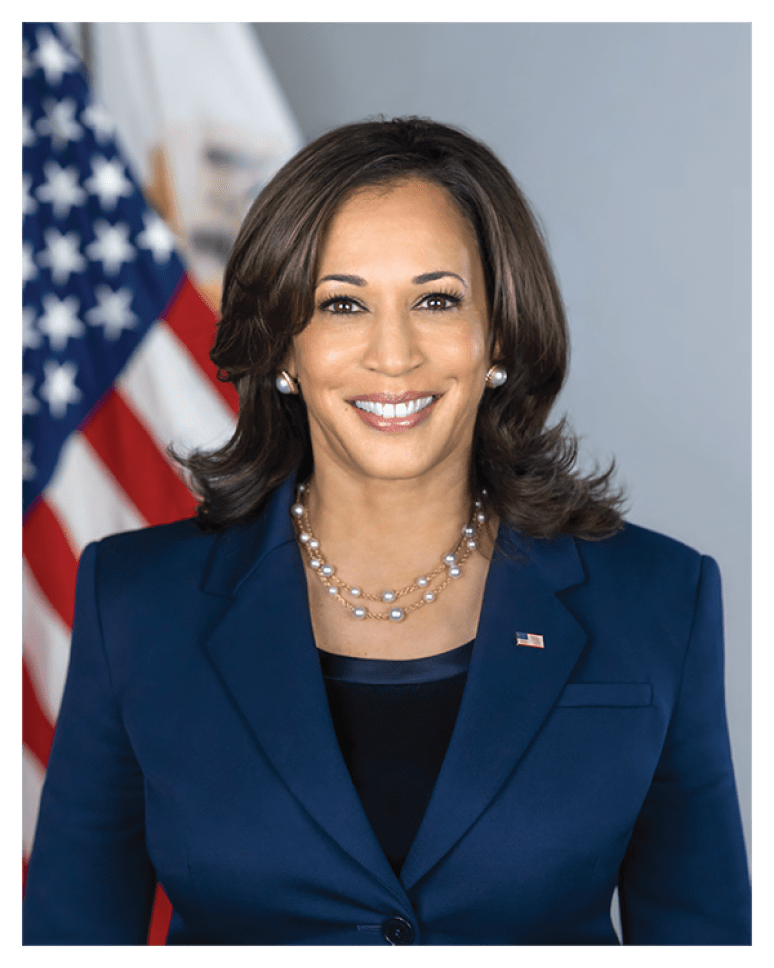
When long-serving U.S. Senator Barbara Boxer announced her retirement, Harris jumped into the 2016 race for the United States Senate. Endorsed by top Democratic figures including President Barack Obama and Vice President Joe Biden, Harris defeated fellow Democrat Loretta Sanchez under California’s top-two primary system, taking office in January 2017. Her entry into federal politics coincided with the beginning of the Trump administration, thrusting her into national opposition leadership.
Assigned to the Senate Judiciary Committee and the Select Committee on Intelligence, Harris leveraged her prosecutorial experience during high-profile hearings. Her sharp, rapid-fire questioning style quickly went viral across news networks and social platforms. Most notably, her intense cross-examinations of Attorney General Jeff Sessions, Deputy Attorney General Rod Rosenstein, and Supreme Court nominee Brett Kavanaugh drew intense praise from progressives and severe condemnation from conservatives, rapidly elevating her status into the top tier of national Democratic figures.

3.3. Peer Accolades & Enduring Cultural Standing
In January 2019, Harris formally announced her candidacy for President of the United States in the 2020 Democratic primary. Her initial rollout drew massive crowds and strong early fundraising, highlighted by a sharp debate exchange with frontrunner Joe Biden over school busing policies. However, structural campaign strategy shifts and ideological friction within the Democratic primary electorate led her to suspend her campaign in December 2019. In August 2020, Joe Biden selected Harris as his vice-presidential running mate. The Biden-Harris ticket secured victory in the November 2020 general election with over 81 million votes.
On January 20, 2021, Harris was sworn in as the 49th Vice President of the United States, breaking historic barriers as the first woman, African American, and South Asian American to hold the nation’s second-highest executive office. Serving in an evenly divided 50-50 Senate during her first two years, Vice President Harris set a historical record for the most tie-breaking votes cast by a Vice President in U.S. history, passing landmark legislation such as the Inflation Reduction Act and the American Rescue Plan. Her portfolio covered major domestic and international mandates, including addressing root causes of Central American migration, leading federal voting rights advocacy, and championing reproductive freedom following the Supreme Court’s overturning of Roe v. Wade.
In July 2024, following President Biden’s decision to withdraw his re-election campaign, Harris rapidly unified the Democratic Party, securing the party nomination for President of the United States alongside running mate Tim Walz. Conducting an intense 107-day national sprint, she spearheaded a historic fundraising effort and mobilized a wide political coalition before competing in the high-stakes November 2024 presidential general election.
4. Relationships, Private Solitude & Personal Bonds
Throughout her rise in California politics, Harris kept her personal life mostly private, though her early public career included high-profile associations. In the mid-1990s, while serving as a prosecutor, she dated Willie Brown, who was then Speaker of the California State Assembly and later Mayor of San Francisco. Though their relationship ended in 1995, it remained a point of political discussion throughout her subsequent campaigns.
In 2013, Harris was set up on a blind date by her close friend Chrisette Hudlin with Douglas Emhoff, a prominent entertainment lawyer and partner at Venable LLP. The pair connected instantly, bonding over family values and professional aspirations. They were married on August 22, 2014, in an intimate ceremony at the Santa Barbara Courthouse, blending their respective heritages with traditional Jewish and Indian wedding customs. Upon their marriage, Harris became stepmother to Emhoff’s two children from a previous marriage, Cole and Ella. Her stepchildren affectionately gave her the moniker ‘Momala,’ a moniker that became widely popularized during her national campaigns.
Outside of public appearances and legislative strategy, Harris is an avid home cook who often discusses food culture as a primary way to unwind. She credits her cooking passion to her mother and frequently shares recipes for Indian and Southern cuisines. Known for her love of gospel music, classic soul, and hip-hop—notably artists like Miles Davis, Stevie Wonder, and Tupac Shakur—she maintains an active, routine workout regimen every morning. The family maintains residences in Los Angeles and Washington, D.C.
5. Censorship Battles, Critical Feuds & Aesthetic Clashes
5.1. Assessing the 'Smart on Crime' Philosophy & Kamala Devi Harris’s Prosecutorial Record
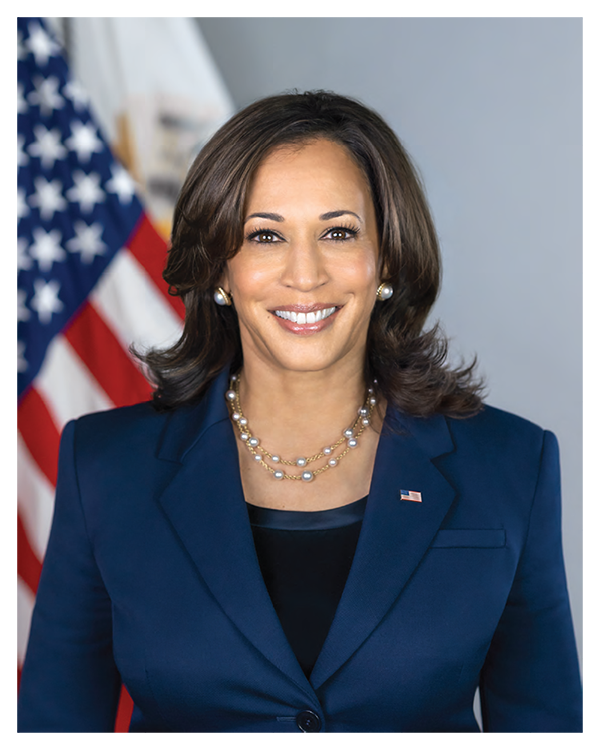
The most persistent crisis of Harris’s career emerged during her 2020 presidential primary run regarding her complex record as a prosecutor and Attorney General. Critics on the progressive left attacked her past positions, coining the phrase ‘Kamala is a Cop’ across political forums and social media. The debate centered on her tough enforcement of anti-truancy laws—which penalize parents of chronically absent children—as well as her office’s opposition to certain state prison reform measures and mandatory body-camera mandates for all local police officers during her statewide tenure.
Critics highlighted cases where her office defended strict sentencing guidelines and fought prison labor mandates under overcrowding orders. Harris responded directly during national debates and media appearances, detailing how her policies aimed to reform systems from within, protect victims of violence, and keep young people out of state prisons through diversion programs like Back on Track. She acknowledged areas where judicial evolution was necessary, adapting her platform to advocate for federal marijuana legalization, police accountability standards, and bail reform.
5.2. Managing Diplomatic Portfolios: Kamala Devi Harris and Regional Migration Strategies
During her vice presidency, President Biden tasked Harris with managing diplomacy regarding the root causes of illegal migration from the Northern Triangle nations (Guatemala, Honduras, and El Salvador). Political opponents swiftly labeled her the administration’s ‘Border Czar,’ attributing border security challenges directly to her oversight. A June 2021 interview with NBC’s Lester Holt—where she fielded intense questioning regarding her physical visits to the southern border—drew substantial criticism from both political flanks, triggering intense media scrutiny over her staff management and communication strategy.
In response, Harris recalibrated her messaging and focus. She secured over $4 billion in private-sector investment commitments for Central America to address economic displacement and redirected her core public engagements toward abortion rights and reproductive healthcare. This pivot re-established her as a primary voice for the Democratic base, neutralizing media narratives regarding internal staff turnover and establishing her as a principal advocate for major party priorities heading into the historic 2024 campaign season.
6. Aesthetic Signature, Philosophy of Art & Enduring Footprint
Kamala Harris has established a distinct cultural footprint, blending executive authority with relatable personal style. Her signature wardrobe—tailored pant suits paired with Converse Chuck Taylor All-Star sneakers—became a viral cultural phenomenon during the 2020 campaign, symbolizing an accessible, on-the-move leadership style. Her collection of pearl necklaces, worn as a tribute to her Alpha Kappa Alpha sorority sisters, remains an iconic visual trademark throughout her public service.
Her digital presence, managed across official channels and campaign accounts like ‘Kamala HQ,’ achieved massive traction with younger demographics. In 2024, her campaign embraced viral internet culture, including Charli XCX‘s ‘Brat’ album aesthetic and coconut tree memes derived from a 2023 speech quote (‘You think you just fell out of a coconut tree?’). These viral moments bridged political discourse with digital youth culture, cementing her position as a major fixture in contemporary political media.
7. Enduring Artistic Heritage, Archival Collections & Future Works
Following her historical term as Vice President and her lead candidacy in the 2024 presidential campaign, Harris remains a central figure in national and international political leadership. Continuing her lifelong work in public service, she actively focuses on policy initiatives surrounding constitutional rights, voting access, and economic equality. She also remains actively engaged with policy institutes, civil rights organizations, and international forums on global democracy and women’s rights.
8. Kamala Devi Harris FAQs: Key Questions Answered
How old is Kamala Harris?
Kamala Harris was born on October 20, 1964, making her 61 years old.
Who is Kamala Harris married to?
Kamala Harris has been married to attorney Douglas Emhoff since August 22, 2014.
What was Kamala Harris’s legal career before becoming Vice President?
Before serving as Vice President, Harris was a deputy district attorney in Alameda County, District Attorney of San Francisco (2004–2011), Attorney General of California (2011–2017), and a U.S. Senator representing California (2017–2021).
What is Kamala Harris’s educational background?
Harris earned her Bachelor of Arts degree from Howard University in 1986 and her Juris Doctor from the University of California, Hastings College of the Law in 1989.


