
Indira Priyadarshini Nehru: Youth at Anand Bhavan and Anti-Colonial Foundations

Indira Priyadarshini Nehru was born on November 19, 1917, in Allahabad, United Provinces, British India. As the only surviving child of Jawaharlal Nehru—India’s first Prime Minister—and Kamala Nehru, Indira was thrust into the heart of India’s independence movement from her earliest days. Her family estate, Anand Bhavan, served as a bustling headquarters for freedom fighters, political strategists, and iconic leaders such as Mahatma Gandhi. This environment provided her with a unique political education, exposing her to high-stakes decision-making and anti-colonial struggle long before she entered formal public service.
Her childhood was defined by both privilege and intense isolation. With her father frequently imprisoned by British colonial authorities and her mother battling chronic tuberculosis, Indira developed a self-reliant and guarded demeanor. At just twelve years old, she demonstrated her innate organizational capability by founding the Vanar Sena (Monkey Brigade), a youth movement that mobilized young people to assist independence fighters by delivering messages, distributing materials, and creating political awareness.
Indira’s academic journey crossed continents, reflecting her family’s commitment to internationalism and intellectual vigor. She pursued her primary and secondary schooling in India and Switzerland before enrolling at Rabindranath Tagore’s prestigious Visva-Bharati University in Santiniketan. Tagore conferred upon her the name ‘Priyadarshini’ (meaning ‘Dear to behold’). She later attended Somerville College, Oxford, studying history, political science, and economics. Her years in Europe broadened her ideological perspective, deepening her understanding of anti-fascist movements, international diplomacy, and economic doctrine.
Indira Priyadarshini Nehru: Leadership of the Non-Aligned Movement and Global Diplomacy
Beyond her domestic policies, Indira emerged as a leading voice for the Global South and the Non-Aligned Movement (NAM). Rejecting rigid Cold War alignments, she advocated for economic self-reliance, nuclear disarmament, and sovereign independence for developing nations. In 1983, she assumed the Chairmanship of the Non-Aligned Movement, hosting world leaders in New Delhi and solidifying her status as a global stateswoman.
Her leadership style was characterized by a rare combination of personal charisma, intense centralized control, and resolute determination. In recognition of her global impact, she received numerous international accolades, including the Jawaharlal Nehru Award for International Understanding and the Lenin Peace Prize. Decades after her passing, a 1999 global poll by the BBC named her the ‘Woman of the Millennium’.
Indira Priyadarshini Nehru: Marriage to Feroze Gandhi and the Nehru Kinship Legacy
Indira Gandhi’s personal life was inextricably linked with the turbulent trajectory of 20th-century Indian history. In March 1942, she married Feroze Gandhi, a Parsi journalist, politician, and fellow independence activist whom she had met during her youth in Europe. The marriage initially met with social resistance due to differences in religious backgrounds, but the union went forward with the blessing of Mahatma Gandhi.
The couple had two sons: Rajiv Gandhi (born 1944) and Sanjay Gandhi (born 1946). While Feroze Gandhi became an influential Member of Parliament noted for his parliamentary independence, their marriage faced strain due to Indira’s growing political commitments as her father’s primary hostess. Feroze Gandhi passed away following a heart attack in September 1960, leaving Indira widowed at age 42.
Personal tragedy continued to mark her life. Her younger son, Sanjay Gandhi, who had emerged as her key political lieutenant, died unexpectedly in a plane crash near Safdarjung Airport in June 1980. The loss deeply affected Indira, who subsequently encouraged her elder son, Rajiv—a commercial airline pilot—to enter public life. Away from politics, Indira maintained a passion for literature, nature preservation, environmental conservation, and traditional Indian textiles.

Indira Priyadarshini Nehru: Lok Sabha Campaigns, Allahabad High Court Ruling & Political Struggles

Indira Priyadarshini Nehru: Decree of the 1975–1977 National Emergency
The most controversial epoch of Indira Gandhi’s tenure began in June 1975. Following widespread economic discontent, student protests led by Jayaprakash Narayan, and a ruling by the Allahabad High Court invalidating her 1971 parliamentary election on grounds of minor electoral infractions, Indira advised President Fakhruddin Ali Ahmed to declare a State of Emergency under Article 352 of the Indian Constitution.
During the 21-month Emergency (June 1975 – March 1977), fundamental constitutional rights were suspended, political opponents were detained without trial, and press censorship was imposed. The administration initiated controversial socio-economic programs, including aggressive slum clearance initiatives and forced population-control campaigns led by Sanjay Gandhi. The period sparked intense international debate over democratic norms and civil liberties in India.
In March 1977, Indira surprisingly lifted the Emergency and called for general elections. The Indian electorate delivered a stern rebuke: Congress suffered a historic defeat, and Indira lost her own parliamentary seat in Raebareli. The Janata Party coalition came to power, marking the first non-Congress federal government in independent India.
Indira Priyadarshini Nehru: 1980 Parliamentary Return and Operation Blue Star Security Crisis
Indira’s political career, however, was far from over. Following her 1977 defeat, she faced numerous investigations, committee hearings, and brief arrests by the Janata government. Rather than retreating, she utilized these challenges to highlight government overreach, mounting a nationwide populist comeback. She formed the Indian National Congress (Indira) faction and capitalized on the internal instability of the ruling coalition. In the 1980 general elections, Indira returned to office with a resounding parliamentary majority.
Her final term was overshadowed by rising militant separatism in Punjab. Militants led by Jarnail Singh Bhindranwale occupied and fortified the Golden Temple complex in Amritsar. In June 1984, Indira ordered ‘Operation Blue Star,’ directing the Indian Army to clear the shrine. While the operation achieved its military objective, the use of heavy armor against the holiest site in Sikhism caused significant structural damage to the Akal Takht and resulted in civilian casualties, deeply grieving the Sikh community.
On October 31, 1984, Indira Gandhi was assassinated at her residence at 1 Safdarjung Road in New Delhi by two of her Sikh bodyguards, Satwant Singh and Beant Singh, in retaliation for Operation Blue Star. Her assassination triggered tragic sectarian violence in Delhi and surrounding regions. In her final public speech in Bhubaneswar just hours before her death, she remarked presciently: “I do not care whether I live or die… Every drop of my blood will invigorate the nation.”
Indira Priyadarshini Nehru: Executive Governance, Economic Doctrines and Parliamentary Oratory
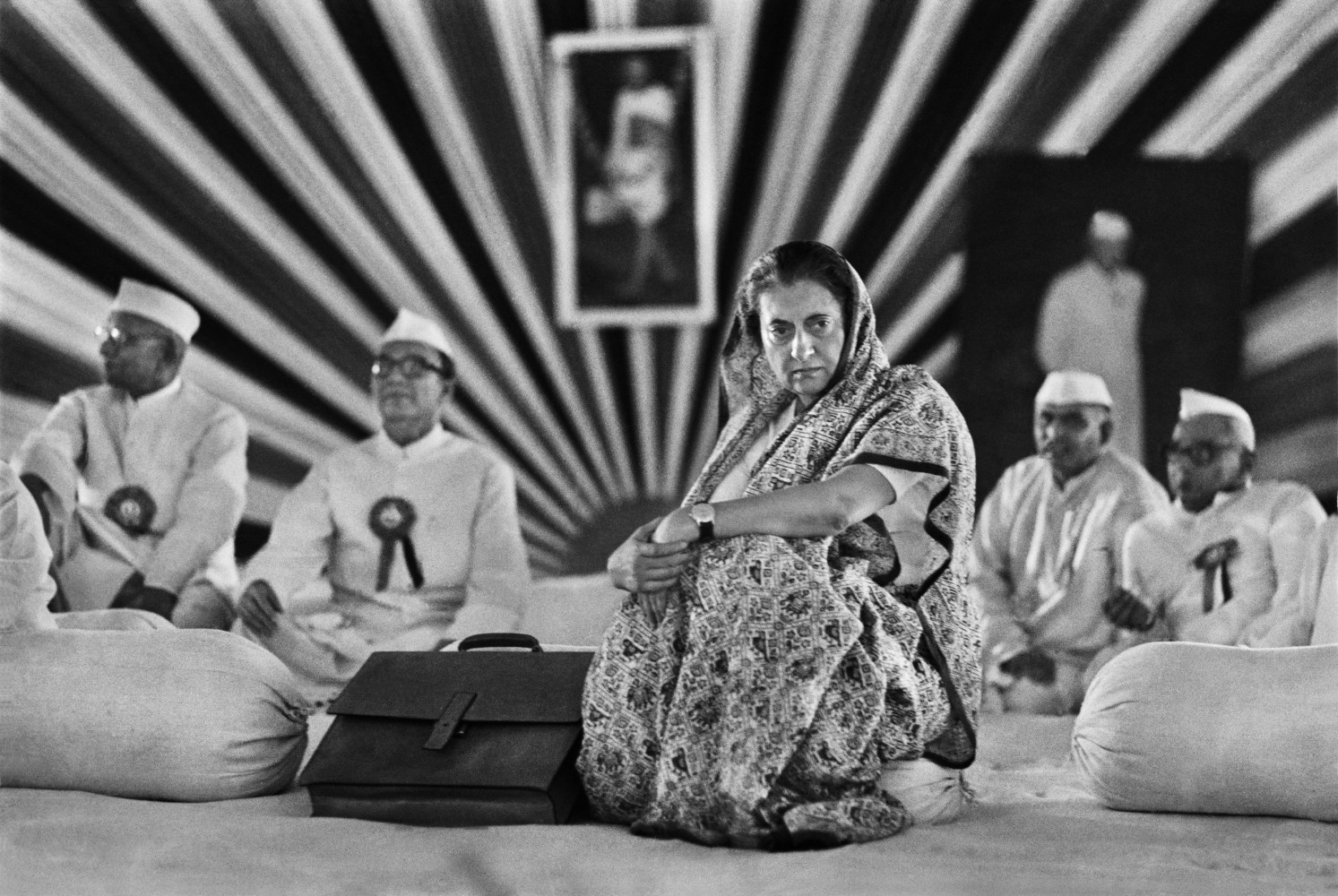
Indira Gandhi’s aesthetic and leadership style remain iconic elements of global political history. She popularized the dignified handloom saree paired with a distinctive streak of white hair, an image that came to symbolize national authority and traditional pride. Her calm, decisive demeanor under intense international pressure earned her the enduring moniker ‘Iron Lady of India’.
Although her career predated the digital era, Indira remains a frequent subject of contemporary political discourse, historical documentaries, literature, and cinema. Memorials such as the Indira Gandhi Memorial Museum in New Delhi and the Indira Gandhi National Open University preserve her intellectual and administrative legacy for modern generations.
Indira Priyadarshini Nehru: Historical Assessment and Shakti Sthal Commemoration
As a historical figure, Indira Gandhi’s impact continues to influence contemporary international affairs, institutional debates, and political scholarship worldwide. Scholars analyze her centralist economic policy, her independent foreign policy blueprint, and her model of decisive crisis management.
Her life and political career remain central topics in historical research, policy analysis, and popular media, offering insights into nation-building, post-colonial sovereignty, and democratic endurance.
Indira Priyadarshini Nehru FAQs: Key Questions Answered
How old was Indira Gandhi when she died?
Indira Gandhi was 66 years old when she was assassinated on October 31, 1984.
Who was Indira Gandhi married to?
Indira Gandhi was married to Feroze Gandhi, a prominent politician and journalist, from 1942 until his passing in 1960.
Was Indira Gandhi related to Mahatma Gandhi?
No, Indira Gandhi was not related to Mahatma Gandhi. She was the daughter of Jawaharlal Nehru and took the surname Gandhi through her marriage to Feroze Gandhi.
What major awards did Indira Gandhi receive?
She received India’s highest civilian honor, the Bharat Ratna, in 1971, along with international honors such as the Lenin Peace Prize.


