: “
1. Early Life, Heritage & Formative Intellect
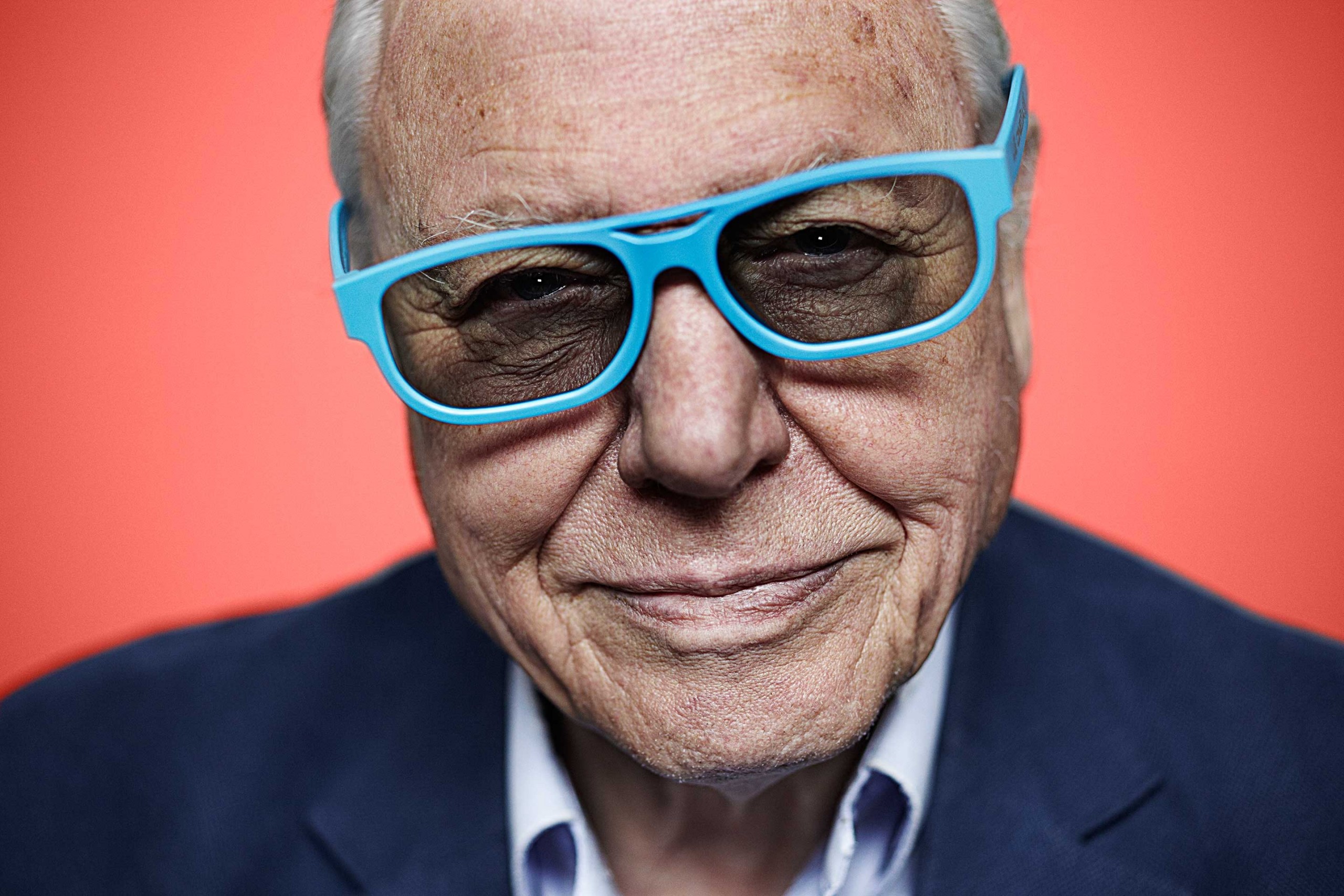
David Frederick Attenborough was born on May 8, 1926, in Isleworth, Middlesex, England. He spent his formative years raised on the campus of University College, Leicester, where his father, Frederick Attenborough, served as principal. Growing up alongside his older brother Richard—who would later achieve global fame as an Oscar-winning film director and actor—and younger brother John, David was surrounded by an intellectually invigorating, cultured household. From a tender age, he demonstrated an insatiable fascination with the natural environment, spending countless hours collecting fossils, stones, and natural specimens in the Leicestershire countryside.
By age seven, the budding naturalist had already established his own home mini-museum of fossils and artifacts, laying the groundwork for a lifelong dedication to understanding earth’s intricate eco-systems. His formal secondary education was completed at Wyggeston Grammar School for Boys in Leicester. In 1945, having demonstrated exceptional academic prowess in the physical and biological sciences, Attenborough won a prestigious scholarship to Clare College, Cambridge. There, he pursued Natural Sciences, specializing in geology and zoology, and earned his Master of Arts degree.
Following his graduation from Cambridge, Attenborough served his mandatory two-year National Service in the Royal Navy from 1947 to 1949, stationed in North Wales and the Firth of Forth. Upon returning to civilian life, he briefly worked as an editor for children’s science textbooks at an educational publishing firm. However, finding desk-bound publishing work overly restrictive, Attenborough set his sights on the expanding medium of television—a decision that would permanently alter the trajectory of natural history broadcasting.
2. Historic Ascendance: Stepping onto the World Stage
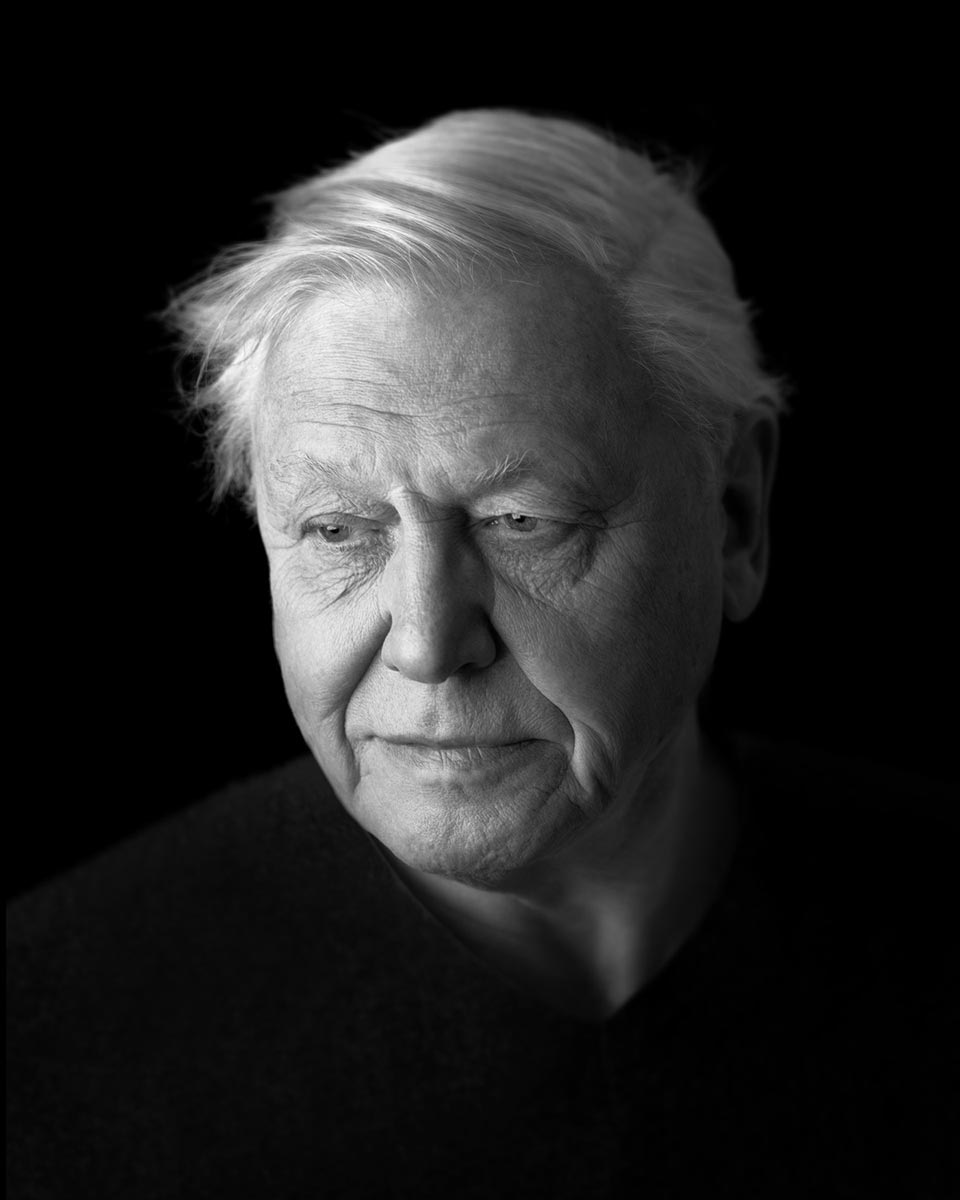
In 1950, David Attenborough applied for a job as a radio talk producer at the BBC. Although he was initially rejected for the radio role, his résumé caught the attention of Mary Adams, head of the fledgling BBC Television Service’s Talks Department. Attenborough was offered a three-month training course in television production, joining the BBC full-time in 1952. At the time, Attenborough owned no television set and had only seen a broadcast once in his life.
His early behind-the-camera assignments included producing non-fiction television studio shows, including music programs and short documentary series. However, his historic breakthrough came in 1954 when he co-created and hosted Zoo Quest. Originally intended to feature London Zoo curator Jack Lester traveling abroad to collect exotic animals, Lester unexpectedly fell ill during filming in West Africa. Attenborough stepped in front of the camera as host, combining live studio presentations of rare animals with groundbreaking field footage shot in pristine global wildernesses.
Zoo Quest became a massive commercial and cultural sensation across Great Britain, running until 1963. It established Attenborough’s signature presentation style: quiet reverence, unbridled enthusiasm, deep scientific rigor, and an uncanny ability to connect on-screen with wild fauna. The success of the series propelled him into national celebrity status, transforming wildlife documentation from sterile educational lectures into thrilling, story-driven mass entertainment.
3. Seminal Works, Breakthrough Theories & Historical Feats
3.1. Landmark Publications & Methodological Shifts
Despite his rapid rise as an on-screen star, Attenborough chose to step back from full-time presenting in 1965 to take up the executive post of Controller of BBC Two. In this high-stakes management position, he championed adventurous, high-brow programming and oversaw the introduced rollout of color television broadcasting across the United Kingdom in 1967. His administrative vision revolutionized British broadcasting; he personally commissioned hit flagship programs such as Monty Python’s Flying Circus, The Ascent of Man, Civilisation, and Snooker’s Pot Black.
By 1969, Attenborough had been promoted to Director of Programming for both BBC One and BBC Two, putting him in charge of all television content output for the network. He was widely tipped to become the Director-General of the entire BBC. However, his deep-seated passion for field biology and natural storytelling outweighed corporate ambitions. In 1972, Attenborough resigned from his senior executive directorship to return to full-time writing, producing, and field presenting, setting the stage for his peak creative era.

3.2. Peak Intellectual Era & Continental Reception
Attenborough launched his magnum opus in 1979 with Life on Earth, a massive 13-part documentary epic produced by the BBC Natural History Unit. Shot across dozens of countries over three years, Life on Earth set an unprecedented global standard for television production values. The landmark series was watched by an estimated 500 million viewers worldwide and produced one of television history’s most iconic moments: Attenborough whispering joyfully while interacting with a group of endangered mountain gorillas in the jungles of Rwanda.
This success laid the foundation for the renowned Life Collection, a multi-decade series of natural history masterpieces authored and presented by Attenborough. Key installments included:
- The Living Planet (1984): An exhaustive examination of how organisms adapt to extreme environments and ecosystems.
- The Trials of Life (1990): A deep dive into animal behavior through every stage of existence, from birth to death.
- The Private Life of Plants (1995): Utilizing pioneering time-lapse photography to reveal the hidden, dynamic world of flora.
- The Life of Birds (1998): A monumental study covering over 300 bird species across every continent.
- The Life of Mammals (2002): An exploration of warm-blooded species, showcasing remarkable subterranean and arboreal behavioral footage.
- Life in the Undergrowth (2005) & Life in Cold Blood (2008): Advanced macro-lens investigations into invertebrates, reptiles, and amphibians.

3.3. Historical Standing Among Global Thinkers
As digital camera technology advanced into High Definition and 4K resolution, Attenborough’s voice became the definitive soundtrack to Earth’s natural wonder. He narrated and anchored the BBC’s flagship blockbuster series The Blue Planet (2001), Planet Earth (2006), Frozen Planet (2011), and Planet Earth II (2016). His unmistakable voice, characterized by warm enthusiasm and dramatic gravitas, brought wildlife conservation into mainstream global popular culture.
Transitioning into global streaming platforms, Attenborough partnered with Netflix for the acclaimed 2019 documentary series Our Planet and the 2020 feature-length retrospective David Attenborough: A Life on Our Planet. In September 2020, at age 94, Attenborough officially joined Instagram to spread urgent messages regarding global warming and ecological collapse. He shattered the Guinness World Record for the fastest account to reach 1 million followers on the platform, accomplishing the feat in just four hours and 44 minutes.
4. Behind the Codex: Family Ties, Companions & Private World
Beyond his globetrotting adventures, David Attenborough maintained a grounded, remarkably stable private life centered in Richmond, London. In 1950, he married Jane Elizabeth Ebsworth Oriel. The couple enjoyed a deeply loving, enduring marriage spanning 47 years. Together, they had two children: Robert, who became a senior lecturer in bioanthropology at the Australian National University in Canberra, and Susan, who served as a primary school headteacher in the UK.
Tragedy struck the family in 1997 while Attenborough was in New Zealand filming The Life of Birds. Jane suffered a sudden brain hemorrhage and lapsed into a coma. Attenborough immediately flew back to London, arriving at her bedside shortly before she passed away. In subsequent interviews and memoirs, Attenborough reflected candidly on the devastating grief of losing his wife, admitting that immersing himself intensely in documentary work was his primary coping mechanism during those dark years.
Despite his worldwide fame, Attenborough has led a modest personal lifestyle. He resides in the same house in Richmond upon Thames that he purchased in the 1950s. His private hobbies include listening to classical music, collecting tribal art and rare fossils, and maintaining a personal library of historic natural history prints. He maintains close relationships with his surviving extended family, including his children and grandchildren.

5. Ideological Feuds, Censorship Battles & Hardships Overcome
5.1. From Naturalist to Climate Advocate: David Frederick Attenborough’s Shift on Global Warming Speech
Despite his revered status, David Attenborough’s long public career has not been immune to intense editorial, scientific, and media debate. For many years, prominent environmental journalists and climate campaigners criticized Attenborough for taking an overly neutral, idyllic stance in his documentaries. Throughout the 1980s, 1990s, and early 2000s, critics argued that his breathtaking wildlife series depicted nature as an unspoiled, pristine paradise, deliberately obscuring human habitat destruction, industrial deforestation, and the accelerating climate emergency.
In late 2018, prominent environmental journalist George Monbiot published a scathing critique alleging that Attenborough’s idyllic portrayals of the wild were actively damaging global conservation efforts by lulling the public into a false sense of security. Public debates intensified when critics labeled him as being “late to the party” regarding climate change advocacy. Attenborough openly addressed these criticisms, acknowledging that early in his career he had exercised extreme journalistic caution, preferring to present verified scientific evidence rather than risk being branded an alarmist or political campaigner. In later years, he fully transformed his messaging, producing hard-hitting documentaries explicitly focused on ecological destruction and global warming.
5.2. Managing BBC Two Controller Duties: David Frederick Attenborough’s Stand for Editorial Independence
Another major public debate emerged regarding accusations of misleading filming practices and editorial bias in BBC natural history productions. In several high-profile incidents, media outlets revealed that certain sensitive wildlife scenes—such as polar bear cubs born in artificial snow dens or specific insect interactions—were filmed in controlled zoo enclosures or studio sets rather than wild settings. Critics accused the BBC of misleading viewers, prompting Attenborough to publicly defend the necessity of controlled shots for animal safety and logistical viability while demanding greater transparency in production credits.
Furthermore, climate skeptic organizations, including the Global Warming Policy Foundation, repeatedly filed official complaints against Attenborough’s documentaries—such as the 2019 BBC film Climate Change – The Facts. These groups accused the programs of broadcasting alarmist claims and overstating the direct link between global warming and extreme weather events. Conversely, conservative commentators accused the BBC of censorship in 2023 when a episode of Attenborough’s series Wild Isles, detailing UK nature depletion, was slated for streaming platform distribution rather than primary broadcast, sparking a media storm over political neutrality. Through every controversy, Attenborough maintained a calm, scientifically backed defense, solidifying his reputation as an objective voice grounded in empirical research.

6. Societal Impact & Paradigm Shifts in Modern Civilization
David Attenborough’s distinctive broadcast style is instantly recognizable across generations. His understated delivery, marked by hushed whispers, genuine childlike wonder, and precise scientific terminology, set the global gold standard for nature narration. Rather than adopting an authoritative, detached persona, he presents himself as a fellow curious observer, inviting audiences to share in the thrill of discovery.
Despite belonging to a generation born long before the digital age, Attenborough’s cultural footprint on social platforms is massive. Memes featuring his classic voiceover cadences regularly go viral across TikTok and YouTube, while his short-lived active Instagram presence broke international engagement records. Dozens of newly discovered animal and plant species have been named in his honor by scientists worldwide—including prehistoric reptiles, rare orchids, and exotic spiders—cementing his legacy across physical science and popular culture.
7. Permanent World Heritage & Contemporary Historical Assessment
Entering his late 90s and continuing into his legendary career, David Attenborough shows little sign of slowing down. He continues to lend his voice to flagship environmental initiatives, streaming documentaries, and global biodiversity summits. His modern work focuses heavily on urgent conservation advocacy, championing renewable energy adoption, rewilding initiatives, and global ocean protection agreements.
Attenborough remains an active ambassador for conservation organizations worldwide, including the World Wide Fund for Nature (WWF) and the Royal Society for the Protection of Birds (RSPB). His ongoing documentary projects leverage cutting-edge immersive technology, including virtual reality experiences and high-frame-rate ocean filming, ensuring that his life’s work continues to inspire and educate upcoming generations of conservationists.
David Frederick Attenborough FAQs: Key Questions Answered
How old is David Attenborough?
David Attenborough was born on May 8, 1926, making him 100 years old.
Who was David Attenborough married to?
David Attenborough was married to Jane Elizabeth Ebsworth Oriel from 1950 until her tragic death from a brain hemorrhage in 1997.
What is David Attenborough’s most famous documentary work?
David Attenborough is best known for creating and hosting the landmark nine-part Life Collection (including Life on Earth and The Living Planet), as well as narrating world-renowned series like Planet Earth, The Blue Planet, and Our Planet.
What awards and honors has Sir David Attenborough received?
Attenborough was knighted by Queen Elizabeth II in 1985 and appointed Knight Grand Cross (GCMG) in 2020. He has received multiple BAFTA Awards, Primetime Emmy Awards, the Order of Merit (OM), and spent decades as a Fellow of the Royal Society (FRS).