: “
1. Childhood Foundations, Early Casting & Screen Ambitions
Brigitte Anne-Marie Bardot was born on September 28, 1934, in the affluent 15th arrondissement of Paris, France. Raised in an upper-middle-class Roman Catholic household, her father, Louis Bardot, was an industrial engineer and factory owner, while her mother, Anne-Marie Mucel, harbored a passionate love for the arts, music, and dance. Growing up alongside her younger sister Mijanou, young Brigitte was subjected to a strict, traditional upbringing governed by rigorous etiquette, personal discipline, and high social expectations. Beneath this polished exterior, however, Bardot harbored a rebellious spirit and a deep-seated sensitivity that would later define both her screen persona and her private life.
Her introduction to performance came through classical ballet. Recognizing her innate grace and physical poise, her mother enrolled her in dance classes at an early age. By 1947, at just thirteen years old, Bardot gained admission to the prestigious Conservatoire de Paris. For three intensive years, she trained under the legendary Russian choreographer Boris Knyazev. The rigorous physical demands of classical ballet instilled in Bardot an effortless posture and fluidity of movement that would become her signature physical trademark on camera. However, despite her talent, the extreme constraints of classical ballet began to clash with her desire for personal expression.
As a teenager, her striking features, natural charisma, and distinctive pout caught the eye of the fashion world. Encouraged by her mother’s associate, she began modeling in high-fashion circles. In 1949, at age fifteen, Bardot landed her first major modeling assignment, appearing on the cover of the French fashion magazine Jardin des Modes. Just a few months later, in March 1950, she graced the cover of Elle magazine. That single magazine cover proved to be the pivotal turning point of her youth. It attracted the attention of young film director Roger Vadim and screenwriter Marc Allégret, setting into motion a dramatic artistic transformation that would catapult the young Parisian ballerina into the international spotlight.

2. Breakthrough Role: Capturing Hollywood & Global Acclaim
Brigitte Bardot’s entry into mainstream cinema was fast-tracked after director Marc Allégret spotted her Elle cover and invited her to audition for his project Les lauriers sont coupés. While the film was ultimately canceled, the audition proved monumental: it brought Bardot face-to-face with Allégret’s young assistant, Roger Vadim. A intense romance blossomed between the teenage model and the aspiring filmmaker. Despite fierce initial opposition from her conservative parents, who insisted she complete her schooling, Bardot married Vadim in December 1952 shortly after her eighteenth birthday. Vadim recognized in Bardot an uninhibited, modern archetype that cinema had not yet captured—a woman who bypassed classical Hollywood artificiality in favor of raw, natural sensuality.
Bardot made her silver screen debut in 1952 with a small role in the French comedy Crazy for Love (Le Trou normand), starring Bourvil. Over the next four years, she worked relentlessly, appearing in seventeen films across France, Italy, and the United Kingdom. She earned notable roles in Anatole Litvak’s Act of Love (1953) alongside Kirk Douglas, the British comedy Doctor at Sea (1955), and René Clair’s period piece The Grand Maneuver (1955). During this period, her sun-kissed blonde hair, barefoot elegance, and effortless style captivated festival audiences, most notably at the 1953 Cannes Film Festival, where media photographers swarmed her on the Riviera beaches.
The definitive explosion of global stardom occurred in 1956 with the release of And God Created Woman (Et Dieu… créa la femme), written and directed specifically for her by Roger Vadim. Set against the sun-drenched backdrop of Saint-Tropez, Bardot portrayed Juliette Hardy, an uninhibited young woman living by her own emotional and physical desires without shame or moral apology. The film broke box office records across Europe and became an astounding crossover hit in North America, earning millions of dollars and establishing Bardot as an international sensation. The image of Bardot dancing barefoot on a table, her hair wildly undone, sent shockwaves through mid-century cinema, challenging conservative censorship boards and signaling the arrival of a new era of sexual liberation.
3. Blockbuster Runs, Golden Globes & Masterclasses in Acting
3.1. Landmark Film Roles & Critical Masterpieces
Following the massive success of And God Created Woman, Brigitte Bardot instantly became a global brand, referred to around the world simply by her initials: “B.B.” International distributors clamored for her films, establishing her as one of France’s top foreign currency earners, alongside exported French cars. In the late 1950s, she anchored a series of highly successful light comedies and romantic dramas that capitalized on her magnetic screen presence, including La Parisienne (1957), In Case of Adversity (1958) opposite Jean Gabin, and the WWII comedy Babette Goes to War (1959).
Seeking to prove her dramatic caliber beyond her sex symbol image, Bardot took on the lead role in Henri-Georges Clouzot’s intense legal drama The Truth (La Vérité, 1960). Portraying Dominique Marceau, a young woman on trial for the passionate murder of her lover, Bardot delivered a powerhouse performance of raw vulnerability and emotional fury. The production was notoriously brutal, with Clouzot pushing her to emotional extremes, but the result was a career high. The Truth became the highest-grossing film in France that year, earned an Academy Award nomination for Best Foreign Language Film, and won Bardot the prestigious David di Donatello Award for Best Foreign Actress.

3.2. Global Cinema Impact & Renowned Collaborations
By the early 1960s, Bardot was not merely a box office draw; she was an icon of the European auteur movement. Her defining artistic artistic pinnacle arrived in 1963 with Jean-Luc Godard’s French New Wave masterpiece Contempt (Le Mépris). Playing Camille Javal, the alienated wife of a screenwriter navigating the commercialization of cinema, Bardot delivered a subtle, haunting performance set against the stunning backdrops of Cinecittà and Villa Malaparte in Capri. Godard’s masterful use of primary colors, combined with Bardot’s natural cinematic gravity, transformed the film into an enduring artistic landmark of modern cinema.
Bardot continued to expand her international repertoire throughout the mid-1960s. In 1965, she starred alongside Jeanne Moreau in Louis Malle’s action-adventure comedy Viva Maria! Set in early 20th-century Central America, the film paired the two iconic French actresses as theatrical performers turned political revolutionaries. Viva Maria! was a worldwide commercial hit, proving Bardot’s comedic timing and earn her a BAFTA nomination for Best Foreign Actress. She followed this with major Hollywood co-productions, such as the Western Shalako (1968) opposite Sean Connery, further cementing her status as an undeniable icon across international boundaries.

3.3. Method Evolution, Academy Awards & Industry Stature
Alongside her film career, Bardot launched a successful musical career in the 1960s, recording dozens of tracks that captured the playful, rebellious ethos of the Yé-yé pop era. Her most famous musical collaborations were with legendary French singer-songwriter Serge Gainsbourg. Together, they recorded iconic hit singles including “Harley Davidson,” “Bonnie and Clyde,” and the original, smoldering version of “Je t’aime… moi non plus.” Her breathy vocal style and musical charisma turned her recordings into enduring cult classics of 1960s French pop culture.
By the late 1960s, Bardot’s cultural status in France reached unprecedented heights. In 1969, she became the official physical model for Marianne, the national personification of the French Republic. Prior to Bardot, busts of Marianne had featured anonymous classical features; her selection marked a historic shift, symbolizing modern French liberty and youth. However, after completing 47 films and recording over 60 songs across two intense decades, Bardot grew thoroughly disillusioned with the movie industry, the invasive paparazzi culture, and the relentless commodification of her image. In 1973, at just 38 years old, she shocked the global media by officially announcing her permanent retirement from acting to dedicate the remainder of her life exclusively to animal rights advocacy.
4. Behind the Camera: Relationships, Family Bonds & Personal Truths
Brigitte Bardot’s private life was subject to intense media scrutiny. Following her 1957 divorce from director Roger Vadim—with whom she maintained a lifelong friendship and professional partnership—she married actor Jacques Charrier in 1959. The union was tempestuous from the start, as hundreds of photographers besieged their home. In January 1960, Bardot gave birth to her only child, a son named Nicolas-Jacques Charrier. Bardot spoke openly in her later memoirs about the severe psychological distress she experienced during pregnancy, feeling unprepared for motherhood while hounded by the global press. Following her divorce from Charrier in 1962, custody of Nicolas was awarded to his father, leading to a long period of emotional distance between mother and son before they eventually reconciled later in life.
In 1966, Bardot married wealthy German playboy and photographer Gunter Sachs, who famously wooed her by dropping thousands of red roses from a helicopter over her seaside villa, La Madrague, in Saint-Tropez. Though their glamorous marriage ended in divorce in 1969, they remained close friends until his death. Beyond her marriages, Bardot engaged in high-profile romances with prominent cultural figures, including actor Jean-Louis Trintignant, musician Serge Gainsbourg, and sculptor Miroslav Brozek. In 1992, she married Bernard d’Ormale, a former political advisor, with whom she remained until her passing in December 2025.

Away from the glamour of public life, Bardot retreated into relative seclusion at her estate in Saint-Tropez. Embracing a simple, rustic lifestyle surrounded by rescued farm animals, dogs, and cats, she rejected cosmetic surgery and the traditional trappings of celebrity wealth. Over the decades, her home became a sanctuary where she penned multiple autobiographical books, including Initiales B.B. (1996), which provided a brutally candid account of her struggles with fame, depression, suicide attempts, and the overwhelming cost of global stardom.
5. Tabloid Pressures, Casting Controversies & Professional Tenacity
5.1. Launching the Fondation Brigitte Bardot & Canadian Seal Hunt Campaigns
After walking away from cinema in 1973, Bardot reinvented herself as an aggressive, uncompromising activist for animal rights. In 1986, she established the Brigitte Bardot Foundation (Fondation Brigitte Bardot), funding its initial capital by auctioning off her personal jewelry, film memorabilia, and high-fashion wardrobe. Her activism was international and unyielding: she famously traveled to the ice floes of Canada alongside Paul Watson in 1977 to campaign against seal hunting, directly confronting commercial sealers and capturing global headlines.
However, Bardot’s confrontational style frequently sparked intense public feuds and legal disputes. In 1989, she faced court proceedings in France after arranging the castration of a neighbor’s donkey while taking care of it, alleging the animal was “sexually harassing” her own donkey and mare. She regularly penned sharp, unvarnished letters to foreign heads of state, targeting world leaders over issue such as dolphin hunting in the Faroe Islands, bear farming in China, and dog meat consumption in South Korea. While praised by animal welfare supporters, her uncompromising methods alienated many within mainstream political circles.

5.2. Racial Incitement Fines, French Court Rulings & Controversial Political Manifesto Books
The most severe controversies of Bardot’s post-acting life stemmed from her increasingly radical political views and public commentary on immigration, Islam, and French society. Beginning in the 1990s, her published essays and open letters took on an aggressive nationalist tone. She publicly criticized the ritual slaughter of sheep during the Islamic festival of Eid al-Adha, extending her animal welfare arguments into broad, inflammatory critiques of Muslim integration in France.
Between 1997 and 2008, French courts convicted Bardot five distinct times for inciting racial and religious hatred under France’s strict anti-racism statutes. Notable convictions included:
- 1997 & 1998 Convictions: Fined for open statements targeting anti-immigrant sentiment and published writings criticizing the growing number of mosques in France.
- 2000 & 2004 Convictions: Fined following the publication of her book Un cri dans le silence (A Cry in the Silence), in which she made derogatory remarks regarding homosexuals, modern art, and Muslim immigrants.
- 2008 Conviction: Handed a €15,000 fine by a Paris court after writing an open letter to Interior Minister Nicolas Sarkozy stating that France was “tired of being led by the nose” by Muslim populations.
These legal battles and political stances severely damaged her public standing among progressive audiences and led several French towns to remove statues modeled after her. Despite the widespread backlash, financial penalties, and media outcry, Bardot remained resolute, asserting that her comments were driven by her passion for animal welfare and free speech rather than intentional malice.
6. Cinematic Screen Presence, Haute Couture & Cultural Impact
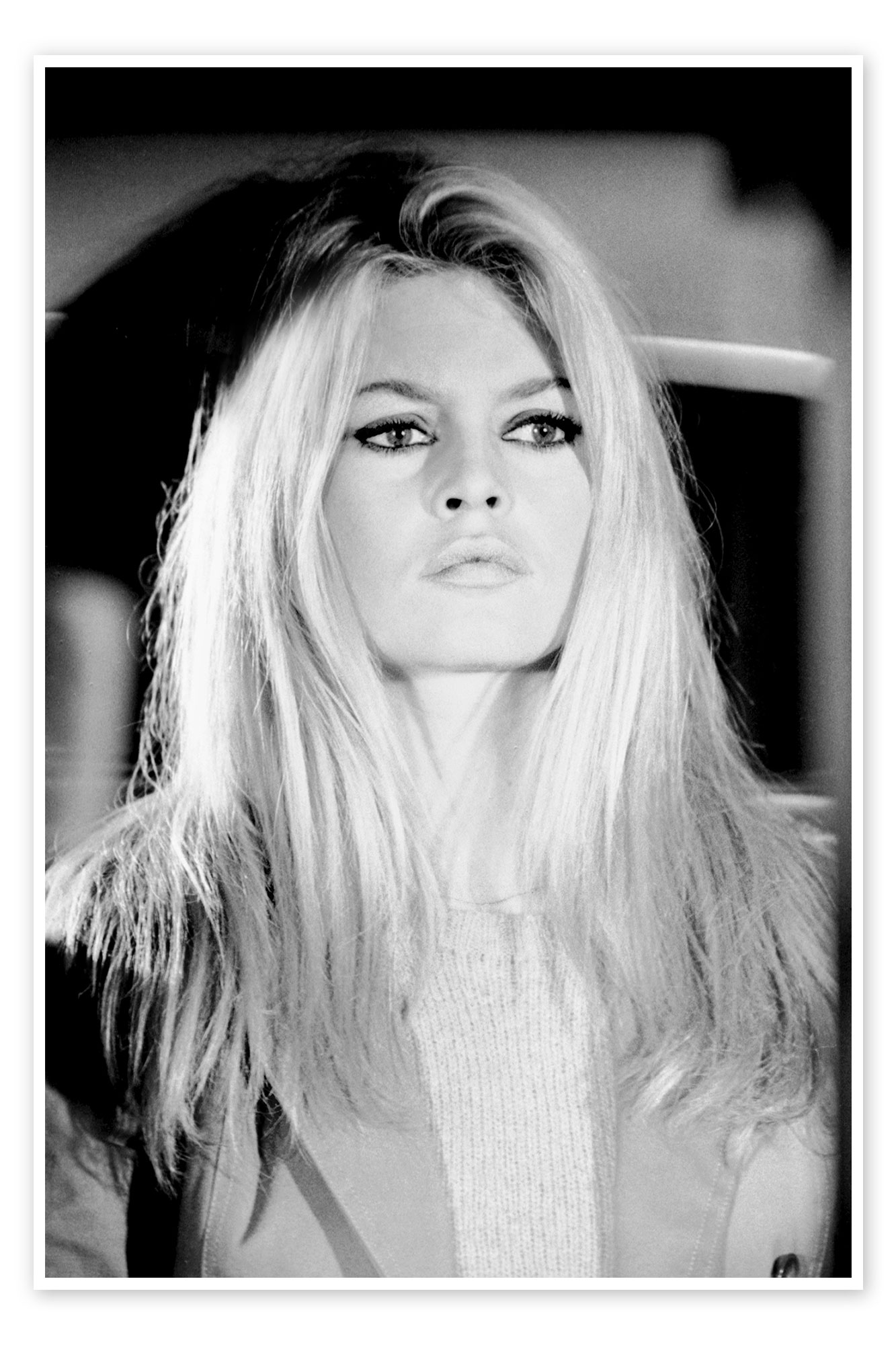
Brigitte Bardot’s aesthetic impact on world fashion remains monumental. In the 1950s and 1960s, she single-handedly popularized styles that defined mid-century casual elegance. She transformed Saint-Tropez from a quiet fishing village into an elite global resort destination, popularizing the bikini, gingham check dresses, ballet flats, and the famous off-the-shoulder neckline officially known worldwide as the “Bardot neckline.” Her signature “beehive” hair—tangled, voluminous, and effortlessly chic—became one of the most imitated hairstyles of the twentieth century.
Unlike contemporary public figures, Bardot completely eschewed personal social media platforms during her later years, maintaining no active personal accounts on Instagram, X (Twitter), or YouTube. Instead, her digital presence was managed exclusively through the official channels of the Fondation Brigitte Bardot. Through this organization, her team utilized modern digital campaigns to mobilize hundreds of thousands of supporters worldwide against fur trading, factory farming, and wildlife exploitation. Her cultural legacy continues to inspire generations of fashion designers, filmmakers, and photographers who view her mid-century work as the epitome of French cinematic style.
7. Future Screen Ambitions, Production Slate & New Horizons
Following her passing in December 2025 at the age of 91 at her estate in Saint-Tropez, Brigitte Bardot’s work lives on primarily through the ongoing global initiatives of the Brigitte Bardot Foundation. Recognized in France as a foundation of public utility, the organization continues to manage extensive animal shelters, wildlife sanctuaries, and international advocacy programs funded by her estate and global donors. Retrospectives of her cinematic masterworks, including And God Created Woman, The Truth, and Contempt, continue to be celebrated at major film festivals and archive restorations worldwide, ensuring her place in the pantheon of cinema history.
8. Brigitte Anne-Marie Bardot FAQs: Key Questions Answered
How old was Brigitte Bardot at the time of her passing?
Brigitte Bardot passed away on December 28, 2025, at the age of 91 at her home in Saint-Tropez, France.
Who was Brigitte Bardot married to?
Bardot was married four times throughout her life: to director Roger Vadim (1952–1957), actor Jacques Charrier (1959–1962), German businessman/photographer Gunter Sachs (1966–1969), and Bernard d’Ormale (1992–2025).
What are Brigitte Bardot’s most famous films?
Her defining cinematic works include Roger Vadim’s And God Created Woman (1956), Henri-Georges Clouzot’s The Truth (1960), Jean-Luc Godard’s Contempt (1963), and Louis Malle’s Viva Maria! (1965).
Why did Brigitte Bardot retire from acting so early?
Bardot retired from screen acting in 1973 at age 38 due to extreme exhaustion from invasive paparazzi attention, disillusionment with celebrity culture, and a desire to dedicate her life entirely to animal rights protection.