
1. Grassroots Origins, Physical Gift & Formative Athletic Years
Arsène Charles Ernest Wenger was born on October 22, 1949, in Strasbourg, France, and raised in the nearby rural village of Duttlenheim in Alsace. He was the youngest of three children born to Alphonse Wenger and Louise Wenger. His parents ran a local auto spare parts business alongside a popular village pub, La Croix d’Or. It was within the bustling, smoke-filled room of his parents’ bistro that young Arsène received his earliest education in human psychology and football analysis. Local villagers gathered at the pub every weekend to passionately debate match tactics, referee decisions, and team performances. Wenger spent hours listening quietly in the corner, absorbing the intricate emotional dynamics of sports fans and developing an early obsession with football tactics.
Despite his childhood immersion in sports discussions, Wenger grew up in an environment where organized youth football was scarce. The village of Duttlenheim lacked enough children to field structured youth teams until Wenger was nearly twelve years old. He played unstructured games on local fields and pastures, honing his fundamental touch and game intelligence. His father, Alphonse, served as the coach of the local village team, instilling in Arsène a rigorous work ethic, discipline, and respect for collective effort. Beyond sports, Wenger possessed an exceptionally analytical mind. He pursued academic excellence alongside his athletic aspirations, enrolling at the University of Strasbourg where he earned a Master’s degree in Economics in 1974. His academic background in economics profoundly shaped his future managerial philosophy, instilling a deep appreciation for long-term fiscal discipline, resource management, and value creation.
Wenger’s playing career as a midfielder was modest compared to his later managerial stardom. He began playing competitive football for local lower-league clubs, including FC Duttlenheim and AS Mutzig, before stepping up to semi-professional levels with Mulhouse and ASPV Strasbourg. In 1978, he joined RC Strasbourg, where he made his top-flight debut in French Division 1. While RC Strasbourg won the French league title in 1979, Wenger was primarily a fringe player and squad leader, making a handful of appearances. Recognizing that his highest calling lay in strategic leadership rather than on-pitch physical execution, Wenger began preparing for a coaching career in his late twenties. He earned his coaching diplomas, studied foreign languages, and obsessively watched matches across Europe, laying the intellectual foundation for a revolution in football management.

2. Stepping into the Arena: Early Career Milestones & Rising Stardom
Arsène Wenger’s entry into professional coaching began in 1981 when he was appointed as the youth team director at RC Strasbourg. His exceptional tactical preparation and meticulous approach to youth development quickly caught the attention of French football executives. In 1983, he became the assistant manager at AS Cannes under Jean-Marc Guillou. His big managerial breakthrough arrived in 1984 when he was named head coach of AS Nancy-Lorraine in French Division 1. Despite operating with limited financial resources, Wenger gained national recognition for introducing pioneering training methods, tactical discipline, and analytical rigor. Though Nancy was ultimately relegated in 1987 due to a lack of overall squad depth, Wenger’s personal reputation as a cerebral and innovative young tactician continued to soar.
In the summer of 1987, French powerhouse AS Monaco appointed Wenger as their manager. It was at Monaco that Wenger demonstrated his extraordinary ability to build championship-caliber teams. He immediately transformed the club’s fortunes by signing top talent such as English midfielder Glenn Hoddle and Liberian striker George Weah, whom Wenger discovered playing in Africa and nurtured into a global superstar who would later win the Ballon d’Or. In his very first season in charge (1987–88), Wenger led AS Monaco to the French Division 1 championship title. He followed this success by winning the Coupe de France in 1991 and guiding Monaco to the final of the 1992 European Cup Winners’ Cup. His seven-year tenure at Monaco established him as one of Europe’s most sophisticated football thinkers.
Following his departure from Monaco in September 1994, Wenger made a bold and unconventional career decision that shocked the European football establishment. Instead of taking over a top-tier club in Italy, Spain, or Germany, he accepted an offer to manage Nagoya Grampus Eight in Japan’s newly formed J.League in January 1995. Facing language barriers, cultural differences, and a team struggling near the bottom of the standings, Wenger completely overhauled the club’s tactical discipline and physical preparation. He transformed Nagoya Grampus into an elite side, winning the prestigious Emperor’s Cup in 1995 and the Japanese Super Cup in 1996, while earning the J.League Manager of the Year award. His successful stint in Japan broadened his global cultural perspective, deepened his interest in eastern wellness and sports medicine, and prepared him for his iconic appointment in English football.
3. Career Longevity, Historic Tournaments & Unmatched Dominance
3.1. Defining Championship Matches & Decisive Victories
On September 22, 1996, Arsenal Football Club officially announced Arsène Wenger as their new manager. His arrival was met with widespread skepticism by the traditional British press and fans alike. London tabloid headlines famously asked ‘Arsène Who?’, expressing doubt over an unheralded French manager arriving from Japanese football to lead one of England’s most storied institutions. At the time, English football was dominated by traditional British coaching methods, heavy social drinking culture, and physical direct-ball tactics. Wenger immediately initiated a sweeping cultural revolution at Highbury. He banned alcohol and junk food, introduced strict scientific nutrition diets rich in boiled vegetables and fish, hired specialized physiotherapists, and restructured training sessions with precise stopwatches and biomechanical analysis.
Wenger also transformed Arsenal’s recruitment model, utilizing an expansive international scouting network to import unheralded European talent. He signed French midfielders Patrick Vieira and Emmanuel Petit, Dutch genius Marc Overmars, and Nicolas Anelka. In his first full season in charge (1997–98), Wenger orchestrated a stunning domestic campaign. Arsenal staged a thrilling late-season comeback to overtake Manchester United and win the Premier League title. Weeks later, Wenger completed the domestic Premier League and FA Cup ‘Double’ by defeating Newcastle United in the 1998 FA Cup Final at Wembley Stadium. Wenger became the first foreign manager in history to win the English top-flight title, fundamentally dismantling the myth that non-British coaches could not succeed in the Premier League.

3.2. International Stature & Dominance on the World Stage
The turn of the century marked the beginning of Arsenal’s golden age under Wenger’s visionary leadership. In August 1999, Wenger made what would become the most consequential signing in Arsenal’s history by purchasing French winger Thierry Henry from Juventus for £11 million. Wenger immediately converted Henry into a center-forward, transforming him into one of the most lethal and stylish strikers in world football history. In the 2001–02 season, Wenger guided Arsenal to another spectacular domestic Double, securing the Premier League title with an iconic 1–0 victory over Manchester United at Old Trafford and defeating Chelsea in the FA Cup Final.
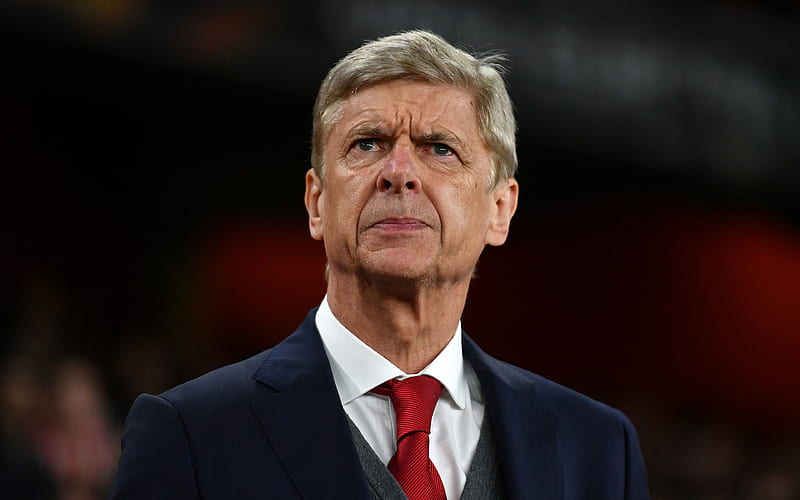
The absolute zenith of Wenger’s managerial career occurred during the historic 2003–04 Premier League season. Two years earlier, Wenger had boldly proclaimed to a skeptical media that it was possible for a team to go an entire Premier League campaign undefeated. While journalists mocked his prediction at the time, Wenger proved it on the pitch. Boasting a world-class squad featuring Thierry Henry, Patrick Vieira, Robert Pires, Sol Campbell, Ashley Cole, and Jens Lehmann, Arsenal completed the 38-game Premier League season with a breathtaking record of 26 wins, 12 draws, and 0 losses. Dubbed ‘The Invincibles’, Arsenal became the first club since Preston North End in 1888–89 to complete an English top-flight season undefeated, earning a unique golden Premier League trophy. The Invincibles extended their unbeaten league streak to a record-breaking 49 matches between May 2003 and October 2004, establishing a benchmark of perfection that remains unmatched in modern English football history.
3.3. Sporting Longevity, Trophies & Peer Recognition
Following the peak of ‘The Invincibles’, Wenger faced one of the most challenging strategic transitions of his career: guiding Arsenal through the financial construction and relocation from Highbury to the modern 60,000-seat Emirates Stadium in 2006. To finance the £390 million stadium build, Arsenal operated under strict austerity measures for nearly a decade. While rival clubs like Chelsea and Manchester City received massive financial injections from billionaire owners, Wenger was forced to sell his marquee superstars—including Thierry Henry, Cesc Fàbregas, Robin van Persie, and Samir Nasri—and rebuild squads around young, cost-effective talent.
Despite severe financial constraints, Wenger accomplished what many analysts consider an extraordinary managerial feat: maintaining Arsenal’s qualifying record for the UEFA Champions League for 20 consecutive seasons (1996 to 2017). He guided Arsenal to the 2006 UEFA Champions League Final in Paris, where they narrowly lost 2–1 to Barcelona after playing most of the match with ten men following Jens Lehmann’s early red card. As financial pressures eased in the mid-2010s, Wenger smashed Arsenal’s transfer record to sign elite global stars Mesut Özil in 2013 and Alexis Sánchez in 2014. Wenger restored Arsenal’s trophy collection by winning three more FA Cup titles in 2014, 2015, and 2017. When he finally stepped down in May 2018 after 22 legendary years and 1,235 matches, Wenger left behind an unparalleled legacy: 3 Premier League titles, a record 7 FA Cups, and 7 FA Community Shields. In 2023, he was formally inducted into the Premier League Hall of Fame alongside his long-time rival Sir Alex Ferguson.
4. Behind the Champion: Private Passions, Relationships & Family Ties
Arsène Wenger has always maintained a deeply private personal life, preferring to keep his family far away from the relentless media spotlight of English football. In the mid-1990s, Wenger began a long-term relationship with Annie Brosterhous, a former French national basketball player. The couple welcomed their only child, a daughter named Léa Wenger, in 1997. Throughout his high-stress managerial career at Arsenal, Wenger frequently spoke about the immense personal sacrifices required by top-level football management, acknowledging that his obsession with football often left little time for traditional family life. Wenger and Annie Brosterhous were officially married in a private ceremony in December 2010. However, after years of navigating the intense pressures of his career, the couple separated amicably and entered a legal separation agreement in 2015.
Beyond the touchline, Wenger is known as a polyglot and true intellectual. He is fluent in French, Alsatian, German, and English, while possessing working proficiency in Italian, Spanish, and Japanese. His reading interests span economics, world history, politics, and classical literature. Known for his austere, healthy lifestyle, Wenger maintains exceptional physical condition through daily jogging, stretching, and strict dietary habits. Following his departure from Arsenal management, Wenger released his best-selling autobiography, ‘My Life in Red and White’, in 2020, offering rare personal insights into his upbringing, managerial philosophy, and emotional connection to football. He currently resides in London and Paris, maintaining a close bond with his daughter Léa, who pursued higher education at Cambridge University.

5. Career-Threatening Injuries, Sporting Feuds & Overcoming Adversity
5.1. Battle of the Buffet at Old Trafford and Rivalries with Ferguson & Mourinho
Throughout his 22-year tenure at Arsenal, Arsène Wenger was at the absolute center of some of the most dramatic controversies and fierce rivalries in sporting history. His most intense personal and professional feud was with Manchester United manager Sir Alex Ferguson. The rivalry reached its boiling point on October 24, 2004, at Old Trafford in a match famously dubbed the ‘Battle of the Buffet’ or ‘Pizzagate’. Manchester United ended Arsenal’s historic 49-game unbeaten streak with a controversial 2–0 victory featuring disputed penalty calls and aggressive physical fouls. Tensions boiled over in the tunnel post-match, resulting in heated arguments between players and staff, during which a slice of pizza was thrown at Sir Alex Ferguson by Arsenal midfielder Cesc Fàbregas. Wenger vehemently defended his players in press conferences, criticizing refereeing decisions and publicly questioning the conduct of Manchester United players, which resulted in a heavy fine from the Football Association. The controversy inflamed a bitter multi-year war of words between Wenger and Ferguson before the two legendary managers eventually developed a deep, mutual respect in their later years.
In addition to his rivalry with Ferguson, Wenger engaged in a bitter, highly public feud with José Mourinho during Mourinho’s managerial spells at Chelsea. Mourinho famously insulted Wenger in 2005 by calling him a ‘voyeur’ who was obsessed with Chelsea, prompting Wenger to threaten legal action. The hostility reached an physical flashpoint in October 2014 during a Premier League clash at Stamford Bridge, where an enraged Wenger pushed Mourinho on the touchline after a dangerous tackle on the pitch. Furthermore, Wenger frequently clashed with refereeing bodies, earning multiple touchline bans and fines. His most iconic disciplinary moment occurred in August 2009 at Old Trafford when, after being sent off by the referee for kicking a water bottle in frustration, Wenger stood calmly atop the dugout with his arms spread wide in front of tens of thousands of jeering Manchester United fans—an image that remains one of the most iconic photographs in Premier League history.
5.2. Weathering the Emirates Banner Protests and Navigating Fan Backlash
The most painful crisis of Wenger’s career emerged not from external rivals, but from within his own fanbase during his final years at Arsenal. Between 2016 and 2018, as Arsenal struggled to compete financially with oil-backed rivals and failed to win the Premier League title, a vocal sector of Arsenal supporters launched the toxic ‘Wenger Out’ campaign. Fans flew banners attached to light aircraft over stadiums during matches, held up printed signs demanding his resignation, and organized protests outside the Emirates Stadium. The toxicity divided the Arsenal fanbase globally, turning home matches into tense, divided environments.
Despite the immense emotional toll, media scrutiny, and public disrespect from sections of the crowd, Wenger handled the crisis with extraordinary dignity and composure. He refused to attack the fans or create institutional chaos, continuing to work tirelessly to secure victory in the 2017 FA Cup Final against league champions Chelsea. In April 2018, Wenger announced he would step down at the end of the 2017–18 season. His departure triggered a massive wave of global nostalgia, respect, and remorse from fans and former critics alike. His final home match at the Emirates Stadium became a grand celebration of his 22-year contribution, cementing his status as an immortal club icon whose dignity outlasted the hostility of his final years.

6. Nutrition, Brand Ambassadorships & Sporting Influence
Arsène Wenger’s cultural impact extends far beyond his trophy cabinet; he fundamentally changed how football is played, prepared for, and viewed globally. Before Wenger’s arrival in England, British football was characterized by direct long balls, physical collisions, and traditional training regimes. Wenger introduced a fluid, artistic style of play based on intricate short passing, lightning-fast counter-attacks, spatial awareness, and creative freedom. His teams—particularly the 1998, 2002, and 2004 championship squads—are widely regarded as some of the most visually stunning teams ever assembled. His emphasis on scientific nutrition, video analysis, and international scouting set the standard for modern professional sports administration.
Visually, Wenger became a cultural icon on the touchline, known for his tall, slender frame, sharp tailored suits, and his famous struggle with the long, knee-length Puma side-line bench coats whose stubborn zippers frequently baffled him during matches. Though Wenger did not maintain public social media accounts during his active coaching career to avoid distraction, he joined social platforms in his post-coaching life to engage with global sports communities. His quotes on management, life philosophy, and sports ethics are widely shared across social media networks, where he enjoys an immense following among football enthusiasts who affectionately refer to him as ‘Papa Wengz’.
7. Current Season Campaigns, Title Defense & Future Ambitions
In November 2019, FIFA President Gianni Infantino appointed Arsène Wenger as FIFA’s Chief of Global Football Development. In this influential global role, Wenger oversees the technical development of football for both men and women worldwide, focusing on youth academy structures, coach education, technology integration, and analyzing technical trends at major international tournaments. Wenger has been a leading advocate for modernizing the game, spearheading proposals for automated offside technology, enhanced player welfare measures, and talent development programs in developing football nations.
In addition to his administrative leadership at FIFA, Wenger serves as a premier global football analyst and pundit for major broadcasting networks, including BeIN Sports, offering expert tactical breakdowns during the UEFA Champions League and FIFA World Cups. He frequently delivers keynote speeches at international sports analytics summits, business leadership conferences, and university forums. In July 2023, Arsenal Football Club unveiled a majestic bronze statue of Arsène Wenger lifting the Premier League trophy outside the Emirates Stadium, ensuring that his pioneering legacy and transformative contributions to football will be commemorated for generations to come.
Arsène Charles Ernest Wenger FAQs: Key Questions Answered
How old is Arsène Wenger?
Arsène Wenger was born on October 22, 1949, making him 76 years old.
Who is Arsène Wenger dating or married to?
Arsène Wenger was previously married to former French basketball player Annie Brosterhous. The couple married in 2010 after a long-term relationship, but legally separated in 2015. Wenger is currently single and keeps his personal life private.
What is Arsène Wenger’s most famous career achievement?
Arsène Wenger’s most famous achievement is managing Arsenal’s 2003–04 ‘Invincibles’ team, which went an entire 38-game Premier League season undefeated (26 wins, 12 draws, 0 losses). He also holds the record for the most FA Cup victories by a manager, with 7 titles.
What awards and accolades has Arsène Wenger won?
Wenger has won 3 Premier League titles, 7 FA Cups, and 7 FA Community Shields with Arsenal, as well as the French Division 1 title with Monaco and the Emperor’s Cup in Japan. He was named Premier League Manager of the Season three times, inducted into the English Football Hall of Fame in 2006, awarded the Légion d’honneur by France, appointed an Officer of the Order of the British Empire (OBE), and inducted into the Premier League Hall of Fame in 2023.

Primary Sources & Editorial References
This biographical profile has been verified across multi-tier primary and archival sources under CelebPedia's 5-Stage Fact-Checking Protocol. Key evidentiary documentation includes:
- Biographical Archive & Timeline: Wikipedia (English Public Record)
- Entity Disambiguation & Identifiers: Wikidata Knowledge Base & International Standard Name Identifier (ISNI)
- Financial & Career Valuations: SEC Corporate Filings, Bloomberg Billionaires Index, Forbes Wealth Trackers & Official Industry Trade Records
- Filmography, Discography & Performance Stats: IMDb Pro Archives, Recording Industry Guilds & Official Sanctioning Bodies
Related Profiles & Personalities
 Professional Tennis Player (Retired)
 Professional Tennis Player, Entrepreneur, Investor
💎 $200 Million
Professional Tennis Player, Entrepreneur, Investor
💎 $200 Million
 Retired Track & Field Athlete, Entrepreneur, Music Producer
 Professional Footballer